




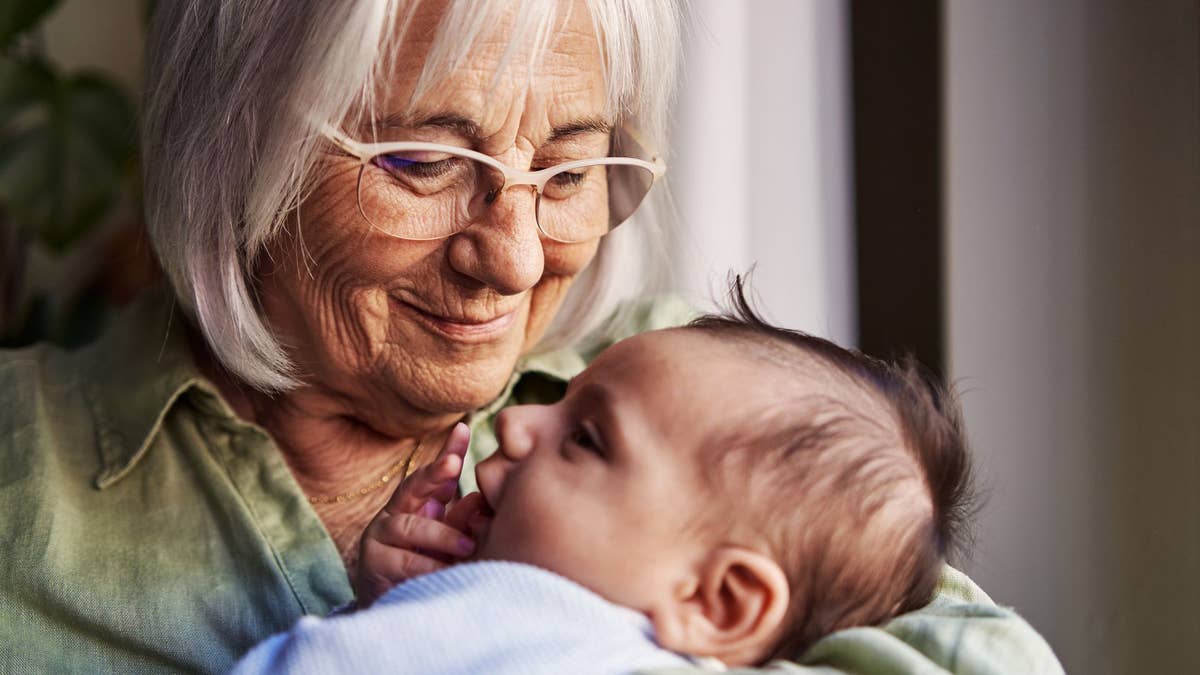

If you’re a grandmother, you probably have already realised that a child’s maternal grandma occupies a very specific place in children’s lives – and it just so happens that psychology proves it.
A strong, healthy relationship with a granny lasts a lifetime; it continues even when the adorable little grandchild becomes an adult – and long after grandma passes away, too.
Unconditional love and a calm approach to child-rearing have a lot to do with why the grandmother is such an important part of one’s life, but does she also influence her grandchildren’s emotional development?
We wanted to know how the bond formed with a maternal grandmother impacts the development of a child’s personality and emotional well-being – so we put these questions and more to psychologist and family therapy specialist María Bustamante.
The expert sheds light on this mother-daughter topic in a fascinating Q&A.
Why is the maternal grandmother so important in children’s lives?
“A grandmother, whether maternal or paternal, stands as living proof of someone who has successfully navigated the many tasks and stages of the personal and family life cycle. Her role in a child’s life can be invaluable – she can potentially add a profound richness to her grandchild’s upbringing.
“Her presence and relationship with her grandchildren demonstrate, among other things, a capacity to maintain deep-rooted family bonds and navigate evolving responsibilities and roles. She serves as a bridge to foster the generational transmission of a family’s values, priorities and a sense of purpose, while beautifully building upon the lessons of her own experience to offer wisdom and perspective.”
Does a maternal grandmother play a vital part in strengthening the bond between her daughter (who is now a mum herself) and her grandchild?
“Absolutely. The interaction between a grandmother and her daughter represents the very chain of life. Much like links in a chain that are joined but still have their own space, [this relationship] provides a wonderful sense of identity, family consistency and a feeling of belonging and protection.
“If a child sees a bond of respect and care between those two generations, it serves as a beautiful model for how they’ll form their own relationships with others, whatever their age, in the years to come.”
How does a child’s relationship with their grandmother influence child development?
“Grandmothers are the common thread that runs through our lives, offering a calmer, more serene perspective on responsibility and a deeper approach to relationships. What’s more, they often become a vital support for a grandchild’s sensitivity.
“Grandmothers have a lovely way of complementing parenting, offering a calmer kind of care that’s free from the daily pressures and heavy responsibilities of a parent”
“I must note that all of this rich background only comes to the fore if the relationship between the generations is properly managed through healthy bonds, creating spaces of respect and care.
“This perspective appropriately distributes responsibility to the parents – confirming and validating their decisions – while maintaining a nurturing attitude that fosters stability, consistency and a sense of belonging for the child.”
How can such a strong bond be forged when a grandmother lives far away?
“Bonds are built on a genuine intention to connect, sustained over time. [A connection] really transcends mere physical space because it’s something that’s truly authentic; it can’t be faked. Physical contact certainly strengthens relationships, as shared experiences are filled with sensory memories – I’m talking about the sounds, scents and emotions that will later endure despite the distance.
“But once this bond is established, not even distance can break it – that’s especially true now because of modern technology, which makes it easy to stay in touch and keep our connections fresh.”
 © Getty Images
What happens to a child who is deprived of their grandmother’s presence due to family rifts or arguments between her and the parents?
“When a family cannot resolve conflicts in a healthy way, bonds suffer – and the fallout inevitably trickles down to the child. As the most vulnerable member of the family, the child often bears the brunt of poor emotional management and conflict avoidance. Worse still, this behaviour sets a precedent for them; they may end up normalising these patterns, which can leave lasting gaps in their emotional development.”
What if this absence is caused by the grandmother’s passing, perhaps before the child was born or when they were very young?
“Bereavement is a natural part of life – it’s something we will all eventually face. When it happens, processing that loss requires significant emotional resilience. If grief isn’t navigated healthily, the emotional fallout, whether it be pain, anger or frustration, remains unresolved.
“These feelings can linger and flare up unexpectedly, unsettling the home environment and deeply affecting children. They’re the ones who may not yet have the tools to regulate these kinds of complex emotions on their own.
“Children who know and interact with a grandmother are exposed to stimuli that cannot be replaced by any other figure”
“But if the grief is resolved in a healthy way, the absence can be filled with fond memories, lessons or gratitude. This helps create a positive narrative for the child, providing a stable, reassuring sense of identity. Instead of a void, they grow up with stories of a cherished grandmother, whether they met her or not.”
So, how does a maternal grandmother help with raising the little ones?
“Maternal grandmothers provide a presence focused on quality time, gentle attention, a bit of shared mischief and plenty of emotional support. What’s more, they give parents a perspective rooted in patience, a broader outlook and a wealth of wisdom.”
About the expert:
María Bustamante is a Health Psychologist specialising in child psychology, family therapy and substance addiction recovery at Spain’s Centta Institute.
Read the full article here