






There is something wonderfully freeing about closing the curtains, turning up your favorite song and moving your body without a second thought. And according to a growing body of science, that simple act could be one of the most powerful things you do for your health after 60.
“Anyone, at any age or ability, can move their body to music and feel energized,” Jules Francis, Mindset and Wellness Coach and co-founder of a Brazilian partner dance community, tells HELLO!. “I believe dance can heal both mind and body. Through my Brazilian dance community, I see people arrive feeling heavy and leave feeling lighter.”
It might sound almost too joyful to count as a serious fitness strategy, but dancing is increasingly being recognized by researchers as one of the most effective and holistic forms of exercise available. And the most surprising part is that you only need ten minutes to start feeling the benefits.
Why dancing is more powerful than you think
Scientists have long been fascinated by humanity’s deep connection to dance. Some even believe it is hardwired into us, helping early societies bond, communicate and survive. That connection may explain why moving to music can instantly shift your mood.
“Emotion is energy in motion,” Jules explains. “When you move your body to music you love, your energy shifts to make space for joy.” That emotional shift is not just psychological. Research shows that dancing triggers the release of endorphins, the body’s natural feel-good chemicals, which can reduce pain and elevate mood in a matter of minutes.
In fact, a study from the University of Oxford found that dancing in sync with others significantly increased feelings of social bonding. Even more remarkably, participants experienced a higher pain threshold after just ten minutes, suggesting a powerful physiological response.
The 10-minute longevity boost
 © Getty Images
If you have ever dismissed dancing as something purely recreational, the long-term data may change your mind.
A major Australian study that followed nearly 50,000 adults over 12 years found that dancing was linked to a 46 per cent reduced risk of stroke or heart attack. That benefit was greater than many other forms of exercise at the same intensity, including walking.
Another long-term study focusing on older adults revealed an even more striking finding. Dancing was associated with a 76 per cent reduced risk of dementia, making it one of the most protective lifestyle activities for brain health. It is not just about movement. It is about how dance engages the body and brain simultaneously.
A full-body and brain workout in one
 © Getty Images
Former dancer turned neuroscientist Dr Julia F. Christensen explains that dancing challenges the brain in unique ways. When you dance, you are not simply repeating a movement. You are listening to music, coordinating your steps, remembering patterns and often responding to a partner or rhythm. This level of multitasking stimulates the brain far more than traditional exercise.
Studies show that dancing can enhance neuroplasticity, the brain’s ability to form new connections. In one experiment, a single 30-minute salsa class improved spatial working memory by 18 per cent.
Even more compelling are the changes seen over time. Brain imaging studies have shown that regular dancing can increase the size of the hippocampus, a region essential for memory and learning. In a long-term study of adults in their 60s, those who danced weekly for 18 months experienced greater brain growth than those who followed conventional fitness routines.
It is cardio, strength and joy combined
 © Getty Images
From a physical perspective, dancing is deceptively powerful. It can raise your heart rate above 140 beats per minute and burn around 340 calories in just 30 minutes.
What makes it so effective is the natural variation in intensity. A dance session often alternates between slower, controlled movements and bursts of higher energy, creating a cardiovascular workout that also supports coordination, balance and muscle tone.
For women over 60, this combination is particularly valuable. It supports heart health, helps maintain bone density and improves stability, reducing the risk of falls.
The secret is to keep it joyful
 © Getty Images
Perhaps the most refreshing part of this “fitness hack” is that perfection is not required. In fact, it is discouraged. “Dance like no one is watching” is more than a cliché. It is key to unlocking the full health benefits.
Dr Christensen notes that competitive dancers can experience elevated cortisol levels when performing under pressure. High cortisol can suppress the immune system, which is why dancing for enjoyment, rather than performance, is so important.
This is where that ten-minute rule comes in. You do not need a class, a partner or even a plan. Simply putting on music you love and moving freely can deliver both immediate and long-term benefits.
How to start your 10-minute dance habit
 © Getty Images
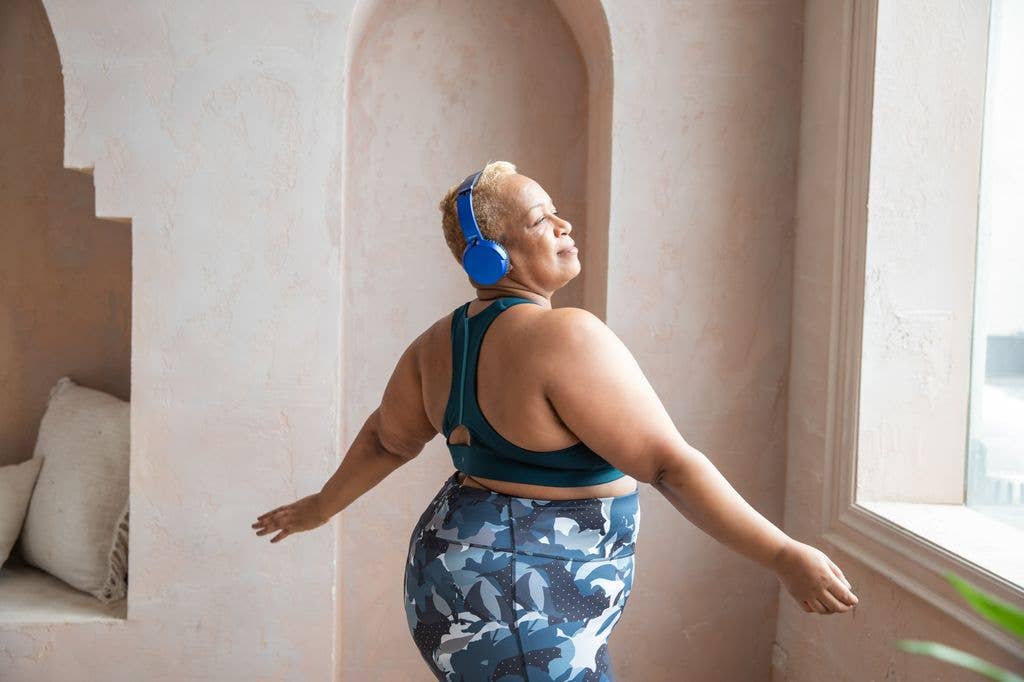
The beauty of this approach is its simplicity. Choose a song that lifts your mood, clear a small space and let your body move naturally. It could be a gentle sway, a full routine or something in between.
The key is consistency. Ten minutes a day can be enough to boost your mood, support your heart and stimulate your brain. Over time, those small bursts of movement can add up to something far more powerful. A stronger body, a sharper mind and a renewed sense of joy.
And perhaps most importantly, a reminder that feeling good is not something reserved for youth. It is something you can create, one song at a time.
Read the full article here