



It has long been theorised that the royals are subject to a set of unwritten beauty rules that they must follow.
Neutral, short nails are one, while avoiding bold lipstick is believed to be another. In the pages of his memoir, Spare, Prince Harry revealed that his father, King Charles, has his own stipulations when it comes to the beauty looks of royal women.
Speaking of the first time he introduced Meghan Markle to his father, Prince Harry wrote of Meghanâs look for the occasion: âHer hair was down, because I suggested she wear it that way. Pa likes it when women wear their hair down. Granny too. She often commented on âKateâs beautiful mane.'â
The Duke of Sussex continued that heâd also had an influence over his then-future wifeâs makeup, noting: âMeg was wearing little makeup, which Iâd also suggested. Pa didnât approve of women who wore a lot.â
Given the way that Prince Harry worded the revelation, noting it was King Charlesâ âdisapprovalâ that influenced the looks of the royal ladies, it would be easy to eye roll at the monarchâs insistence that women in the family employ a less-is-more look, but with the royals so steeped in tradition, Iâll give King Charles the benefit of the doubt and say itâs an overall royal preference than a King Charles-specific one.Â
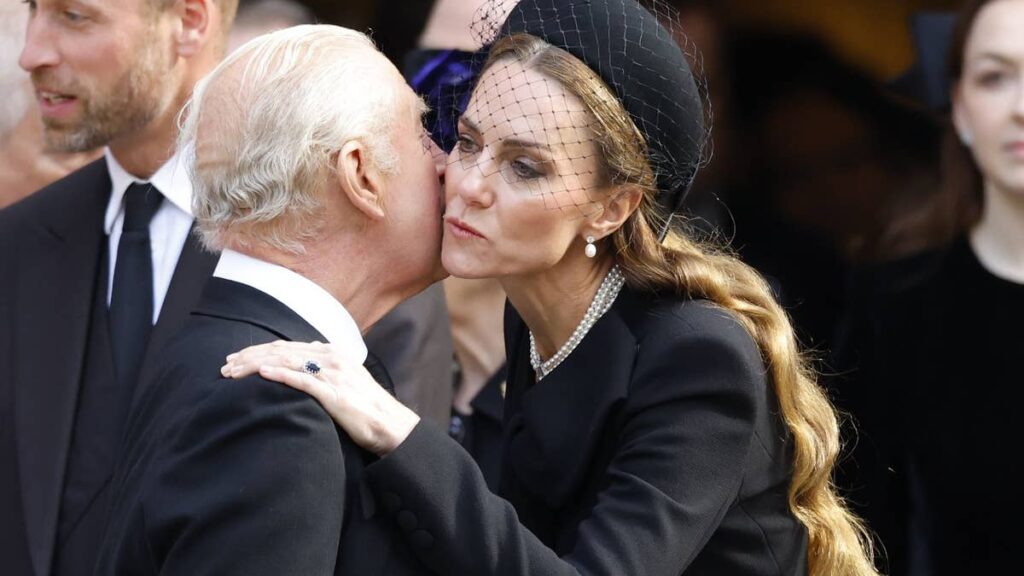
But thatâs not to say that King Charlesâ beauty preferences arenât impacting the women in his life. Picture his wife, Queen Camilla. She never wears her hair up.
His daughter-in-law, Princess Kate, is famed for wearing her hair down â to the point sheâs been criticised for how long it is, with unnecessary comments about her hair being âunprofessionalâ doing the rounds among royal watchers earlier this year. Perhaps knowing His Majesty encourages hair worn down will silence the detractors?
While Iâm sure thereâs no pressure coming directly from King Charles impacting how Princess Kate, Queen Camilla and other working royals wear their hair, when another personâs opinion becomes so familiar that it begins to feel like your own, it can cause issues.
According to Cognitive Behavioural Coach Elizabeth Walker, this is called introjection, which she describes as: âThe unconscious process of absorbing another personâs judgements or expectations and treating them as though they are our own conclusions.â
She continues: âIntrojection is not a conscious decision. It develops gradually, as the views of parents, friends or other influential people begin to shape how we see ourselves and the world around us. Over time, these ideas can become so familiar that we stop questioning where they came from.â
While not inherently an issue, introjection can pull us away from our own authentic thoughts and make us feel unsure of ourselves or cause undue self-criticism if we deviate from the ideas weâve begun to believe. Subtle beauty preferences of others can easily shape how anyone presents themselves over time â sometimes without us even realising it.Â
Overcoming introjection
While the royals may be required to adhere to the preferences of the monarch, if introjection sounds like something impacting your life, Elizabeth says there are ways to overcome it.
âThe first step is becoming more aware of which beliefs are genuinely yours and which ones may have been introjected.
âWhen a critical voice in your head appears, pause and consider where the thought came from. Tracing it back to a specific person or experience can help reveal whether it reflects your own values.â
She says that the language behind these thoughts can offer another clue. âPay attention to the exact words that come to mind when you criticise yourself and ask whether they sound familiar.
âYou may recognise a phrase that was often used by a parent, teacher or someone else whose opinion carried weight. Writing the thought down word for word can make this connection easier to spot, helping you recognise when it may have been inherited rather than formed through your own experiences.â
Read the full article here