




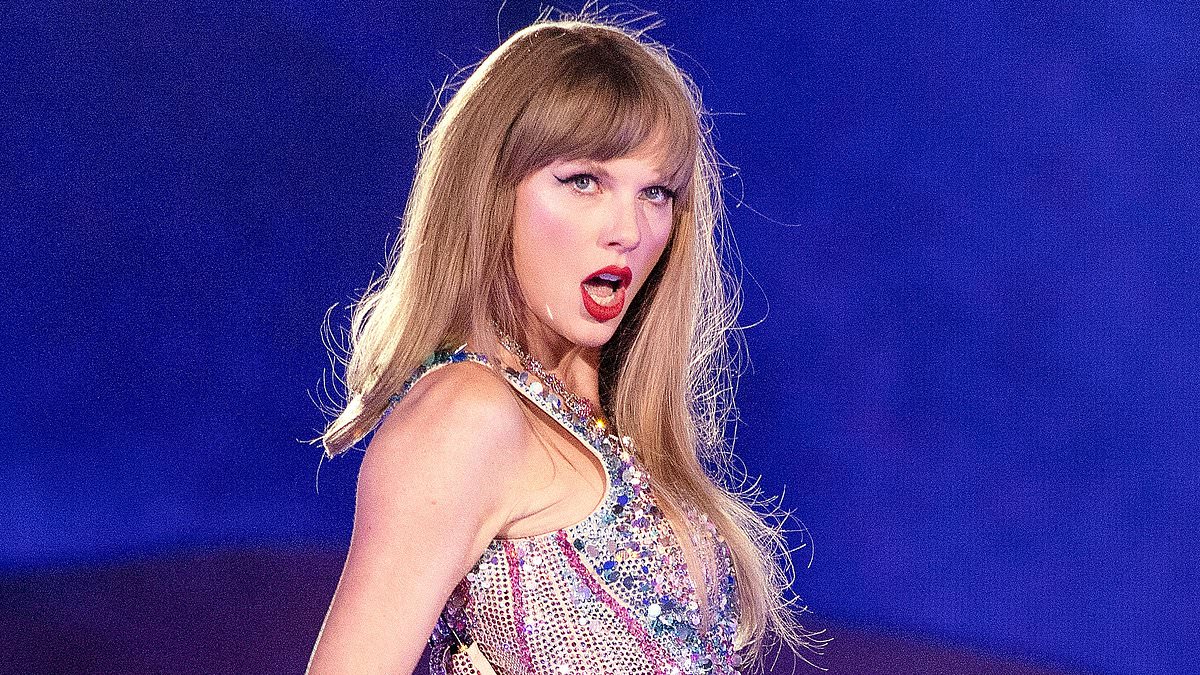

Few topics, in the fickle world of popular culture, have generated more column inches during the past decade than Taylor Swift’s love life.
The 34-year-old singer has not only dated a Who’s Who of square-jawed celebrities since achieving fame in the late Noughties, but has endlessly chronicled their high-profile romances — and sometimes hostile break-ups! — in a succession of hit songs.
Her split from British actor Joe Alwyn last year was, for example, the inspiration for a track called You’re Losing Me. The implosion of her year-long fling with Scottish DJ Calvin Harris a couple of years earlier led to the release of We Are Never Ever Getting Back Together. Harry Styles, who she stepped out with in 2012 and 2013, was the subject of a song called I Knew You Were Trouble.
These songs are an object of fascination to ‘Swifties’, as the singer’s millions of predominately young and female fans are known. And an ever-expanding portion of the internet seems to be devoted to trawling her back catalogue in search of disobliging references to former boyfriends, among them country singer John Mayer and boyband star Joe Jonas.
The last few months have, meanwhile, seen Swift’s whirlwind romance with a musclebound American Football star named Travis Kelce splashed across newspapers, magazines, websites and social media, where she boasts an astonishing 400 million followers.
‘An informed commentator might reasonably describe [Taylor Swift (pictured)] as the world of entertainment’s most high-profile heterosexual,’ writes Guy Adams
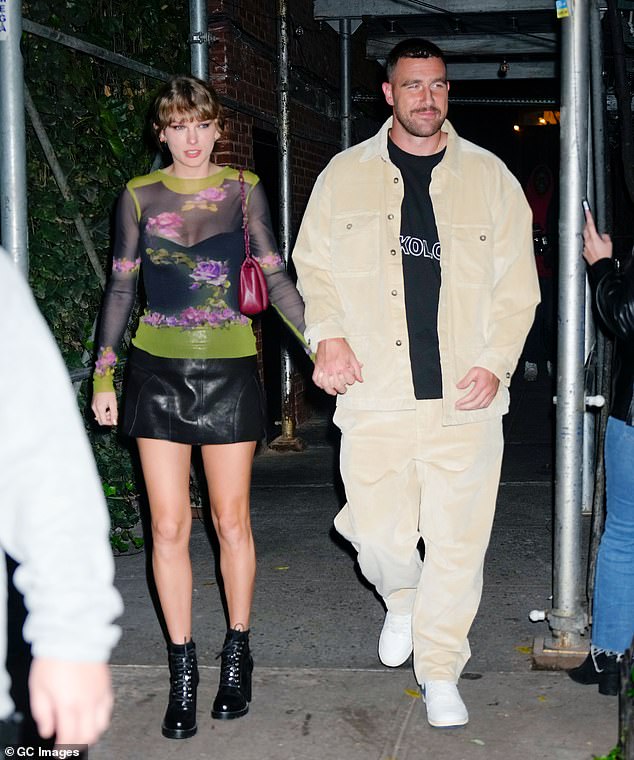
The 34-year-old singer has not only dated a Who’s Who of square-jawed celebrities since achieving fame in the late Noughties
You don’t have to be an expert on show-business to conclude that Swift’s dazzling musical success owes something to her talent for turning her heartbreak over various hunks into chart success.
Indeed, an informed commentator might reasonably describe her as the world of entertainment’s most high-profile heterosexual.
Unless, that is, the informed commentator in question happens to work for America’s best-known newspaper — and the most right-on newspaper in the Western world — the New York Times.
It has found itself at the centre of a surreal controversy this weekend after publishing a 5,000-word essay arguing that, despite her romantic CV, Taylor Swift is actually a secret lesbian.
In a bizarre and, at times, somewhat unhinged article, Anna Marks, who works as an editor on the paper’s opinion section, chronicled various ways in which she appears to believe the singer has attempted to signal her membership of the queer community.
These are, at best, odd. They range from posing for PR photographs in ‘pastel shades of blue, purple and pink’, which Marks informs readers are ‘colours that subtly evoke the bisexual pride flag’, to launching a video on a date in April that has been named ‘Lesbian Visibility Day’.
It is a strange line of argument. And it’s expressed in such ludicrously woke terms that a casual reader could be forgiven for wondering if the whole thing is some sort of spoof.
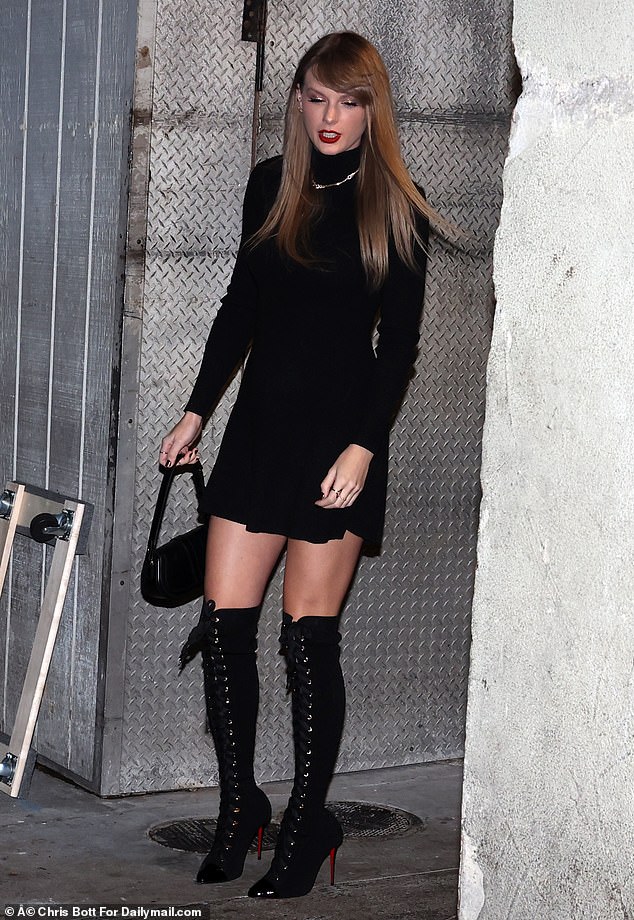
Taylor Swift, 34, wowed in a black mini dress as she enjoyed a girls’ night out with her friends Brittany Mahomes and Lindsay Bell in Beverly Hills on Saturday
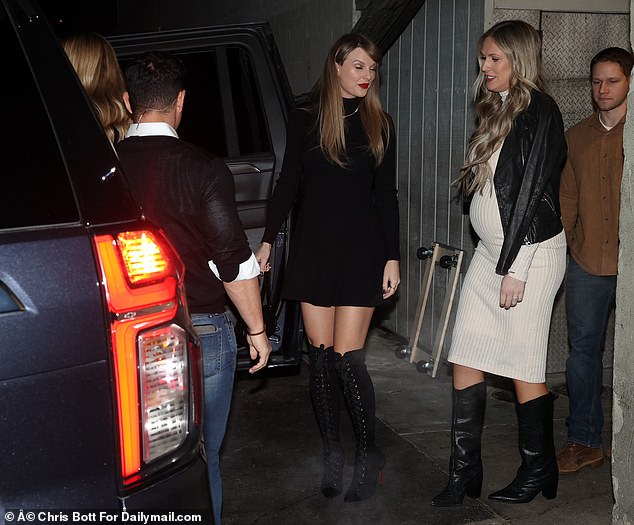
The singer showed off her svelte model figure and flaunted her long toned legs while donning stylish thigh-high heeled boots (pictured with Lindsay)
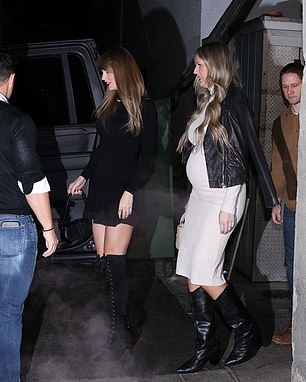
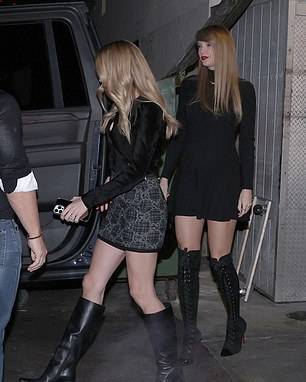
Swift and Bell were pictured stepping into a car last night ahead of their beaus’ football game
Little wonder, then, that the article has met with understandable criticism. Speculating about the sexuality of a public figure is not only highly unusual but, in the view of most people, distasteful.
And were Swift a lesbian — and the evidence is, let’s face it, almost non-existent — the NYT would be guilty of ‘outing’ her.
Recent days have seen significant pushback. An individual close to the singer described the article as ‘invasive, untrue and inappropriate’, and Swifties have been calling for Marks to be sacked.
Critics say the article fails to mention Swift’s own remarks on the subject of her sexuality.
Describing her concerts as ‘safe spaces’ for sexual minorities, she told Vogue in 2019 that she was proud to be a heterosexual ally of the LGBT community.
‘Rights are being stripped from basically everyone who isn’t a straight white cisgender [a person whose gender identity corresponds with their sex at birth] male,’ Swift told Vogue. ‘I didn’t realise until recently that I could advocate for a community that I’m not a part of.’
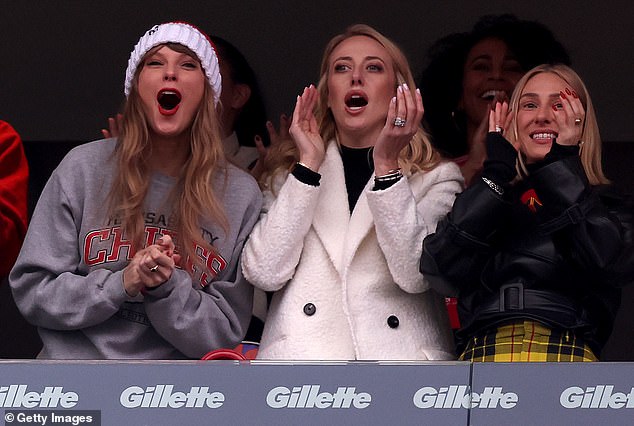
Taylor Swift, Brittany Mahomes, and Ashley Avignone cheer after a Kansas City Chiefs touchdown during the second quarter against the New England Patriots at Gillette Stadium in Foxborough, Massachusetts, on December 17, 2023
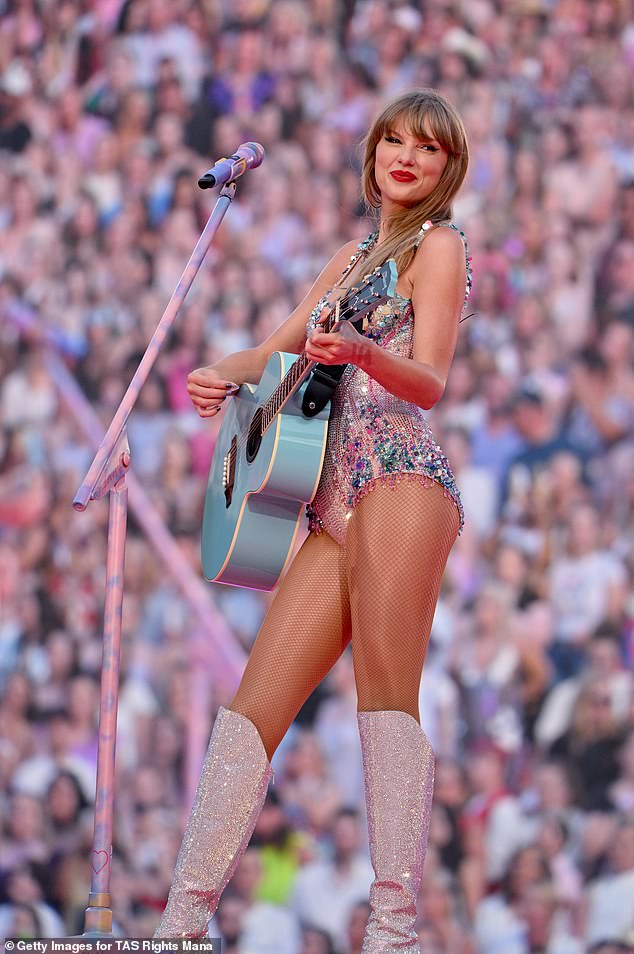
Taylor Swift performs onstage during night two of Taylor Swift | The Eras Tour at GEHA Field at Arrowhead Stadium on July 08, 2023 in Kansas City, Missouri
The New York Times has, in other words, given over several of its hallowed pages to unevidenced claims about a public figure’s sexuality that are likely to be completely untrue.
Where the controversy over this now leads is anyone’s guess. But away from the excited world of Swifties, the wider context of this row is perhaps significant.
For it’s not the first time, in recent weeks, that the reputation of the NYT, a supposed bastion of journalistic integrity, has suffered due to its apparent surrender to the forces of political correctness — in this case the LGBT+ lobby.
Just before Christmas, a former senior executive on the paper named James Bennet, who previously edited the op-ed slot in which the Taylor Swift article was published, accused his former employer of having gone from being a vibrant news outlet to ‘an environment of enforced group-think’.
Bennet, who now works for The Economist, described how he was ‘chased out’ of the paper after publishing an opinion piece by Republican senator Tom Cotton in the wake of the killing of George Floyd, a black man, by a white police officer in 2020.
The article, which was headlined Send In the Troops, called for the army to be used to tackle criminal rioting across the U.S. It sparked quite the backlash, particularly among staff at the NYT.
They didn’t just disagree with Cotton’s line of argument but took the view that the newspaper’s office was no longer a ‘safe space’ because his opinions had been allowed into the pages of the title.
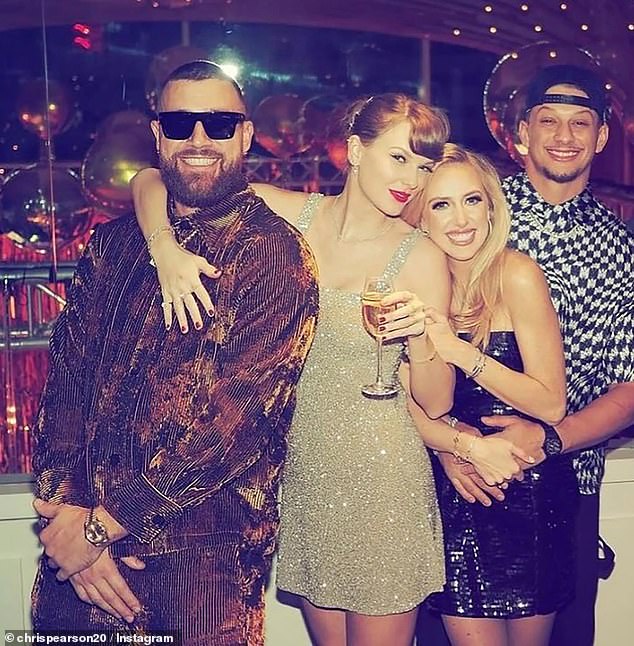
The loved-up couple rung in the New Year together with friend Brittany and Patrick Mahomes

Taylor Swift was seen arriving at Arrowhead Stadium on December 31 to support her man
‘The publisher called to tell me the company was experiencing its largest sick day in history; people were turning down job offers because of the op-ed, and, he said, some were quitting,’ Bennet wrote, adding that at one point, Left-wing members of staff argued that all articles written by conservatives should henceforth have a ‘trigger warning’ attached, in case readers were traumatised by reading something that conflicted with their world view.
As the furore escalated, he was called by the publisher, Arthur Sulzberger, and told to resign.
‘I got mad, too, and said he’d have to fire me. I thought better of that later. I called him back and agreed to resign, flattering myself that I was being noble.’
Bennet’s article concludes, witheringly, that like many centre-Left outlets, the NYT has gone from supporting ‘one side of the national debate’ to ‘an impulse to shut debate down altogether’.
During his final months, he said, the ‘bias had become so pervasive’ it was ‘unconscious’. He also criticised the paper’s virtue-signalling staff for failing to live up to its ‘claim to value diversity’, saying in 2016 the opinion department ‘did not have a single black editor’.
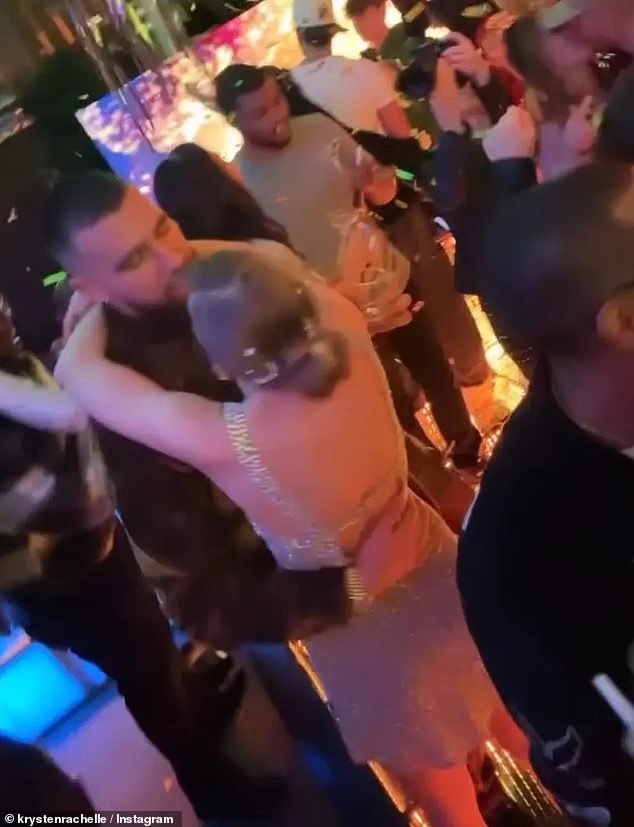
This comes amid speculation among fans that Travis told Taylor ‘I love you’ in a viral video of the pair sharing a kiss at midnight
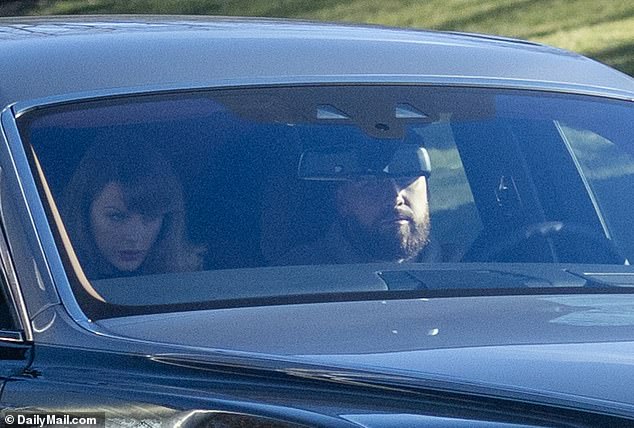
The loved-up couple have spent plenty of time together in Kansas City over the past two weeks
More recently, the NYT has illustrated its point via its coverage of another potent skirmish in America’s ongoing culture wars: the resignation of Harvard president Claudine Gay.
Gay, the daughter of Haitian immigrants, was at the centre of heated debate before Christmas after an appearance before Congress in which she was grilled about campus anti-Semitism.
Asked if calling for the genocide of Jewish people would breach Harvard University’s code of conduct, she replied that it would ‘depend on the context’. She also failed to state that Jewish students had a right not to feel unsafe at University.
In the ensuing controversy, critics scrutinised Gay’s academic publications, discovering that she had plagiarised nearly 50 passages. This appeared to break Harvard’s own policy, which bans not only verbatim copying but also replicating ‘bits and pieces’ from other sources without adequate attribution.
Gay was eventually forced to resign, though has been allowed to keep her $900,000 salary.
The NYT decided to champion the shamed academic by publishing an unapologetic article by her in which she claimed that being forced to resign for breaking plagiarism rules was ‘a single skirmish in a broader war to unravel public faith in pillars of U.S. society’.
Mara Gay, a member of the newspaper’s editorial board, called the whole thing an ‘attack on academic freedom’, telling a TV interviewer: ‘This is an attack on diversity, this is an attack on multiculturalism, and on many of the values that a lot of us hold dear.’
Those ‘values’ now seem to involve attempting to ‘out’ Taylor Swift as a secret lesbian. To cite the popstar’s own lyrics: ‘Karma’s gonna track you down.’ So perhaps this deeply unbecoming chapter in America’s most prestigious newspaper is not over yet.
Read the full article here