




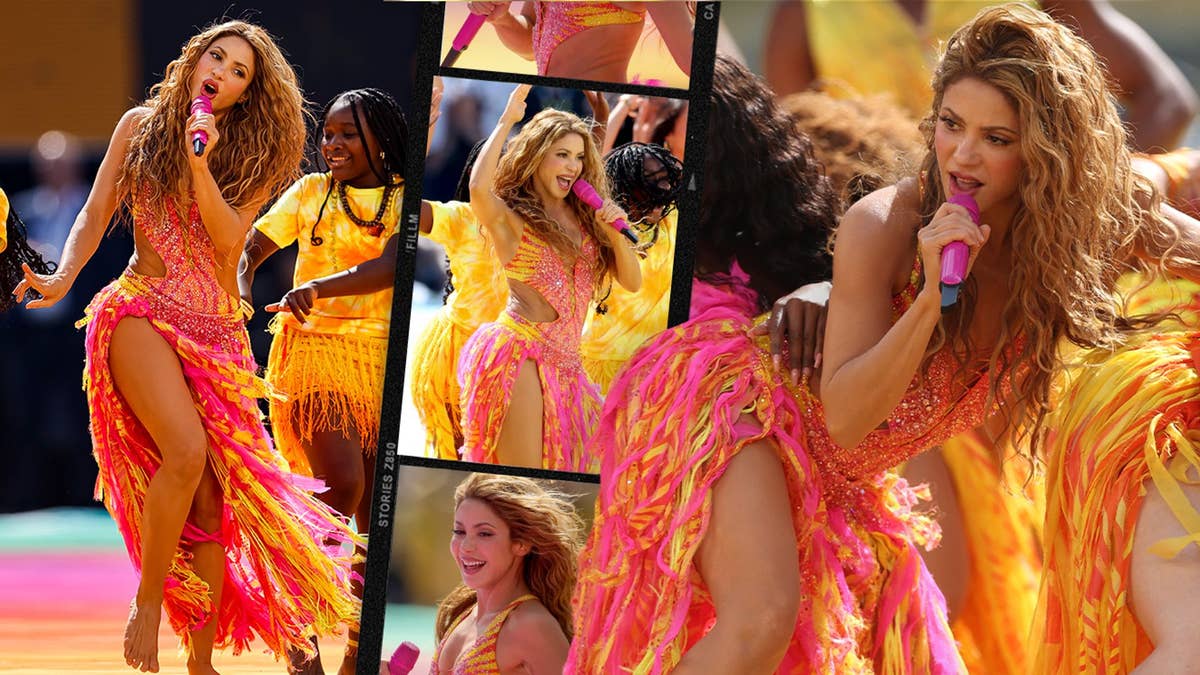

Watching the World Cup final on Sunday, I was perturbed to find that the bar I was in turned off the halftime show, switching to expert commentary rather than the star-studded performance.
I begged the bartender to switch the channel back, and she flipped back to the (somewhat questionable) show just in time for me to bear witness to the fitness that is Shakira, who was dancing up a storm on the pitch in New Jersey, New York, with her hips twisting, writhing and flowing in a mesmerising manner.
At 49, the Colombian musician has flexibility that many of us can only dream of, with her wiggly dance moves impressive from someone at 19, let alone someone who turns 50 next year – we should have believed her when she told us her hips don’t lie, way back in 2005.
Shakira’s midlife mobility
“Lucky I have strong legs like my mother,” Shakira sang in her 2001 breakthrough single, Whenever, Wherever, but it’s not just her strength that allows the performer to move in such a unique way.
As well as an intense fitness routine of cardio and weight training (stay tuned on HELLO!, I have a piece on the topic dropping tomorrow), staying mobile is key to Shakira’s flexibility and fitness – especially as her 50s draw closer (not that you’d know that from her undeniable energy and toned physique).
 © Getty Images
Staying mobile in midlife
While most of us don’t need the mobility to lead a dance troupe on a world stage dressed in a fringed Roberto Cavalli number, mobility is key in allowing us to do everyday tasks, from getting off the sofa, carrying our shopping and springing out of bed in the morning – and it can decline rapidly as we age.
HELLO! spoke to exercise experts Move The Gap for their advice on how to move like Shakira in midlife and beyond, with 67-year-old fitness professional Monika Akabusi explaining: “Mobility exercises become more and more important as we age. In order for our joints to move freely and without pain, we need to make sure we maintain a healthy range of movement for all of our joints.”
On why our mobility might decrease as we hit midlife, Monika adds: “Our movement can change either due to general reduced physical activity, increased inflammation, stiffness within our joints or a decline in muscle mass. It can even be affected by certain types of medication, loss of hearing or reduced confidence in our ability.”
 © Getty Images
When to start working on our mobility
We should be mindful of mobility as early as our 30s, cautions personal trainer Shakira Akabusi. “Whether due to longer periods of sitting at a desk or nursing a baby, or because of poor postural habits, once an area becomes tight, we often see a ripple effect across the body, causing discomfort or pain in other areas.
“Using hip flexor stretches can help to ease tension in and around the hips and thereby trigger a ripple effect of less tension across the lower back as well.”
Menopause expert Kate Rowe-Ham adds: “One of the most common complaints I hear from women I work with is stiffness, especially in the shoulders. I remind them that this isn’t weakness or failure, it’s biology.
“As oestrogen levels drop, we lose muscle mass and joint flexibility. Women are often surprised at how quickly their range of motion improves when they practise simple yet effective exercises, such as arm circles, wall slides, resistance band pull-aparts, and chest stretches regularly. Adding light strength work is equally important as it stabilises the joints and prevents the slow decline that sneaks up over time.”
Monika’s best advice is simple: “Keep moving.”
How to move like Shakira
To ensure your hips stay mobile, a hip opener will work wonders to build a range of motion in your lower body.
Counteract sitting and slouching (two things we can’t imagine Shakira ever doing) with cat-cow movements to strengthen your back.
Many in midlife are struck by the dreaded ‘frozen shoulder’ (a painful affliction which sees the lining of your shoulder socket become inflamed and thicken, causing it to act like a wall, stopping the joint from being able to move freely). This simple move will enable free and easy movement in your shoulders, allowing you to shimmy like Shakira.
Spinal twists will make all the difference if you want to wind your hips like Shakira – or simply counteract tightness from sitting for long periods of time.
With three dates remaining on her world tour, I look forward to seeing more of Shakira’s age-defying moves on stage – how do you stay mobile? Let me know in the comments…
Read the full article here