




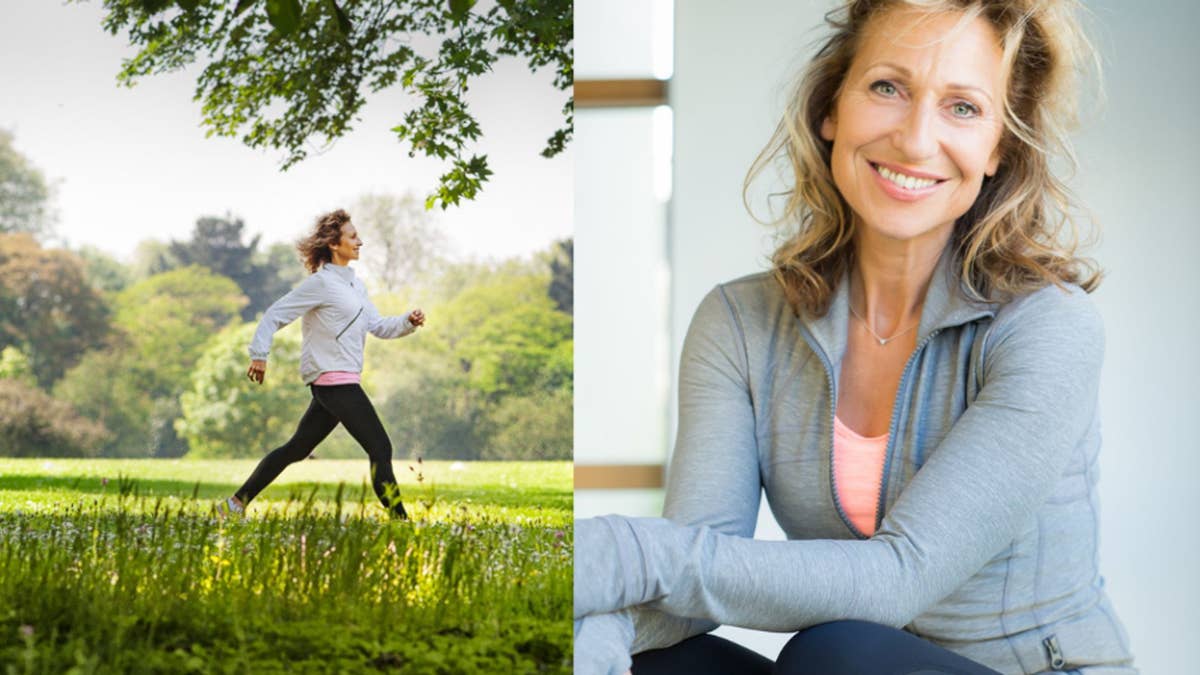

If your knees complain after a walk, your lower back tightens halfway around the park, or you feel heavy and tired rather than energised during your daily stomp, it’s no wonder that walking can feel like a chore rather than a pleasure.
Add to that the frustration of being told how good for you walking is, and guilt over not hitting 10,000 steps a day and you’ve got a recipe for trainers gathering dust, neglected by the front door.
We’ve got good news, though. We’re not lazy or idle if we can’t find the motivation to walk each day. According to sports scientist Joanna Hall, founder of the WalkActive app, it could be our walking technique that is hindering us – and if we can get that sorted, there’s no stopping us. “If you’re slumping, landing heavily, or holding tension, walking can feel harder than it needs to and that’s when discomfort and frustration creep in,” Joanna says.
How to walk well
“A few small adjustments can make walking feel lighter, smoother and far more energising,” Joanna enthuses. “When walking feels good in your body, it becomes something you want to repeat, and that’s where the real results come from.”
Joanna advises that rather than focusing only on steps or speed, we should learn to ensure our whole body works together when we walk; if our muscles, joints, connective tissue and fascia work as one, movement feels natural, efficient and joint-friendly. (For the uninitiated, the fascia is sometimes described as the body’s “second circulatory system”. When it’s healthy and well-supported, it acts like a natural spring, helping you move more fluidly and with less effort.)
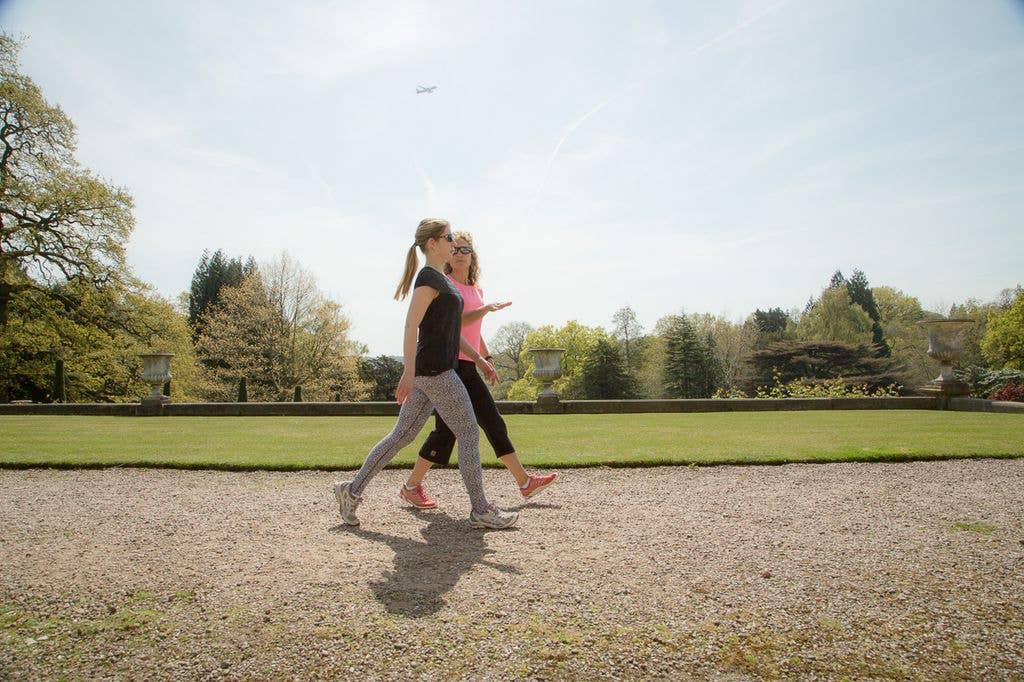
Here, Joanna shares practical do-this-today tips to help you get more from your walking.
1. Focus on technique, not distance
“Most people try to walk more or faster before they’ve learned to walk well,” says Joanna. “Start with posture, because it underpins comfort, efficiency and repeatability, and it amplifies results across everyday life without needing more exercise time.”
She advises thinking of your body in three dimensions: height, width and depth, and aim to fill each one as you walk.
- Height: Feel tall through your spine so you’re not collapsing when you get tired,
- Width: Allow your shoulders to widen so breathing feels easier and your chest isn’t cramped.
- Depth: Let the stride length come from behind rather than reaching forward with your head, which can increase back strain.
2. Release tension
Upper-body tension is one of the biggest hidden stride blockers, says Joanna. “When the jaw, shoulders and hands are tight, your stride shortens and your body works harder than it needs to,” she explains. “Many people don’t realise there can be a link between a stiff shoulder girdle (common after desk days) and tightness through hips and pelvis, which can reduce smooth stride and impact your pace.
“Unclench your hands and soften your jaw. About five minutes into your walk, lift your arms up until they are fully extended over your head and walk eight to ten strides this way, then relax your arms down. Repeat two or three times. “It’s a surprisingly effective way to open the body and improve stride length.”
3. Walk lightly
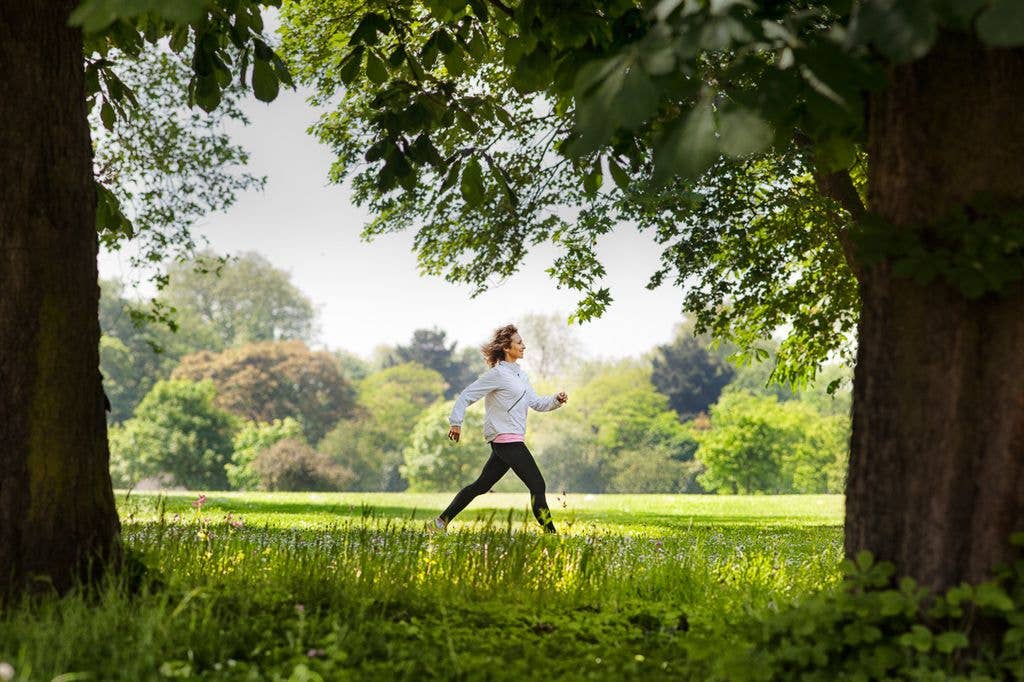
Heavy thudding steps can place unnecessary stress on knees, hips and the lower back, making walking feel jarring rather than energising.
“For one to two minutes, aim for quieter footsteps, as if you’re walking on something delicate,” advises Joanna. “The goal is controlled, smooth foot contact rather than stomping. Many people notice walking immediately feels softer through the joints.”
4. Prepare your body before you set off
“Stiff ankles can affect everything from foot placement to knee tracking and hip movement, and they’re often overlooked. A small amount of mobility work can make your first five minutes feel far better.”
Before you set off, spend 60 seconds mobilising your ankles. “Gentle ankle circles and rising up and down through the whole foot and hold balancing on your toes can help,” Joanna suggests. “Pay particular attention to your big toe, middle toe and little toe to help feet roll through more smoothly and encourage better alignment as you move.”
5. Find your natural pace
Many people either walk too gently to gain fitness benefits or push too hard and end up sore or breathless. Joanna’s approach is to use rhythm to help you find an effective pace without forcing speed.
“Put on a song with a steady beat and walk in time with it for five minutes. Keep posture first, pace second. If your body tenses, ease off slightly but keep the rhythm. Think steady, controlled and expansive (as in tip one), not a power march,” she says.
6. Consistency over intensity
If your goal is better health, energy or body confidence, what matters most is what you can repeat. “A short walk done well is far more powerful than an occasional big effort,” Joanna says.
“Set a 10-minute timer and focus on just one cue, be it tall posture, relaxed shoulders, or quiet feet. Keep it simple and repeatable. That repeatability is what builds fitness and wellbeing over time.”
 © Getty
7. Be realistic
Walking only works if it becomes part of your routine. “Think of walking as your foundation,” says Joanna. “When you elevate how you walk, the benefits ripple into every part of your life.
“Set a realistic minimum walk for each day, even if it’s just 10 minutes. If you do more, that’s a bonus. The key is consistency, because it keeps the habit alive through busy weeks and low-energy days.”
The takeaway
Step count can be motivating, but technique is what elevates your walking to feel good enough to repeat. And repetition is where the benefits truly build.
“When you walk well, everything changes,” Joanna says. “You feel better in your body, you move with more ease and you start to enjoy it. That’s when walking becomes something that truly supports your health, your confidence and your life.”
Read the full article here