



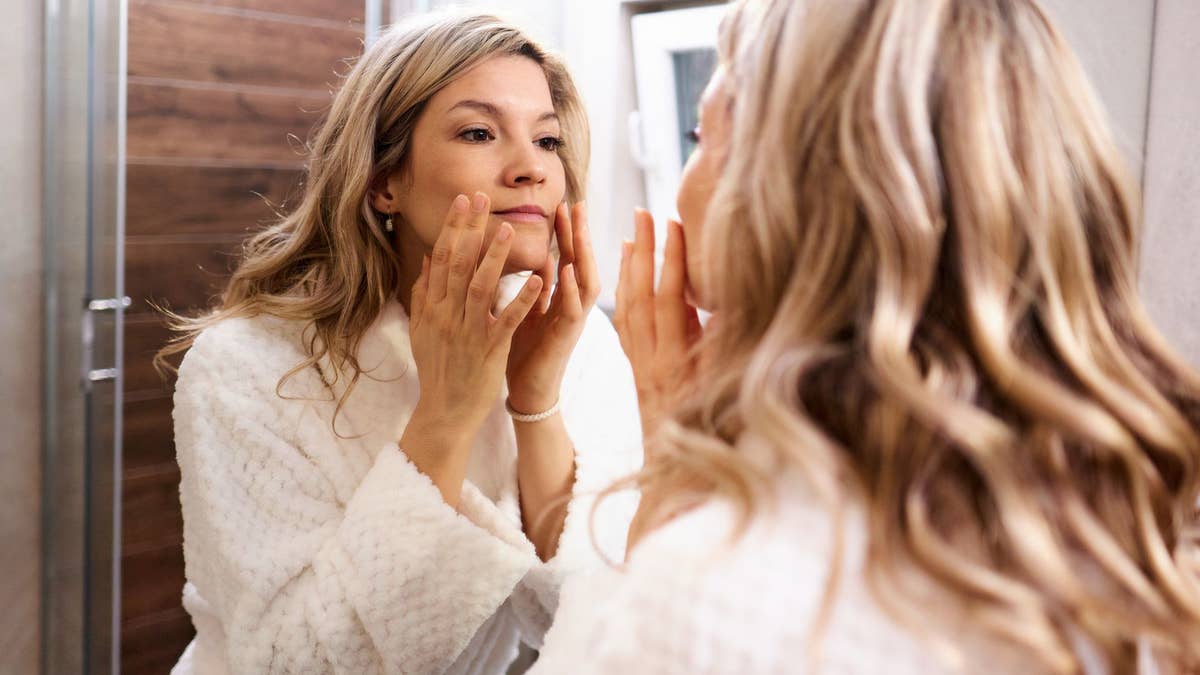

Many women in their 40s look in the mirror and feel that something has changed, though they can’t always put their finger on exactly what it is. Our skin looks duller, our faces look tired even after a good night’s sleep, and our jawlines lose definition.
It’s easy to blame stress for this sometimes shocking evolution of our skin – or maybe we just think it’s because we’re going through a rough patch. However, behind many of these skin changes are factors that rarely get the early attention they deserve: perimenopause and menopause.
Dr Rita Sêco, a specialist in cosmetic medicine, explains that one of the first signs is often the loss of luminosity and firmness of the skin.
“Many women describe their face as looking tired even when they’re well-rested, or feel their skin has simply lost its glow,” she points out.
The expert explains that during the first five years of menopause-related hormonal changes, a woman can lose around 30% of her skin’s collagen.
This is a relatively sudden drop that can transform your face’s appearance in a short space of time, so many of us look for a quick fix. But, warns Dr Sêco, if you’re over 40, be wary of fillers because they might give you the opposite effect of what you’re looking for.
The filler mistake: Why adding volume makes menopausal sagging look worse
When the face begins to lose firmness, many women automatically think about replacing lost volume. However, this is where the specialist sees one of the most common mistakes made in the clinic.
A loss of firmness and a loss of volume are two entirely different issues, cosmetically speaking
“Menopausal sagging isn’t down to a lack of volume,” she explains. In her experience, trying to correct droopy looks by overdoing it with fillers can have the exact opposite effect.
“Adding volume to a face that is already sagging doesn’t lift it; it just makes it look heavier, wider and, paradoxically, older,” she explains.
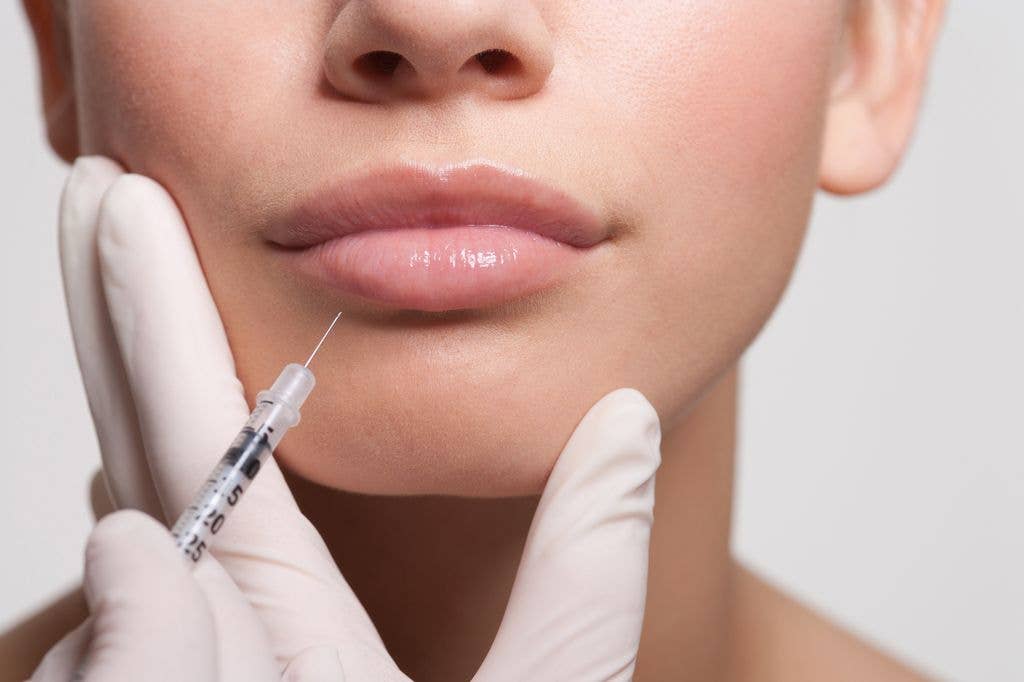
While fillers can make sense in specific areas where there is a genuine loss of support, the specialist recommends a change of focus once sagging sets in. “When the problem is sagging, we need to think about treatments that boost collagen production,” she explains.
These include biostimulators and specific energy-based devices designed to improve skin firmness and quality. The goal, she argues, is not to pack the face with volume, but to achieve “a face that has become firmer, with much better skin quality, without making it look puffy or overfilled.”
 © Getty Images
How hormonal shifts alter your lower face and jawline
Although changes affect the whole face, certain areas are especially sensitive to a drop in hormones. One of the main culprits when it comes to changing looks is the lower third of the face – the jawline loses definition, the neck begins to sag and the facial contours no longer look as sharp as they used to.
“Adding volume to a face that is already sagging doesn’t lift it; it just makes it look heavier and wider”
The cheekbones change, too. They lose the volume and structure that previously helped lift the face, creating a generally droopy appearance. At the same time, the eye area is transformed. “The eyelids become heavier, the eyebrows drop slightly and the area around the eyes loses firmness,” says Dr Sêco.
On top of this, according to the doctor, the skin becomes “thinner, drier, more sensitive and prone to dark spots,” as “hormonal changes also affect melanin production.”
The specialist notes that “overall sagging is the common denominator here,” and that “the underlying cause is often the same: the drop in oestrogen.”
Why skin quality matters more than wrinkles after 40
While wrinkles are often seen as women’s ultimate anti-ageing concern, Dr Sêco explains that priorities are changing. “Fine lines are the usual obsession but they’re the things that should worry us least,” she says.
 © Getty Images
Firmness, texture, an even tone and luminosity have become the new benchmarks for healthy skin. And it isn’t just reproductive hormones that influence this process. Dermatologist Sabrina Guillén Fabi—co-founder of XOMD, a skincare brand focused on the impact of hormonal balance, and one of the most respected cosmetic dermatologists in the US—notes that cortisol levels also rise with age.
“As we age, rising cortisol levels trigger increased inflammation in the skin, which contributes to skin ageing,” she explains. According to Dr Fabi, this phenomenon causes cells to work less efficiently, accelerates the breakdown of collagen, and weakens the skin barrier.
Ultimately, what determines whether a face looks youthful or aged isn’t a few wrinkles, but the overall quality of the skin
Dr Sêco has noticed a distinct shift in her own clinic, with more and more patients asking for treatments that improve skin quality rather than procedures designed to alter facial volume or structure.
This trend also explains the rise of preventive treatments among younger women. At 35, the goal is usually to maintain collagen and skin quality. At 50, especially after the menopause, the challenge is to recover some of the lost density and slow down a biological process that accelerates with the hormonal drop.
 © Getty Images
The overriding trend is no longer about trying to look ten years younger; it’s simply about having healthier, and healthier-looking, skin. As Dr Sêco sums it up: “We’re now in an era in which skincare is viewed as a matter of overall health.”
She reminds us that the face that ages best isn’t the one transformed by tweakments, but the one that maintains its unique identity while gaining health, quality and balance over the years.
Her advice is clear: use a daily SPF as well as a good antioxidant like vitamin C – and when it comes to treatments, skip the fillers and look to those designed to stimulate collagen for best results.
Read the full article here