




The question of whether fashion can be considered art continues to divide the industry. While leading figures such as Anna Wintour argue that the two are distinct mediums (“Fashion does not exist in a vacuum”), prompting others to echo the sentiment (Karl Lagerfeld – “Art is art, fashion is fashion”), many of today’s foremost designers consistently challenge this notion.
Having simmered for a few years, the debate boiled over upon the announcement of the Met Gala 2026 theme – Costume Art. The concept examines the symbiotic relationship between fashion and art, with the exhibition (taking place after Ms Wintour’s celebrity-studded bash on May 4) featuring approximately 400 objects from The Met’s vast collection – a colourful melting pot of artefacts.
Courtesy of curator Andrew Bolton, ancient Greek vases will exist alongside archival punk Vivienne Westwood pieces, sculptural Henry Moore designs and avant-garde Comme Des Garçons ensembles – creating a visual conversation for spectators to follow and dissect.
Those with an aversion to philosophical chatter, feel free to scroll on now because the fashion-as-art deliberation is surprisingly abstract – at least according to the scholars. Many historians take issue with the word ‘fashion’ itself. Fashion acts as a blanket statement, an umbrella term that incorporates subsections such as couture, luxury, fast fashion and costume. The latter, the focus of this year’s Met Gala, has roots in theatre and historical dress codes (think sumptuary laws that acted as a social costume) – a highly technical corner of fashion study.
High street and luxury fashion, however, have long been dismissed as a subject worthy of extensive research, according to Karen Hanson in her article Dressing Up, Dressing Down: The Philosophic Fear of Fashion. Academic discourse has long fixated on Elsa Schiaparelli’s relationship with Salvador Dalí, with art historians favouring deep dives into surrealism’s enigmas over a more considered examination of the garments themselves. But, in doing so, scholars have ignored the subversive, technology-driven work of designers such as Issey Miyake, Junya Watanabe and Iris Van Herpen, who continue to blur the line between fashion and ‘living’ art.
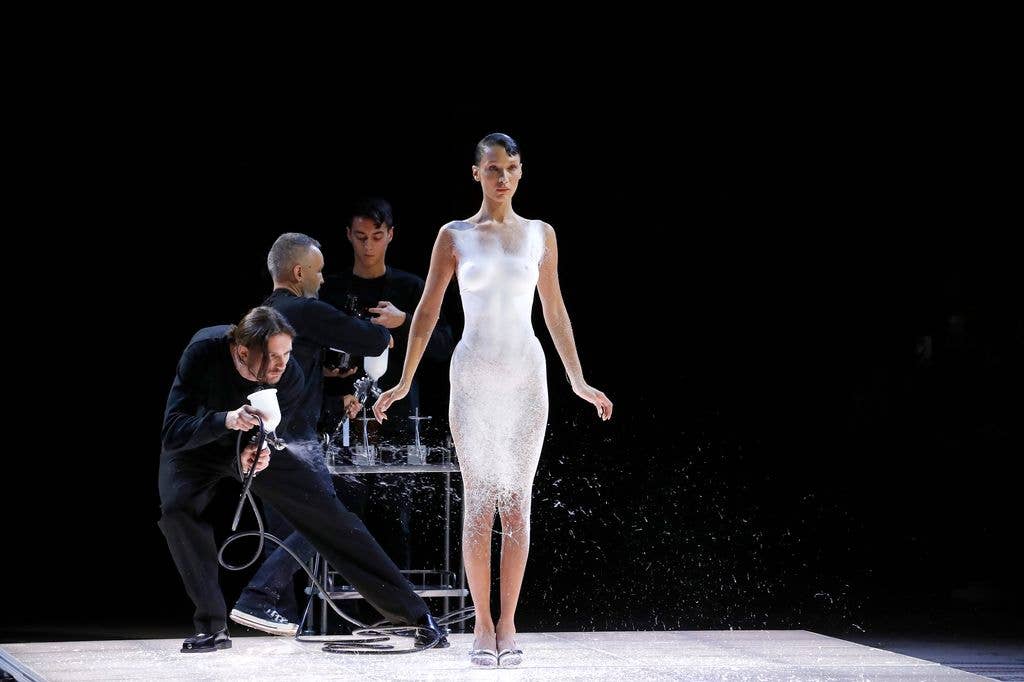
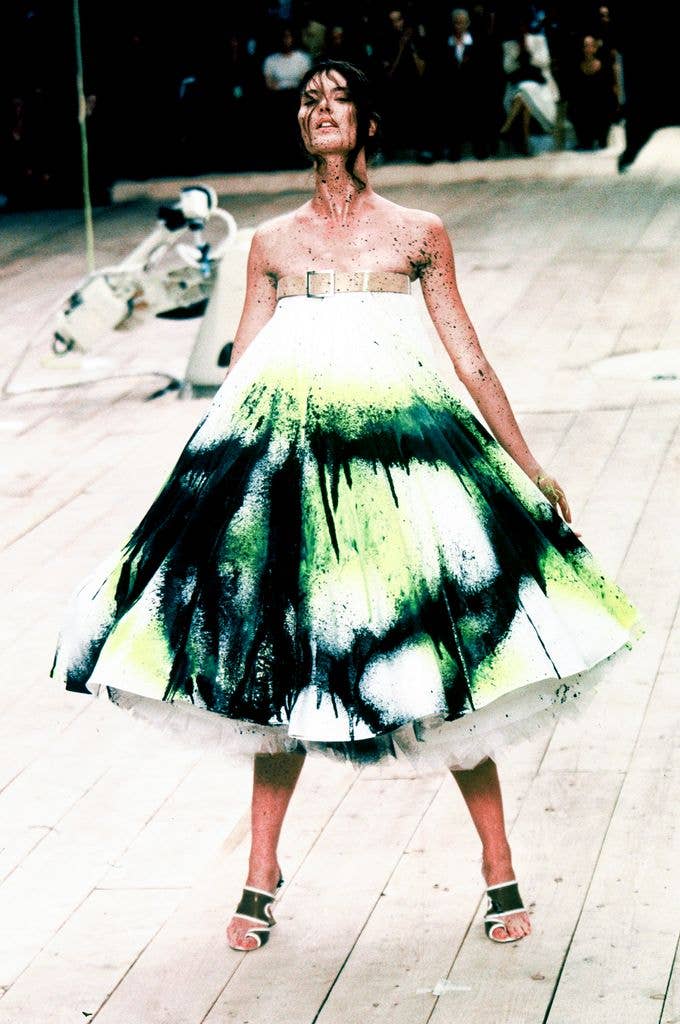
Not forgetting the role of performance art within the fashionscape. Shalom Harlow being spray-painted by robots for Alexander McQueen’s ground-breaking spring/summer 1999 collection (more on this below), a display later reimagined by Coperni for the brand’s spring/summer 2023 runway in which Bella Hadid was mechanically sheathed in a polymer-based liquid to form a dress.
 © Getty Images
The debate rages on – as would this article if word counts didn’t exist. While the stars gear up for a night of spectacle on the first Monday in May, I’ve decided to put my art history degree to good use and double down on the geeky details for fellow culture vultures to pore over. From on-the-nose references à la Moschino to subtle artistic flexes, below you’ll find twelve times art infiltrated the runway. As to whether or not fashion and art are one and the same? That’s up to you – but perhaps this roundup can help you reach a conclusion.
When art inspired the runway:
 © AFP via Getty Images
Yves Saint Laurent Autumn/Winter 1965 Haute Couture
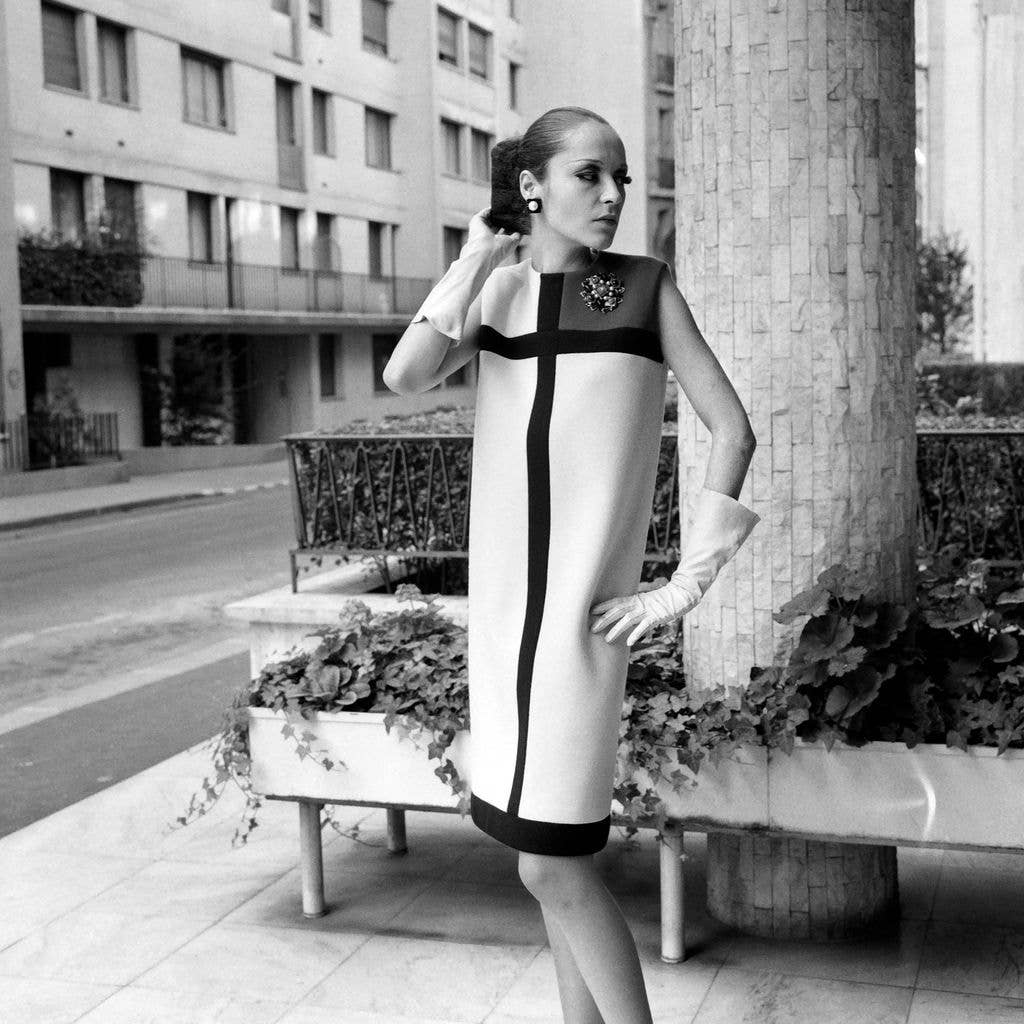
In 1965, Yves Saint Laurent honoured Piet Mondrian with a series of cocktail dresses that echoed the artist’s signature compositions for his autumn/winter runway offering. Defined by clean silhouettes, sharp geometric paneling and striking blocks of colour, the collection paid homage to the iconic Neoplasticism designs of the artist.
 © Gamma-Rapho via Getty Images
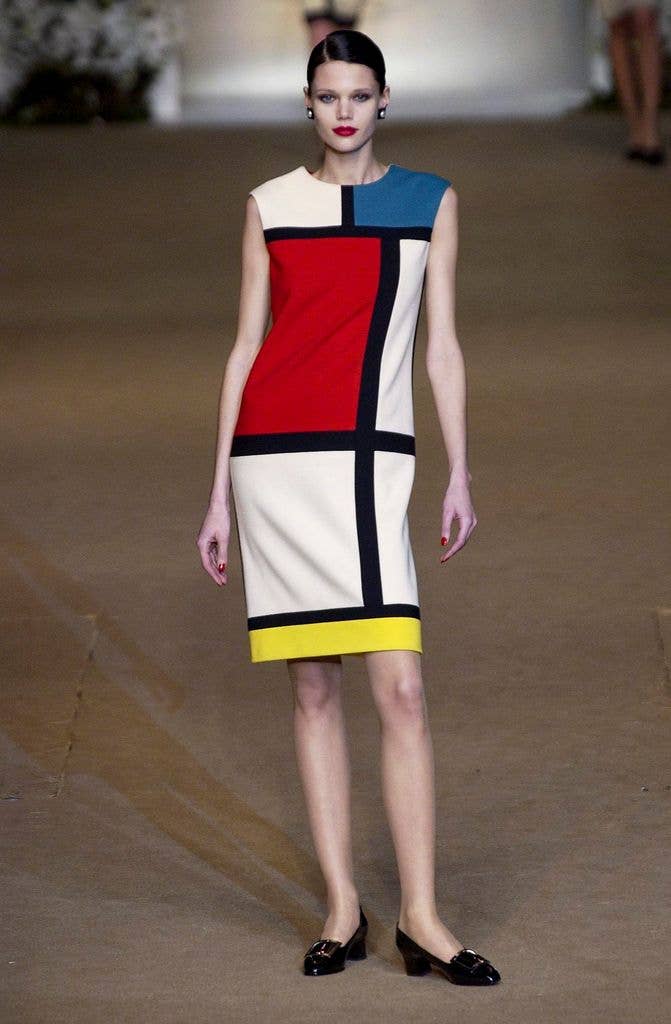
Yves Saint Laurent Spring/Summer 2002 Haute Couture
For his last haute couture collection at he maison, Yves Saint Laurent resurrected The Mondrian Dress – modelled here by Diana Gartner. The haute couture spring/summer 2002 retrospective show, hosted at the Centre Pompidou in Paris, was a touching ode to the designer’s four-decade career.
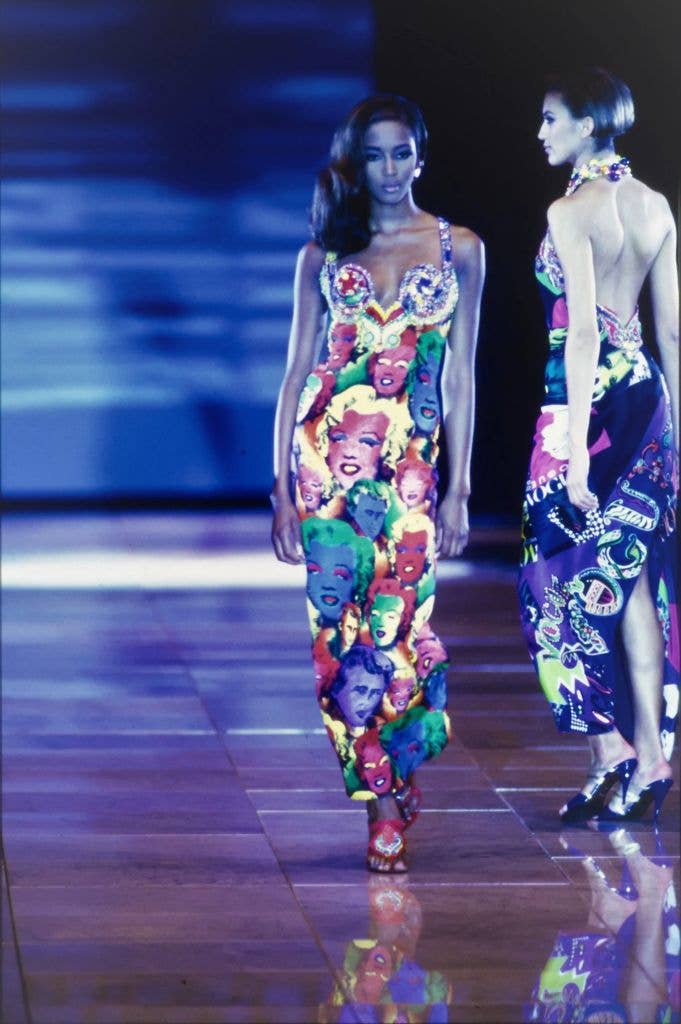
Versace Spring/Summer 1991
Gianni Versace channelled his love for art for the Versace Spring/Summer 1991 collection – taking inspiration from Andy Warhol’s signature pop art style of the 1960s. Naomi Campbell took to the runway in a gown featuring Warhol’s iconic screen prints of Marilyn Monroe and James Dean.
 © AFP via Getty Images
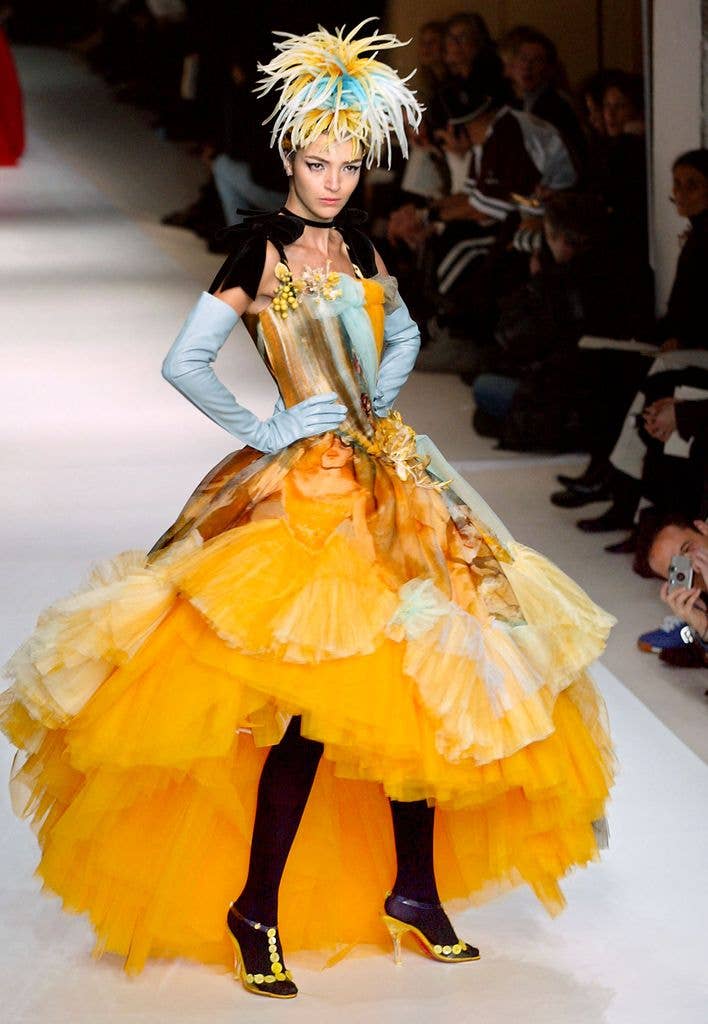
Jean Paul Gaultier Spring/Summer 2003 Haute Couture
A vibrant celebration of Degas’ famous ballerinas, Jean Paul Gaultier’s spring/summer 2003 couture collection married fanciful, Victoriana silhouettes with Impressionist masterpieces.
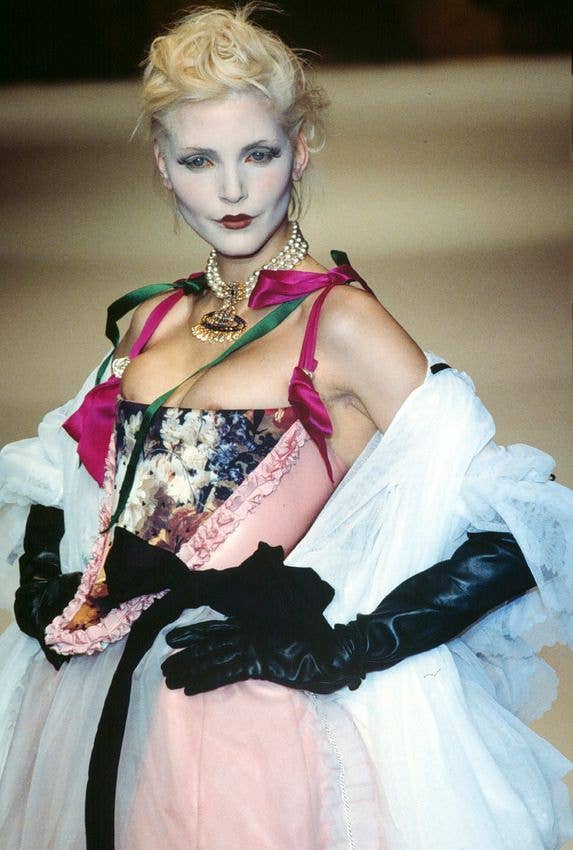
Vivienne Westwood Autumn/Winter 1995
Vivienne Westwood often produced disruptive collections stepped in art historical reference. The designer’s autumn/winter 1995 offering was no different – spotlighted her signature corsets printed with still life artworks across the bust.
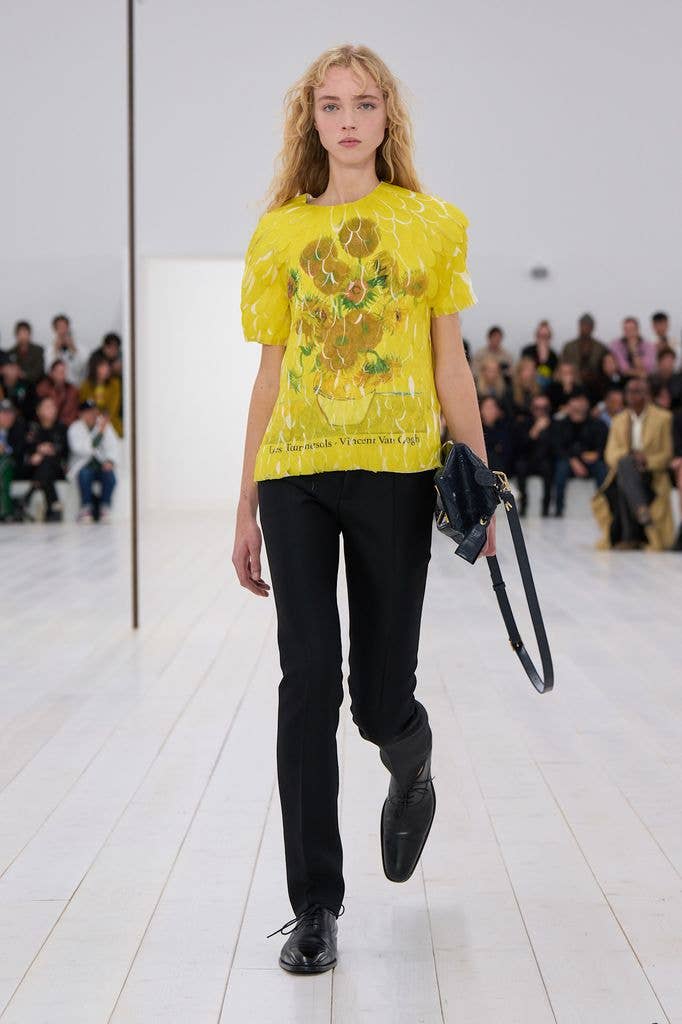
Loewe Spring/Summer 2025
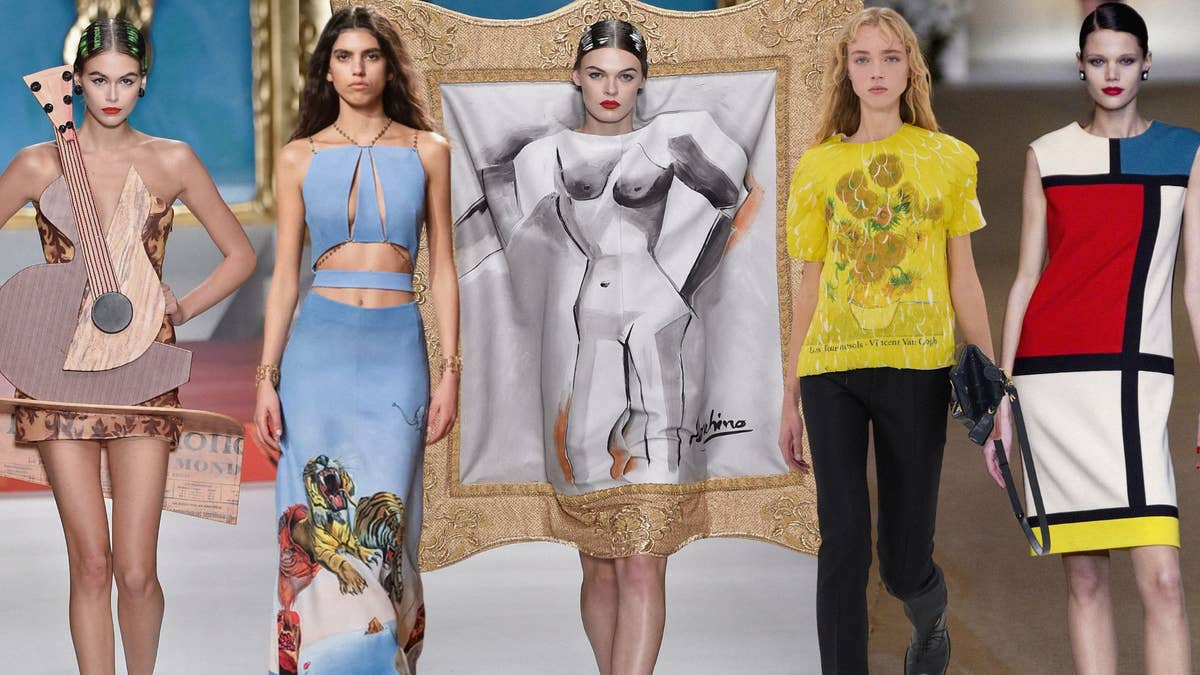
In true Jonathan Anderson style, Loewe’s spring/summer 2025 was a colourful display of modern, quirky pieces – artist-inspired tees very much included. Feathered throw-ons emblazoned with Van Gogh’s sunflowers and Manet’s realist scenes were a stand-out.
 © Getty Images
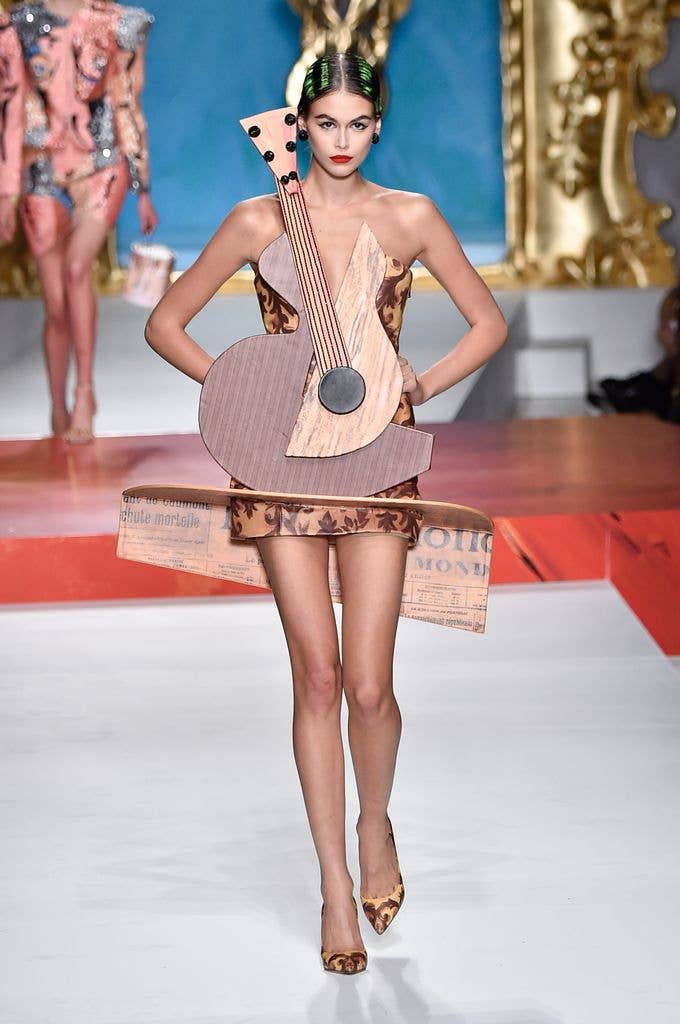
Moschino Spring/Summer 2020
Never one to shy away from a viral moment, Jeremy Scott shone the spotlight on Picasso’s cubist guitar paintings for spring/summer 2020 – with playfully structured looks modelled by stars such as Kaia Gerber.
 © Getty Images
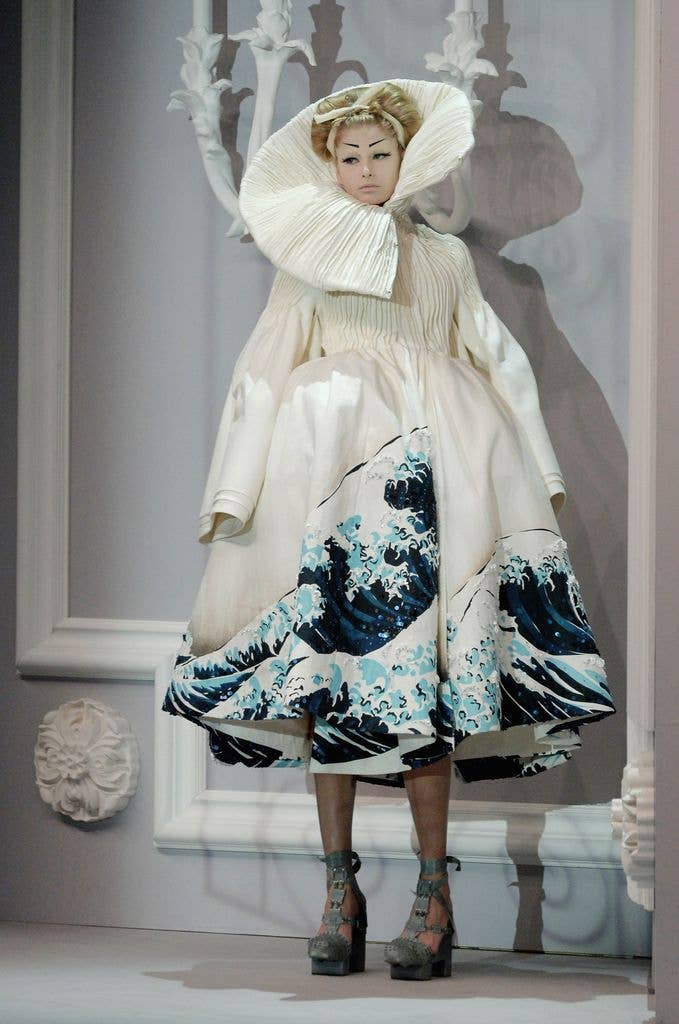
Christian Dior Couture Spring/Summer 2007
Executed by the one and only John Galliano, Dior’s spring/summer 2007 collection featured an avant-garde look displaying The Great Wave off Kanagawa, a woodblock print by the Japanese ukiyo-e artist Hokusa.
 © Gamma-Rapho via Getty Images
Alexander McQueen Spring/Summer 1999
One of the most recognisable moments in fashion show history, Shalom Harlow took to the rotating floor of Lee McQueen’s iconic spring/summer 1999 to be spray painted by robots during the grande finale.
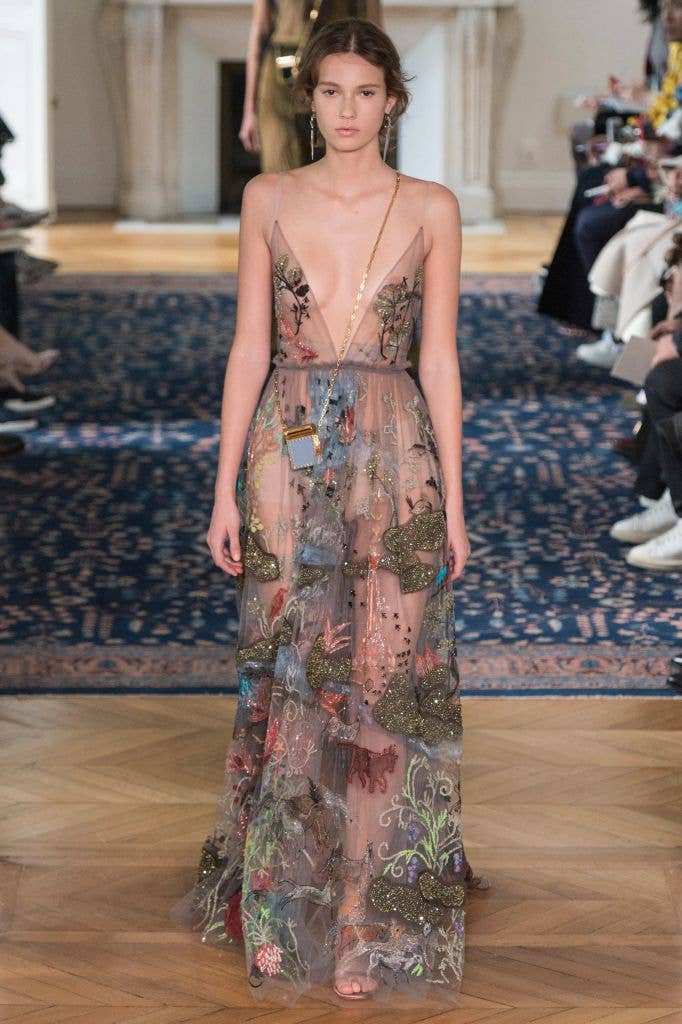
Valentino Spring/Summer 2017
A devoted admirer of the Renaissance, Pierpaolo Piccioli cemented his fascination with the era in Valentino’s spring/summer 2017 collection. Rich with medieval undertones, the designs drew on the fantastical imagery of Hieronymus Bosch’s triptych The Garden of Earthly Delights.
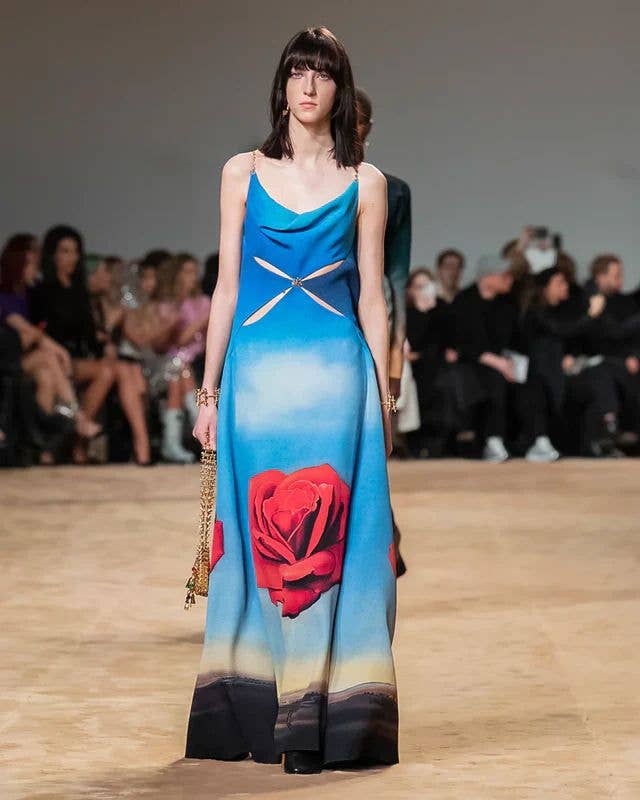
Rabanne Autumn/Winter 2023
Rabanne’s Autumn/Winter 2023 collection paid homage to not one, but two Spanish visionaries. Under the direction of Julien Dossena, diaphanous gowns were emblazoned with the surrealist works of Salvador Dalí – most notably the iconic Meditative Rose – bringing a dreamlike quality to the runway while celebrating the friendship between Rabanne and Dalí.
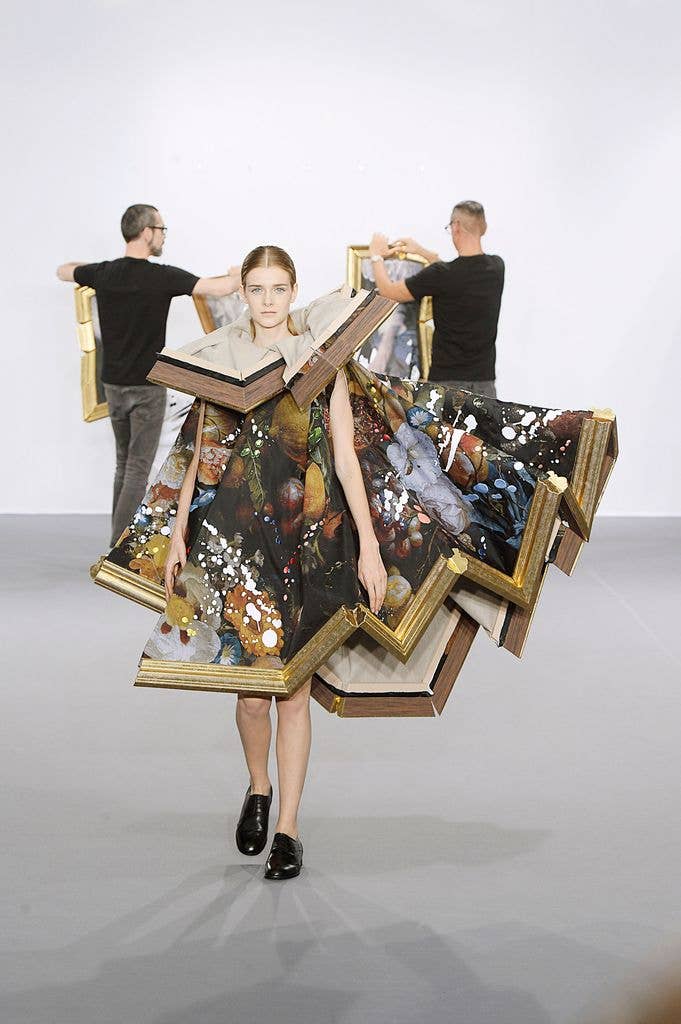 © Getty Images
Viktor & Rolf Autumn/Winter Couture 2015
Titled Wearable Art, Viktor & Rolf’s autumn/winter couture 2015 witnessed the designer duo dress their models in still life-printed canvases, including The Threatened Swan circa 1650, which were layered over simple linen tunics on the runway before the audience.
Read the full article here