




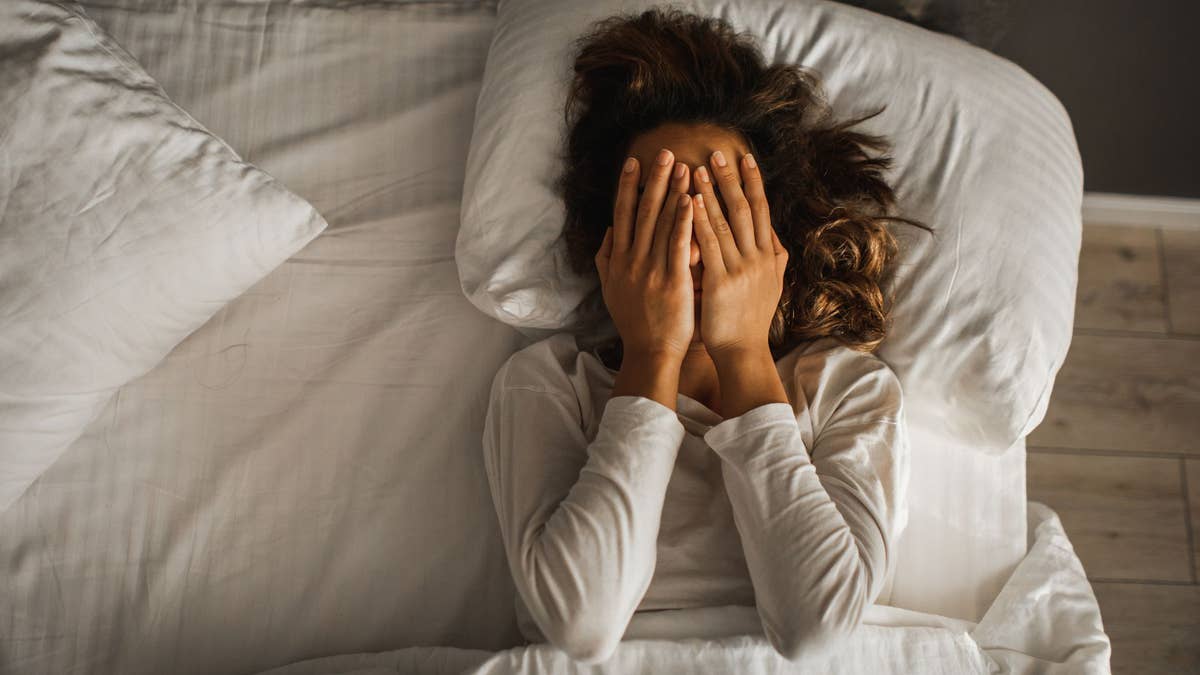

The pursuit of perfect sleep has a wellness moniker now. Sleepmaxxing. It sounds futuristic (I blame the double X), but when it boils down to it, many of us have been sleepmaxxing for years. The trend rose to fame on TikTok (as so many wellness fads do) a few years back now, and put simply, sleepmaxxing is focusing on habits to optimise your dozing hours with the hope of improving the quality and quantity of your sleep.
The practices of sleepmaxxing range from accessible (spraying a pillow mist, wearing an eye mask or tracking your sleep via a wellness wearable) to slightly more dedicated, such as mouth taping or banning liquids for two hours before bed.
As someone obsessed with sleeping well, I’ve been inadvertently sleepmaxxing for decades. It started with a simple Avon pillow mist at school, graduating onto Kalms Sleep at university, and by the time I was in my 30s, my routine wasn’t complete without CBD oil (in my bath and taken orally) magnesium sprayed onto the soles of my feet, ‘calm balm’ applied to my wrists, a Himalayan salt lamp (to create a mellow glow in my room, but also to purify the air), an Oura Ring to track my sleep and melatonin gummies for the nights I can’t drift off despite all of these habits. I’m tired just thinking about it.
While I like my bedtime rituals, as I feel they set the tone for sleepytime, during periods when I have struggled to sleep, I’ve questioned whether putting so much pressure on myself to sleep well actually made my slumber worse. And if this is the case, surely sleepmaxxing, which puts so much emphasis on one’s nighttime routine, could be a recipe for disaster for insomniacs?
In short, yes – and there’s a term for our obsession, too – orthosomnia, which is defined as the worry about getting enough sleep – specifically the perfectionist’s quest to achieve perfect sleep
Investigating orthosomnia
According to behavioural sleep specialist Donna Fairley, orthosomnia is triggered by overthinking sleep, which is one of the biggest symptoms of insomnia. “Orthosomnia can affect falling asleep, staying asleep and waking early in the morning,” she says.
Kathryn Pinkham, founder of The Insomnia Clinic, elaborates: “When we put pressure on ourselves to ‘sleep well’, monitor our bedtime routine, notice every wake-up, check the time and calculate how many hours we have left, we activate the very system that keeps us alert. The brain interprets that effort and monitoring as a signal that something is wrong, which increases arousal. And arousal and sleep do not mix.”
 © Hester Barnes Photography & Film
Kathrn says this mounting pressure creates “performance anxiety around bedtime,” meaning: “The bed stops feeling like a place of rest and starts to feel like a test to pass. That shift alone can maintain poor sleep, even in people who are physically capable of sleeping.
“Sleep improves when we reduce effort, not increase it,” she concludes.
The trouble with tracking
While I am a slave to checking my daily sleep score on Oura, I know it’s not entirely healthy, a point which Dr. Silva, medical director of longevity retreat SHA in Spain, is keen to make.
“There is a growing tendency to equate sleep with performance metrics,” she cautions. “When sleep becomes something to achieve, measure, and perfect, it stops being a natural rhythm and becomes a task. The irony is that this performance mindset is often what perpetuates the difficulty.”
On making trackers work for you, Dr. Silva says: “I would encourage caution around becoming overly focused on wearable data and sleep scores. For some, checking deep sleep minutes or efficiency percentages every morning creates more anxiety than insight.”
 © Getty Images
A positive move
Despite the potential for creating anxiety around sleep, Dr. Silva notes that it is “genuinely positive that rest has become a cultural priority,” adding: “For many years, sleep was undervalued and even sacrificed in the name of productivity. Reclaiming it as a pillar of health is, without question, a step in the right direction.”
Here’s are the sleepmaxxing practices the experts actually follow.
1. Keeping it simple
On what truly makes a difference to sleep, Dr. Silva says it’s down to simple practices such as maintaining relatively consistent sleep and wake times, exposing yourself to natural morning light, engaging in regular physical activity, and allowing for a gradual transition into the evening by reducing intense stimulation.
“These are not glamorous interventions, but they are physiologically powerful because they respect and stabilise our circadian rhythm, which is the biological foundation of healthy sleep,” she says.
 © Getty Images
2. An early rise
Kathryn says that a consistent, early wake-up time is one of her preferred sleepmaxxing protocols. “This is one of the most evidence-backed ways to stabilise the body clock and create a stronger ‘pressure’ to sleep better at night,” adding: “Morning light exposure is key, too. Natural light is a powerful regulator of sleep-wake rhythms.”
3. Winding down
At the opposite end of the day, Kathryn says a simple wind-down routine signals the end of the day without becoming overly long or complicated. “You don’t need lots of elements to your routine, just the things you relate to sleep, such as brushing your teeth and putting on your nightclothes.”
Dr. Silva concludes: “Our brain knows how to sleep. What it needs is not pressure, but biological trust, consistent signals, emotional safety, and the permission to let go.”
Read the full article here