




The ‘reverse hair washing’ hack top stylists swear by for fixing dry, brittle hair (and you can do it at home)

News Room By News Room
5 Min Read

Understanding your hair and giving it precisely what it needs is the key to success. The savviest among us don’t just see a trip to the hairdresser as a moment of relaxation; we also view it as an opportunity to soak up our stylist’s wisdom and put together the best hair care routine for us. 

Good stylists can convince us to tweak our habits—whether that’s adopting the Italian wash method, which cleanses while stimulating the scalp, or never going to sleep with loose hair to prevent dryness. We’re about to explore these lesser-known tricks, and a few of them might just make you rethink your entire routine.

Why your dry hair is crying out for hydration (and the oil mistake to avoid)

There are times when your hair feels lifeless, dry and has brittle ends—all signs that it’s crying out for hydration. This lack of nourishment leaves it unable to retain its flexibility or elasticity. “When it loses its natural protective barrier, it becomes more fragile, breaks easily and leaves you with that coarse, unmanageable feel,” says pharmacist Helena Rodero.

© iStock
Dry and brittle hair needs a hydration boost

However, to restore moisture and nourish your hair properly, you need a targeted strategy and to ditch the ‘more is more’ mindset. 

“The biggest mistake is thinking that slathering on extra hair oil will speed up repair, but that simply isn’t true. You only need a small amount and, in most cases, applied strictly to the mid-lengths and ends. Using it when your hair doesn’t genuinely need it will just weigh it down and make it a nightmare to wash out,” warns hairstylist Luciano Cañete, co-founder and director of Madrid’s Corta Cabeza salon group.

You should also avoid reaching for the straighteners or hair dryer just to tame frizzy bits. Cañete advises keeping heat styling to a low temperature and using tools sparingly, prioritising a natural finish instead.

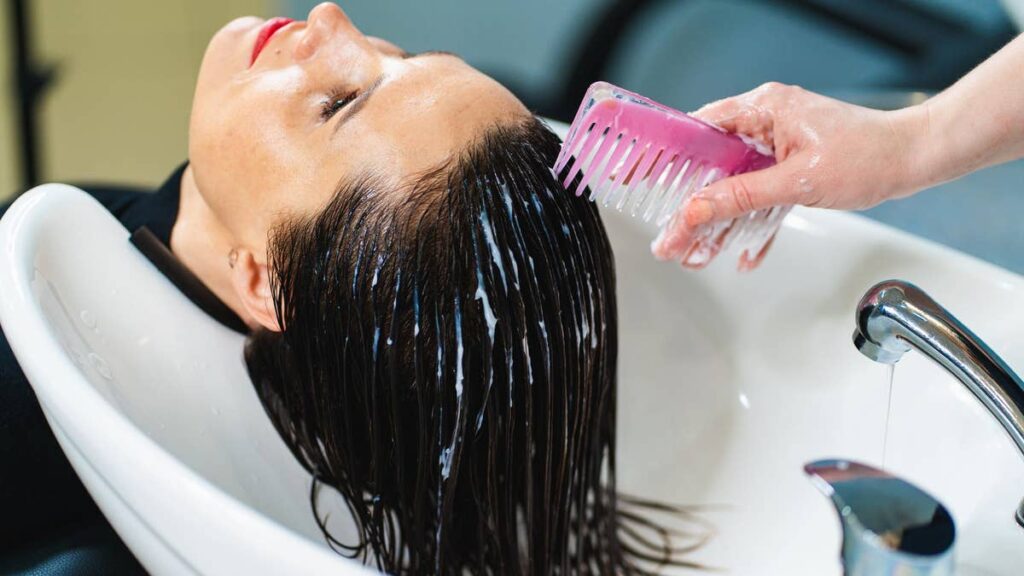
What is ‘reverse hair washing’ and how does it protect your locks?

When it comes to giving your hair an extra hydration boost, Rodero explains that at key times, “Hair needs nourishing masks, restructuring treatments and leave-in products that really lock in moisture. Ideally, you should introduce a hair mask once or twice a week and, if your hair is feeling particularly parched, apply it to dry hair as a pre-wash treatment before shampooing.”

Woman receiving a hair wash and scalp massage at a salon. © Getty Images
Hairstylist and hair health expert Wilma Sortino says the reverse hair washing technique is great if you’re prone to dry ends

Hairstylist and hair health expert at Llongueras Wilma Sortino calls this technique “reverse hair washing”. “It strikes the right balance between cleansing and hydration, making it ideal for anyone who washes their hair frequently—especially if you’re prone to dry ends,” she says. It also pays off over time: “With regular use, you’ll notice a real boost in shine, softness and elasticity; it works as a much deeper conditioning treatment.” 

Another major benefit of reverse washing is how well it restores the hair’s natural moisture levels. 

How to reverse wash your hair step-by-step

Sortino breaks down the routine step-by-step: 

  1. Apply the protective base: “First, wet your hair, then smooth a mask or conditioner through the mid-lengths to the ends, keeping it away from the roots. Don’t rinse it out.”
  2. Cleanse the scalp: “Next, apply a targeted shampoostraight onto the scalp and massage it in thoroughly.”
  3. Rinse: “Rinse both products out together in one go.”
Woman washing her hair with shampoo, rear view © Getty Images
Reverse hair washing means using a mask or conditioner before you shampoo

The idea behind the technique is that the pre-shampoo layer delivers deep nourishment: “The mask coats the cuticle, shielding it while you wash. This stops the friction that leads to breakage or split ends, sealing the hair shaft and keeping it protected.”

Ultimately, “a pre-shampoo mask creates a barrier over the hair shaft, shielding it from water damage and harsh washing.” However,  the expert notes it doesn’t quite match the heavy-duty protection of a hair oil: “A mask mainly delivers softness and conditioning, whereas an oil is better at repelling water and preventing the hair shaft from swelling.”


Read the full article here

TAGGED:
Share This Article
Leave a comment