



Psychology says you need to ditch black clothes and start ‘peacocking’

News Room By News Room
7 Min Read

I am as guilty as anyone for raiding the wardrobe and pulling out a little black dress…again. It’s safe, it’s neutral, and it is unlikely to offend anyone. 

But after listening to the chat with celebrity chef Andi Oliver on this week’s Second Act podcast, I’ve come to the realisation I’m dressing all wrong – I need to start ‘peacocking’.

Andi embraced wearing colourful clothes after having therapy to treat depression and says it helped her become a happier version of herself.

In the podcast she opens up about having a breakdown during the ‘toughest time of my life’, following the sudden death of her brother Sean when he was in his twenties. 

After therapy, she noticed that by switching from her trademark black uniform to brighter clothes, her mood began to change too.

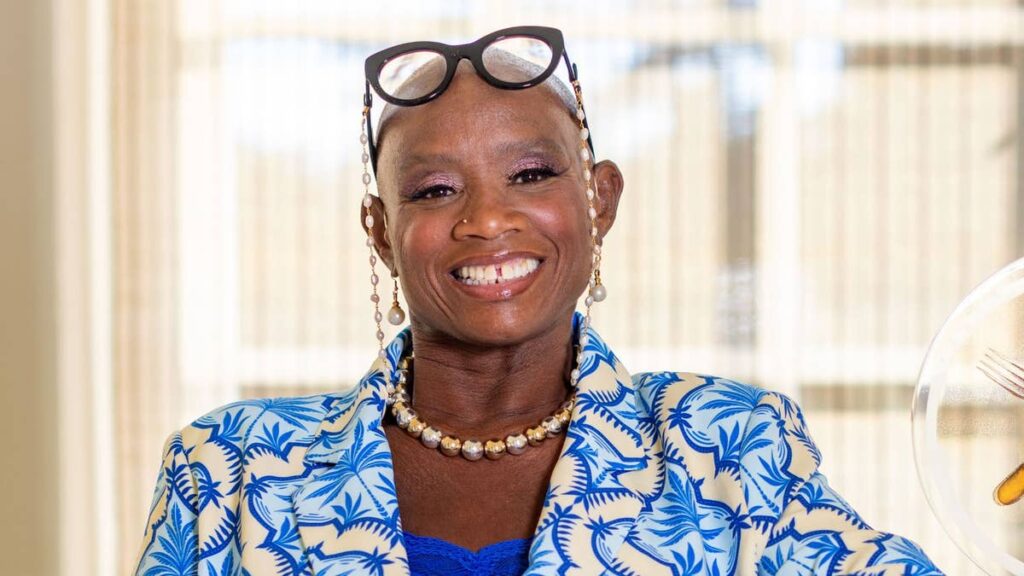
Andi Oliver in the Second Act studio with Ateh Jewel

“For me, it was a way I walked out of depression,” the 63-year-old says. “Just by stepping into colour is one of the things that got me back up on my feet. Because colour is transformative. 

“When you wear black all the time, which I did for quite a long time, I feel very depressed. I wore black all the time, I felt musty, and I felt kind of fusty.

“And as I stepped out of that and stepped into my true, powerful self, the more kind of peacock I’ve become. I started to put on orange, red and bright greens and turquoise and you just feel excellent. It really does have an effect on you, it really makes a huge difference. I would say to anybody, if you’re feeling down, just even if it’s a pair of earrings, start small and work your way into it.

It feels fabulous, I love it. Now I want to take as much space as I possibly can.”

Great British Menu's Andi Oliver© Ashleigh Brown
Great British Menu’s Andi Oliver loves to embrace colour

Andi’s love of colour jumps out of the screen when she is on Great British Menu – even her fans to cool down menopausal hot flushes are flamboyant, becoming iconic in their own right.

“I’m very big on accessories. If you’re hot, you’ve got to cool down. Why would I do it with some scruffy piece of paper when I can use something fabulous and have a fan? It’s another opportunity for an accessory. It’s another pretty thing, another thing I can go shopping for. “I’ve always been jewelry driven. I’m a magpie. I like shiny things. Now I have fans, glasses –  even my hearing aids are quite nice.”

Scientific power of colour

It isn’t by chance that Andi started feeling better wearing colourful clothes, there is science behind it that validates everything she says.

Kate Harrison, a Chromotherapist, and expert in Colour Psychology & Wellbeing, has treated women with colour therapy for over 25 years using research that has been around since Ancient Egypt and notices the massive impact introducing colour can have on your life.

Kate Harrison

Founder, ChroME®

Chromotherapist | Colour Psychology & Wellbeing Expert
Wearing colourful clothes can change your life according to psychology & wellbeing expert Kate Harrison

Wearing different colours can have a huge impact on how we think, feel, and regulate our emotions.

“Colour is so much more than something we decorate with or wear,” Kate says. “It’s something we experience every single day, often without even realising it. 

“Research in colour psychology and neuroscience shows that colour can influence mood, attention, energy and even physiological responses like alertness and heart rate. 

“That doesn’t mean wearing a yellow jumper is going to cure depression, and colour should never be seen as a replacement for professional mental health support. But I do believe it can become a really valuable part of our wellbeing toolkit. Used intentionally, colour can help us reconnect with ourselves, lift our mood, express how we’re feeling and remind us of the person we’re trying not to lose in the middle of busy lives.

“We already know that light plays an important role in our sleep, mood and circadian rhythms, so it makes sense that colour is about much more than aesthetics.”

The Flamingo Effect

“What fascinates me most, though, isn’t just the research. It’s what I’ve seen in over 25 years of working with women,”  says Kate, who founded ChroME which connects women and helps guide them into using colour as a tool.

“I often talk about what I call the Flamingo Effect. Flamingos lose their beautiful pink feathers when they don’t get enough nutrients. They don’t become a different bird; they’ve simply become depleted.

“I think the same thing happens to so many women.

“We spend years pouring our energy into everyone else, our children, careers, relationships, ageing parents, homes and endless to do lists, and somewhere along the way, we stop choosing ourselves. 

“It’s often reflected in the world around us. The colourful wardrobe becomes black because it’s easier. The vibrant home becomes beige. We stop buying the flowers, wearing the bright lipstick or choosing the colours that once made us feel alive.

“I call it slipping into greyscale. It’s not really about the colour itself. It’s about what the loss of colour represents. A loss of energy, of confidence and sometimes a loss of identity.

“I’ve seen it happen after motherhood, during divorce, through grief, burnout and menopause and that’s why I believe colour matters.

“Not because it’s a magic fix, but because it can be the invitation to notice yourself again. Sometimes reconnecting with yourself doesn’t begin with a huge life change, but by asking yourself one simple question: What colour do I need today?”

So the next time you go to reach for the little black dress, ask yourself “which is the colour that makes your heart sing and fills you with joy?” – and go for it! 

Read the full article here

TAGGED:
Share This Article
Leave a comment