




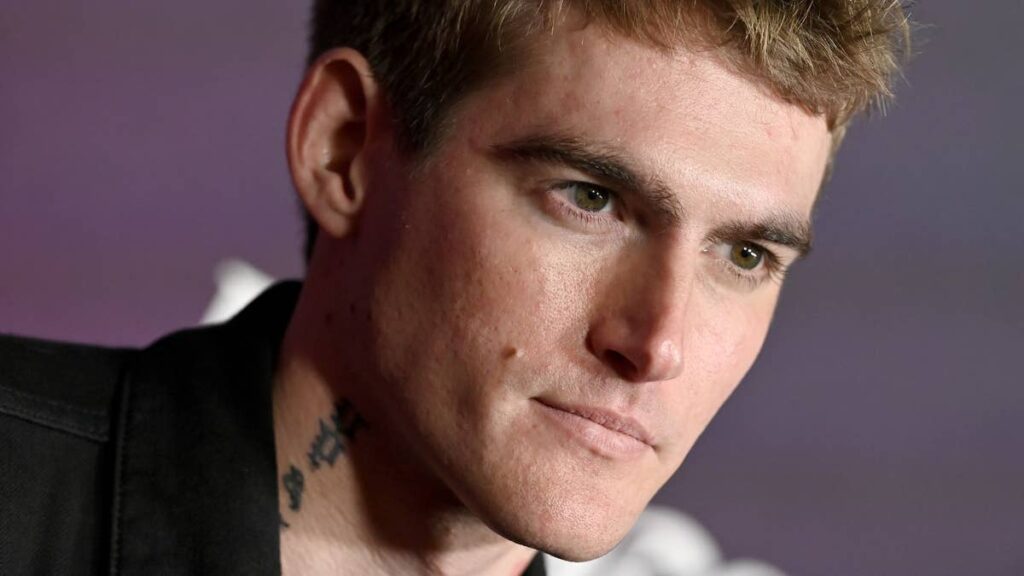
Further details regarding Presley Gerber’s death have been revealed hours after his passing.
The model was 27 when he passed away at a rehabilitation facility on September 20, according to Los Angeles County Medical Examiner records obtained by Us Weekly.
At the time, a family representative for his parents Cindy Crawford and Rande Gerber told HELLO!: “The family is asking for privacy during this very difficult and painful time.”
Per recordings reported on by multiple outlets, a call was dispatched to Santa Monica, California police on September 20 for a cardiac arrest in the 1000 block of Berkeley St. at 9:35 a.m., with another dispatch revealing that first responders were responding to an overdose at the address.
Though an official cause of death has yet to be confirmed, the autopsy has now been completed, according to the Medical Examiner’s Office. “SMPD detectives are investigating the death as a suspected overdose. At this time, there is no indication of foul play. The investigation remains ongoing,” a Santa Monica Police Department spokesperson confirmed to The Daily Mail.
“Death was pronounced at 09:45 hours on September 20, 2026, by responding paramedics. The Santa Monica Police Department is the investigating law enforcement agency,” the medical examiner’s office also told People.
Presley was undergoing psychedelic drug treatment
In one of his last social media posts before his untimely death, Presley Gerber confessed to being “terrified” as he faced further treatment for his addictions.
He had been open about his struggles and in March he revealed to his social media followers that he was undergoing psychedelic drug treatment.
At the time, the model said that he was “praying it’s the last time I have to come back.”
Presley Gerber’s mental health struggles
Presley previously explained that he wanted to use what he had learned from his own difficulties to support other people. During a 2023 appearance on the Studio 22 podcast, he discussed his experiences with depression and the time he had spent working with therapists to better understand himself.
“Having struggled with mental health, depression and some other things that come along with that, I think that whether I help one person or a hundred people get out of that place that I was in at one point in my life, that’s all I need to do,” he said.
The ambition, he explained, was to create a space where people could speak about their experiences without feeling judged. Reflecting on what he had taken from his own life, he said: “I’ve seen a lot of stuff and I’ve learned a lot of things.”
“So you feel like you’re not alone, because that is how I feel most of the time, and I have a feeling that if I say all of this, a lot of people will at least know that there’s someone else going through it,” he said. “And the second thing is, hopefully, I find some people out here… willing to help or know someone that can help.”
If you or someone you know is struggling with substance abuse, please contact the SAMHSA helpline at 1-800-662-HELP.
Read the full article here