

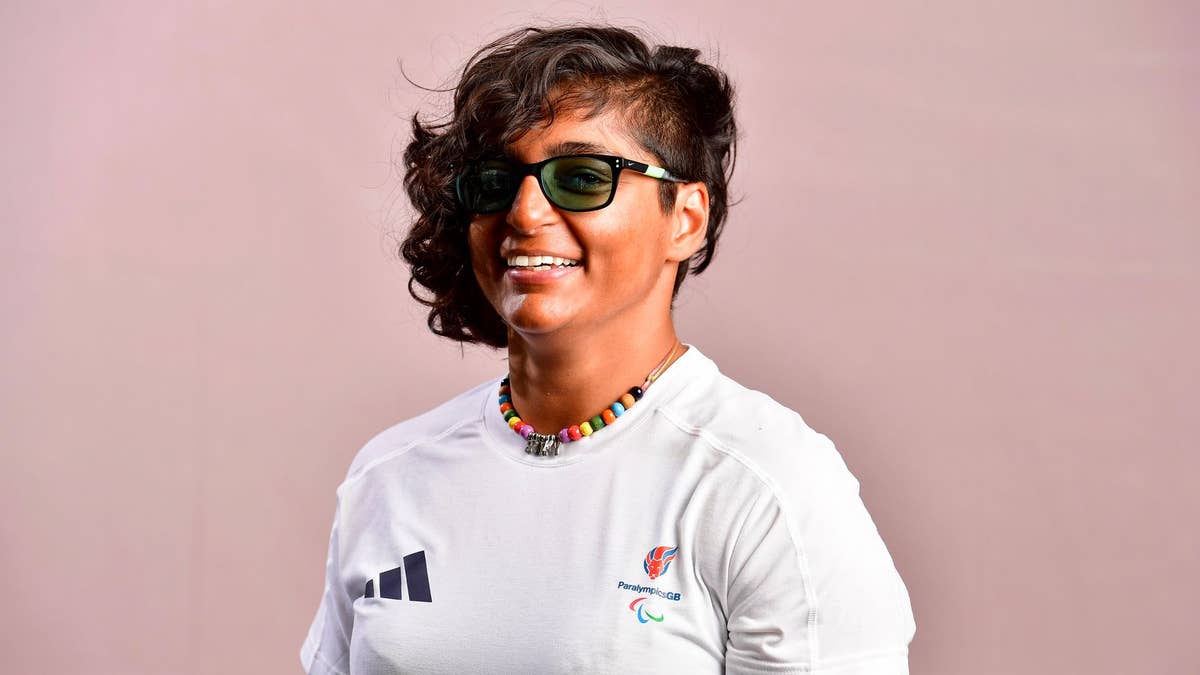

Before she has even touched the snowy slopes in Northern Italy’s Cortina, High Wycombe’s Nina Sparks is already making Paralympic Winter Games history. At 35 years old, she has conquered a feat many won’t ever achieve in their lifetime and has collected medals to prove it.
The athlete started her sporting journey in an unconventional way. Redefining the limitations of multiple sclerosis, she went from ‘ski mum’ at a school in Austria to slaloming her way to world champion status, all while dealing with a life-changing diagnosis that started with a numb foot and a blind eye.
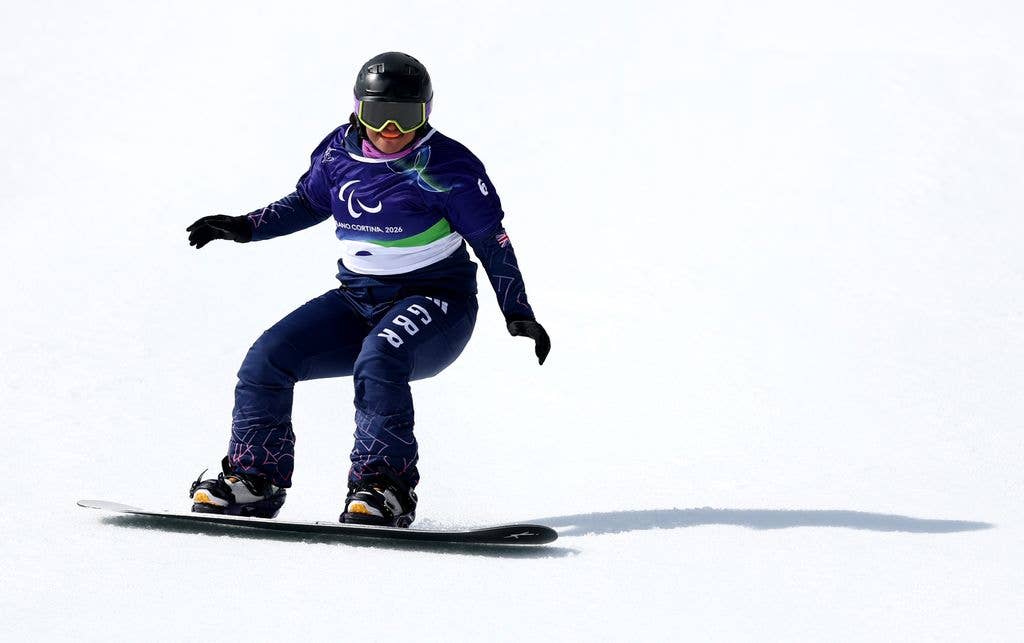
Landing in Milan and travelling to Cortina, the Para Snowboarder was still taking in the eccentricities of the Olympic Village when she spoke to HELLO! ahead of her LL2 banked slalom event, which is raced against the clock on a course of tight turns.
Using an orthotic to walk and an ankle foot orthosis in her boot to help her on her board, the athlete will be vying for a spot on the podium in her category, which is designed for people with less severe lower limb impairments.
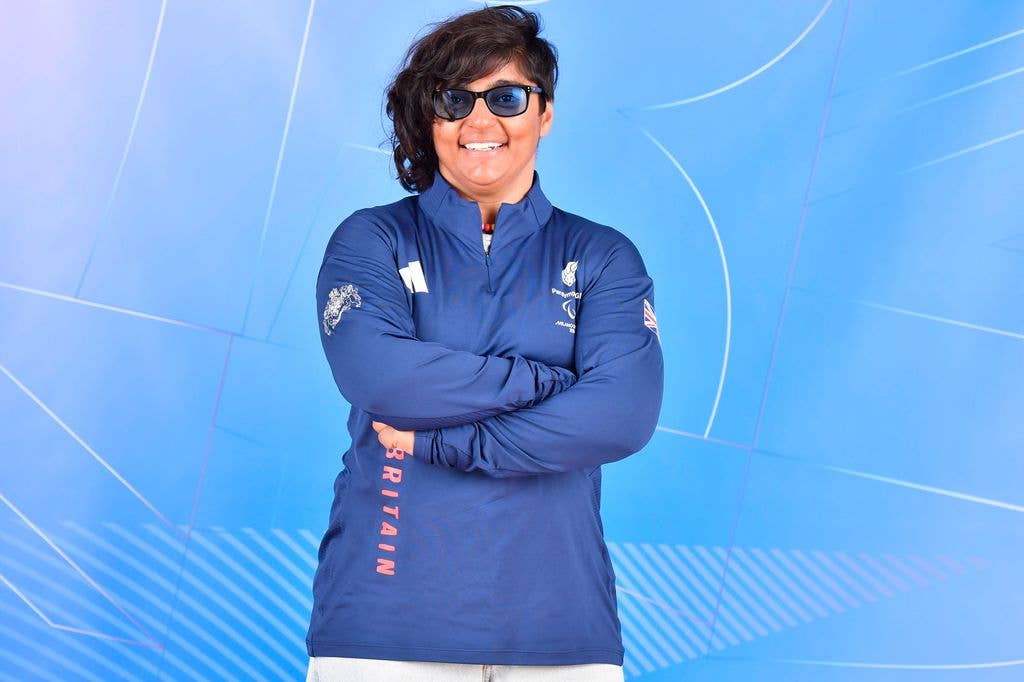
Excitedly pointing out her new branded ParalympicsGB jacket on the video call, she expressed her amazement at being part of such an occasion and revealed she hadn’t really had a moment to process her achievement.
Before suiting up and representing her country as the first-ever female snowboarder to compete for Great Britain in the Games, she transported us back to where it all began.
From dry slopes to a ‘scary’ diagnosis
Snowboarding has been a part of Nina’s life since she was 13 years old. The athlete learned how to navigate a board on the dry slopes in her hometown and graduated to colder regions on ski trips with friends’ families.
It was during her time working as a teacher that she developed a yearning for the mountains and decided to take a leap and see what Austria had to offer her.
Nina told HELLO!: “I went on a ski holiday and was like, ‘Do you know what, actually, I wanna do something in the mountains’. Obviously, I snowboarded a bit, and then I found myself a job as a ski mum for a race academy in Austria. So that obviously got me a job as well as the mountainside of it.”
During her chilly adventure, the snowboarder woke up one night with a completely numb right foot, a week before she celebrated her 30th birthday.
“It kind of felt like it was cold, and like it had just been in a bucket of water, and I was like, ‘Oh, that’s weird!'”
I remember the doctor had done a brain scan, and he was like, ‘Oh, there are these lesions on your brain. It could be nothing, or it could be the first sign of MS’
Brushing it off as a side effect of the cold weather outside or a result of sleeping in an uncomfortable position, the star athlete continued on her life as normal. That was until a ride on a chairlift raised red flags.
She said: “I remember we were on a heated chairlift and one of my friends was like, ‘Oh, it’s so nice having a heated chair lift in this cold weather’, and I was like, ‘Wait a minute, I can’t feel any temperature at all from my waist downwards. That’s probably not good’.
“My sister-in-law’s a nurse, and I messaged her because I didn’t want to message my mum and dad and get them worried, so I messaged her and was like, ‘Just wondering, is this normal?’, and she was like, ‘No, absolutely not, get yourself to a doctor!’.”
Alone in Austria during the coronavirus pandemic in 2020, she was unable to have her family come and visit her while enduring countless tests at the local doctors’ office. She was advised to stay in Europe by her insurance, as NHS waiting lists would have impacted the speed of her diagnosis.
“We’d done quite a few tests, and I’d actually had a really weird episode a year before when I was in the UK. I went blind in one eye, and I remember the doctor had done a brain scan, and he was like, ‘Oh, there are these lesions on your brain. It could be nothing, or it could be the first sign of MS’,” Nina told us.
She added: “[In Austria, she told the doctor] ‘Oh you know, I remember the doctor said it could be the sign of MS’, and that kind of put it on her radar and then they did all sorts of tests. I had blood tests, I had a lumbar puncture, I had MRI’s, I had electrode test things where they send like electric shocks through your body. They basically ruled out everything else, and she was like, ‘We, you know, that’s what it is, it’s MS’.”
 © Luc Percival
A world champion’s mindset
Despite receiving her MS diagnosis, a chronic, often disabling autoimmune disease of the central nervous system (brain and spinal cord), Nina was determined not to let it get in the way of living a big life.
She still had her lift passes for the mountains and chose to learn how to pivot rather than completely give up on her desire to live in the Austrian foothills.
Nina explained: “COVID was still around, and so I was going through this diagnosis in Austria, and none of my family was allowed to travel because I was over 18, they couldn’t play the ‘I’ve got a sick child’ card.
“I was very much on my own. It was pretty scary, but I think because I was in Austria, living in a house full of people who skied and snowboarded, I was like, ‘Well, I’ve got a lift pass, let’s figure this out’.
“I honestly think if I’d have gone back to the UK, I don’t think I would have thought, ‘Oh yeah, I’m gonna try carrying on snowboarding’.
I made that decision while the diagnosis was still happening. I remember thinking, ‘If this does turn out to be MS, I think I can do this’
She soldiered through, navigating her new reality, living with MS, and re-learned how to make her disability work for her sport, not the other way around.
“I had the time and the space to figure out how to snowboard without being able to feel your feet and your legs and stuff. I looked up Paralympic snowboarding because I knew about Kadeena Cox, who’s a British Paralympian.
“She has MS, and I was like, ‘Wait, hang on. She’s in the Paralympics. I looked on YouTube, discovered Paralympic snowboarding, and was like, ‘Right, that’s what I’m doing’, and that was that.
“I made that decision while the diagnosis was still happening. I remember thinking, ‘If this does turn out to be MS, I think I can do this.'”
 © Getty Images for IPC
Eyes on the prize
From that moment on, Nina was locked in, learning how she could carve a career in a sport she once viewed as nothing more than a hobby and a nice way to spend time in the wild. But how does one go from casual snowboarder to competing in world championships and the Paralympics?
“Competition’s a bit of a blur. We have to get classified first before we’re allowed to compete. I literally got classified the day before my first-ever race. So I didn’t actually know I was gonna be able to race until I got classified,” Nina reflected.
She went on to say: “So there was all this buildup about having all the doctor’s appointments and the paperwork I needed to get classified, and then that happened, and it was like, ‘OK, right, you’re racing tomorrow’. I didn’t have time to be nervous about the race because it was like, ‘Oh my God, I’ve just been classified. OK, let’s do this. We’re going. Off we go’.
“24 hours later, I did my first race, and then, actually, the next day, I did my second race, and I got my first podium. I went from not actually being a classified Para Snowboarder to having got a Europa Cup podium in the space of three days. It was a little bit of a whirlwind weekend!”
Don’t let stuff like a medical diagnosis stop you from doing what you want to do. You’ve got to find a way around it.
She explained how she first got in touch with the Great British team: “Because I was the ski mum for this race academy, I already knew about GB Snowsport, which is our national governing body for snow sports.
“I had a contact who was on the GB snowboard team, and I just said to him, ‘Do you know if there is a para team?’ He gave me the email address for the guy who’s actually now my coach.
“I was self-funding everything, and I was training in the Snowdome, and then the following season I basically was like, ‘Right, I’m gonna do this’, and I moved out to Austria for the winter full-time.
“First couple of seasons I did a bit of work and a bit of training, and then built up, got the results, got onto our world-class programme, which meant I got funding, and since then, I’ve literally been snowboarding for a job, which is still crazy to me that I get paid to snowboard, it’s wild!”
Nina’s words of wisdom
As a final question, the star was asked if she could possibly put into words how she felt about making history in her sport and in GB’s Paralympics hall of fame. Taken aback, she pondered over her answer with a shy smile on her face.
“I’ve been doing preparation and training camps, so it hasn’t really hit me that this is actually happening until probably about the last 24 hours. At the moment, everything’s still very new.
“I’ve been the only girl on our team the whole time I’ve been on the team, so for me, it’s just normal. My coach literally said to me this morning, ‘This is just like a normal competition. It’s just us, it’s just our team. We’re just doing what we normally do. We’re going snowboarding’.
“But obviously, because it’s the Paralympics, there’s all this stuff around it, all the press, and the fact that I am making history, which is crazy. But I guess I’ve been doing that for the last four years, and it’s been normal.”
She drew the conversation to a close with a final word of advice for any other women going through a similar diagnosis to her own, or any hard times in life, for that matter.
“What I did was just carry on doing what I do because I like doing it, and I’m happy, and I’m confident on a snowboard, so I just snowboarded.
“Don’t let stuff like a medical diagnosis stop you from doing what you want to do. You’ve got to find a way around it. I now have nerve damage in my legs, so instead of being like, ‘Oh well, I can’t do this with my foot’, I’ve found a way to adapt and make it work so I can do something. Focus on the stuff you can do!”
Read the full article here