




My Oura sleep score is always above 85

News Room By News Room
9 Min Read

I am a self-confessed Oura bore. The first thing I say to my boyfriend in the morning is ‘What’s your sleep score?’, before asking the same question to my tracker-wearing colleagues when I get to my desk.

I’m proud of my sleep score – my average is 87. Last night, I got 92. If I wake up and don’t see the little crown on the app, I know something is amiss.

I tend to get over 85 on my Oura sleep score most nights

My impeccable sleep score doesn’t happen by accident, though. I have a sleep routine that starts long before bedtime, and while it has many steps, it doesn’t take long and sets me up for a perfect night of slumber almost every night (not every single night, I’m still human and have nights where I toss and turn regardless of my sleep regimen).

I’m well aware of the concept of orthosomnia; the notion that overthinking sleep is what stops someone from drifting off, creating a vicious cycle. Putting too much pressure on bedtime (including with a multi-step sleep routine) can actually make sleep worse, but for me, a routine is essential.

screenshot of oura calendar with crowns
I’m lucky enough to win an Oura crown most days

It puts me into sleep mode, signalling to my brain that it’s time for bed. So, without further ado, here’s everything I do and use to preserve my high sleep score – I promise it’s not arduous.

During the day

No coffee after 2pm

I love a daily latte, sometimes so much that I consider a second, but it’s extremely rare that I’ll have a coffee after lunch.

mel drinking coffee
I try not to drink coffee after lunch

Sleep-supporting electrolytes

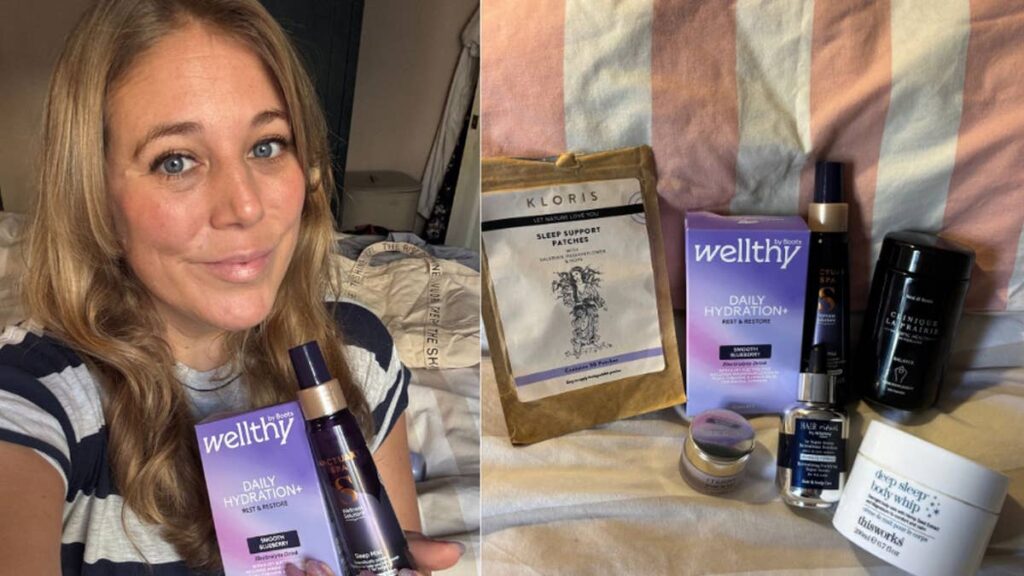
I wrote a piece on not everyone needing electrolytes (only if you’re working out a lot, or sweating a lot), but when I do drink them, I always use Wellthy’s Daily Hydration Rest & Restore sachets in Smooth Blueberry flavour, £7 for 13 sachets.

mel holding two sleep products
I love Wellthy’s supplements

As well as amping up hydration, they include sleep supporters such as magnesium glycinate, L-theanine and lemon balm. Though they’re designed to support restful evenings, I drink these during the day (they’re not a drowse-inducing bedtime drink).

Before bedtime

A consistent bedtime

As long as I’m home of an evening, I try to get into bed before 10:30. I’m not rigid about this – sometimes I have to stay up because I’m addicted to watching The Pitt, or I’m out and about living life, but I’d say most nights I’m in bed by 10:30.

Sleep supplements

An hour before bed, I take my sleep supplements. Right now, I’m relying on Clinique La Prairie’s Balance Rest & Reset supplements, £340 for 120 capsules. Designed to promote deep, restorative sleep, these contain lemon balm, L-tryptophan, which helps produce melatonin and serotonin – can also be found in turkey, passionflower extract, which is meant to soothe anxiety and Ashwagandha extract, which helps the body adapt to stress better.

bedtime products on a striped bed
My sleep routine has many, many steps

I know these are cripplingly expensive. For a budget-friendly option, when I was younger, I always took Kalms One-a-Night, £10.50 for 28, and rated them. For a mid-range option, beauty editors I know sing the praises of Diome’s supplements, £60 for 60. I enjoyed taking them because they help you to stay asleep once you nodded off, rather than helping you to fall asleep in the first place.

Magnesium

I started using magnesium spray when I had a running injury (as advised by Nadia the Osteopath, who I frequently book in with at Biome by Corinthia), and I haven’t stopped since. I spray it wherever I might be injured at the time (right now, my hip) as well as on the soles of my feet. I’m using The Nue Co. Magnesium Ease, £45, at the moment and it has a subtle sleep-inducing scent and isn’t too oily. That said, I apply it once I’m sitting on my bed, about to turn it, to avoid slippy footprints everywhere.

Body cream

I like This Works’ Deep Sleep Body Whip, £30 The light blue coloured formula feels calming and the ultra-light texture doesn’t need too much rubbing in at bedtime. It has This Works’ signature Deep Sleep scent too, which is cocooning and comforting.

Once I’m in bed

I checked how many things I do when I’m in bed the other night and felt fairly ridiculous, but this routine doesn’t take more than five minutes, I promise.

One thing to note: I do scroll in bed. I know it’s frowned upon and we’re supposed to keep our phone away from the bed, but it doesn’t seem to impact my sleep (I do have a blue light filter on my screen, though). That said, when I put my phone down for the night, I switch it to sleep mode for zero disturbances. 

Anyway, my routine once I’m in bed (skincare already done and dusted, that isn’t part of my bedtime ritual because I often do it as soon as I’m home from the gym, way earlier in the evening), includes spraying my bed with pillow spray.

Mel holding two sleep products
I love my long sleep routine!

I’m not fussy about which mist. Currently I have This Works Sleep Plus, £26, (I prefer this to the original because it’s designed to keep you asleep, rather than send you off), and Sanctuary Spa’s Wellness Solutions Sleep Mist, £15, which I like because it smells of jasmine, violet and sandalwood, rather than lavender.

Next, a nighttime lip mask. Currently, By Terry’s Baume De Rose Lip Balm, £42. Applying this is one of my key brain messages that it’s time to sleep as I don’t apply it until after I’ve put my phone or book down.

Next, I use Sisley’s Hair Rituel Revitalising Fortifying Super Serum, £178. Again, this doesn’t support sleep, but it does need to be applied at night, so it makes up part of the soothing signals for bedtime.

Then, I apply a Kloris Sleep Time Patch, £16 for 12. There’s debate about how much you can absorb through the skin, but I really rate these clear stickers for a long, undisturbed sleep. They include hops, valerian, passionflower and hemp. I stick it on my wrist and find that Oura says my sleep is much deeper than the nights I don’t wear one of these.

Once I’m in bed, I wear Loop earplugs, £44.95, as I’m a light sleeper, and an eye mask (ask, as long as it’s black) to block out the light.

So there we have it, my 13-step bedtime ritual, which actually adds very little time to my routine, but makes all the difference.

The expert take

As well as all the lotions and potions I use pre-sleep, there’s also simply advice that can help if you struggle to drift off, as shared by insomnia expert Kathryn Pinkham, who joined HELLO! for a live Q&A on sleep.

Kathryn explained: “Focusing on calming the nervous system and reducing pressure around sleep can make such a difference. A few things that tend to help are:

  • Keeping a consistent, earlier wake-up time
  • Avoiding going to bed too early
  • Getting natural daylight exposure in the morning
  • Reducing stress and mental load during the day
  • Avoiding clock-watching during the night
  • Getting out of bed briefly if you feel wide awake and frustrated

Read all of Kathryn’s expert guidance.

Read the full article here

TAGGED:
Share This Article
Leave a comment