






Jennifer Aniston turns 57 on 11 February, and the Hollywood actress looks better than ever. The This Morning Show star is passionate about staying fit and works closely with Dani Coleman, a personal trainer, who spoke exclusively to HELLO! earlier this month about the star’s workout routine.
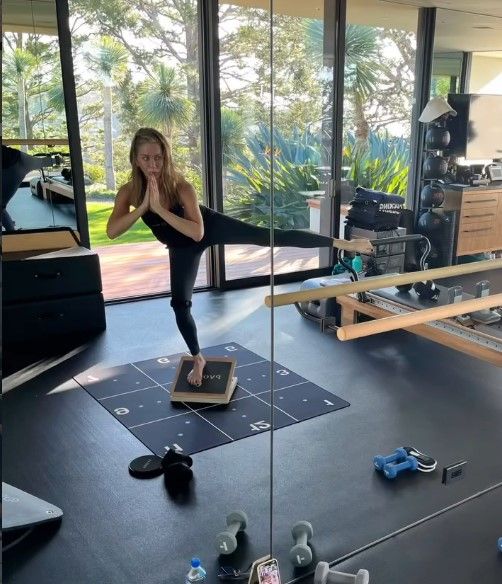
Dani revealed that Jennifer’s workout schedule largely relies on one key aspect, and for an important reason. She told us: “One thing is always a given: core exercises, because Jennifer suffered a back injury in 2021. We do a lot of core work to help protect her spine.”
The personal trainer added: “I know she’s talked about how one reason she loves Pvolve (a form of low-impact fitness designed to mimic everyday movements) is because she had a back injury, but she can do this workout and not [inflame] those old injuries.” She has largely kept details of her injury to herself, but she did tell InStyle in 2023 that she reached a point where she felt “burnt out” by over-exercising.
 © Instagram
“My physical therapist gave me a Barbie doll that’s covered in Kinesio tape,” Jennifer recalled. “It’s a silly mental image until you realize the purpose of all that tape is to show every injury I’ve had in the last 15 years.”
How to train safely after a back injury
As Jennifer has proved, you don’t have to entirely abandon working out after suffering a back injury. Nicole Chapman, a qualified personal trainer with over 10 years of experience, tells us how to work out safely if you find yourself in the same predicament as Jennifer.
 © Instagram
“Working out safely after a back injury is not about avoiding movement. It is about moving away from patterns that overload the spine and intentionally rebuilding the foundations that support it,” she says. “The spine depends heavily on the core, glutes and posterior chain to share load and control movement. When those systems are not doing their job well, the back often compensates.”
Nicole says that research supports this approach. “Studies have shown that motor control and stabilisation-based exercise can reduce pain and improve function more effectively than general exercise alone in people with a history of low back pain,” she explains.
 © Getty
“This type of training focuses on improving coordination and control around the spine rather than simply strengthening muscles in isolation.”
What does this mean for your workout regime?
 © FilmMagic
Nicole says that when approaching your workout regime with this expertise in mind, it’s important to prioritise controlled, purposeful movement that teaches the body to stabilise while the limbs move.
For deep core stability, Nicole favours:
- Dead bugs – Lay on your back and allow your lower back to lie flat on the floor. Bring your knees in towards your chest until your knees are directly above your hips. Lift your arms straight towards the ceiling so that your elbow is above your shoulder and palms face each other. This is your start position. On an exhale, extend your left arm and right leg until your leg is straight and they are both above the floor. Inhale, engage your abdominals and return the arm and leg to the start position.
- Bird dogs – Begin on all fours, nicely aligned with your hips above your knees and your shoulders directly above your wrists. Engage your abdominals; this will help you maintain a neutral spine. Draw your shoulder blades back, inhale and as you exhale, contract your pelvic floor and simultaneously raise your left arm and right leg keeping your hips and shoulders parallel to the floor.
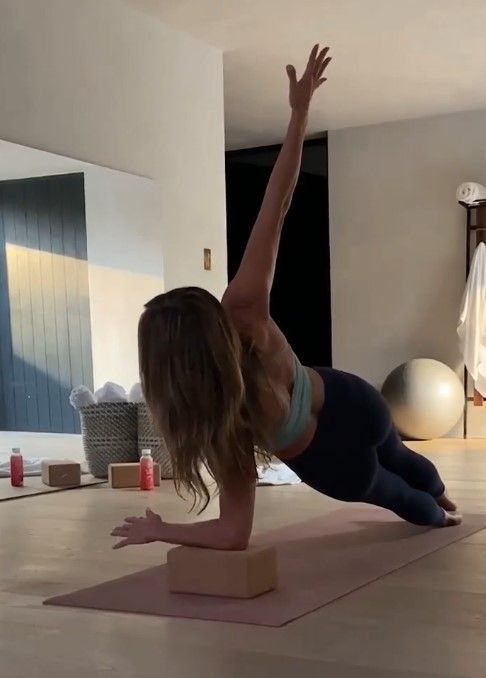
- Side planks – Lie on your left side with your forearm flat on the floor, bottom elbow lined up directly under your shoulder, bend the bottom leg and rest the side of your knee on the floor. To engage your core, inhale and lift your hips off the floor – exhale as you start to rise, bracing your core (that corset tightening feeling). Raise your top arm straight above you, reaching for the ceiling.
- Anti-rotation presses (Pallof press is her favourite) – Using a cable machine or resistance bands set at chest height. Stand sideways to the machine or bar you have attached the resistance band to. Take the grip or band with both hands. Take side steps away from the machine/bar so that you feel resistance. Brace the core to create a neutral spine (keep your rib cage down). Extend the arms fully to press the cable or band forwards. Slowly return maintaining resistance.
For glute-focused, Nicole loves:
- Bridges – Lie flat on your back and bend your knees, keeping them hip-width apart and plant your feet on the floor. Rest your arms down by your side and press through your heels, tucking your pubic bone towards your belly button, and squeeze your glutes and raise your pelvis off the floor.
- Supported hip movements, e.g., band or cable pull-throughs – Stand with your feet hip-width apart and toes facing forward. Start with bodyweight (good morning) with fingers on the temple or hands on the thigh, and slowly move your hands down your thigh to just below the knees, hinging only at the hips, send your hips back as far as you feel able to. Keep your chest lifted and a neutral spine. Bring the hips back to the start position.
Remember: Avoid pushing through sharp pain, loss of control or a sense that the movement is being taken over by the lower back, and always consult a physiotherapist before starting a new routine if you have a history of spinal injury.
Read the full article here