





I’ve been scared of spiders ever since I can remember. They are called eight-legged freaks for a reason, right? Rather ugly. Move terrifyingly. Pop up when you least expect it. Living in the UK, it’s not like I have to confront my phobia on a daily basis, only when a garden spider loses its way and ventures into the house or the annual zoo trip with the trepidation of the creatures being displayed in glass boxes.
However, I knew I wanted to be rid of my phobia, mainly because of my son. My fear has likely been inherited from my petrified mother, who leapt onto a chair and shrieked every time she saw one, and I’m determined that my two-year-old son won’t grow up frightened, too. That’s where phobia expert, Christopher Paul Jones, comes in. Could my phobia really be ‘fixed’?
Therapy sessions
I had a mix of in-person sessions with Christopher at his Harley Street clinic and also video calls, where he introduced me to different techniques for conquering my anxiety around spiders. Surprisingly, a lot of the time was spent avoiding the topic of arachnids. Instead, we spoke about my character, personality traits, childhood and relationships. This was Christopher trying to understand my ‘secondary gain’, which is why a fear becomes so deeply rooted, making it hard to let go of. Basically, your brain thinks there is an advantage to keeping the fear, when of course there isn’t. ‘Being scared kept me safe’ or ‘being scared kept me in control,’ for example. The irony is, when I tensed up at even the sight of the word spider, I wasn’t in control at all.
Something Christopher said right at the beginning of our first talking session was that no feeling or emotion is ever wrong because feelings are not facts. No matter how you feel, it’s always valid because it’s how you feel, and that’s totally subjective. This put me totally at ease to admit that being scared of spiders gave me feelings of embarrassment, weakness and stupidity.
The penny drop moment
Over the course of the sessions, we discovered the element of surprise and unpredictability was actually the issue, not the spiders themselves. The alien-like creatures often appear out of nowhere – one minute you’re minding your own business and then, out of the corner of your eye, there’s an ominous black mass. Something unexpected and something out of my control. Not feelings I like very much as a highly organised, meticulous planner, who oversees everything.
The split-second moment of seeing a spider would automatically send shockwaves through my body, and I’d tense up all my muscles and feel hot – a full-on panic. Christopher explained that this is simply learned behaviour, my mind and body have learned to deliver this same reaction every time, and it doesn’t have to be this way. “The body stores emotion, especially fear, as part of its survival system, and once that pattern is in place, it runs automatically, whether or not the danger is real,” he said.
“The body stores emotion, especially fear, as part of its survival system, and once that pattern is in place, it runs automatically, whether or not the danger is real”
Christopher deployed a range of tactics to tackle the issue. We did tapping, anchoring, visualisation and memory re-writing. Many of these techniques require you to use your mind’s eye to imagine things. For example, one was recounting a bad spider memory, playing it over and over in my head, but messing with the memory – playing it backwards, adding a silly tune, fading it black and white and making it play on a small screen. This was all to scramble the existing memory, to help me chip away at the phobia’s impact that had been gaining strength from all these so-called negative experiences.
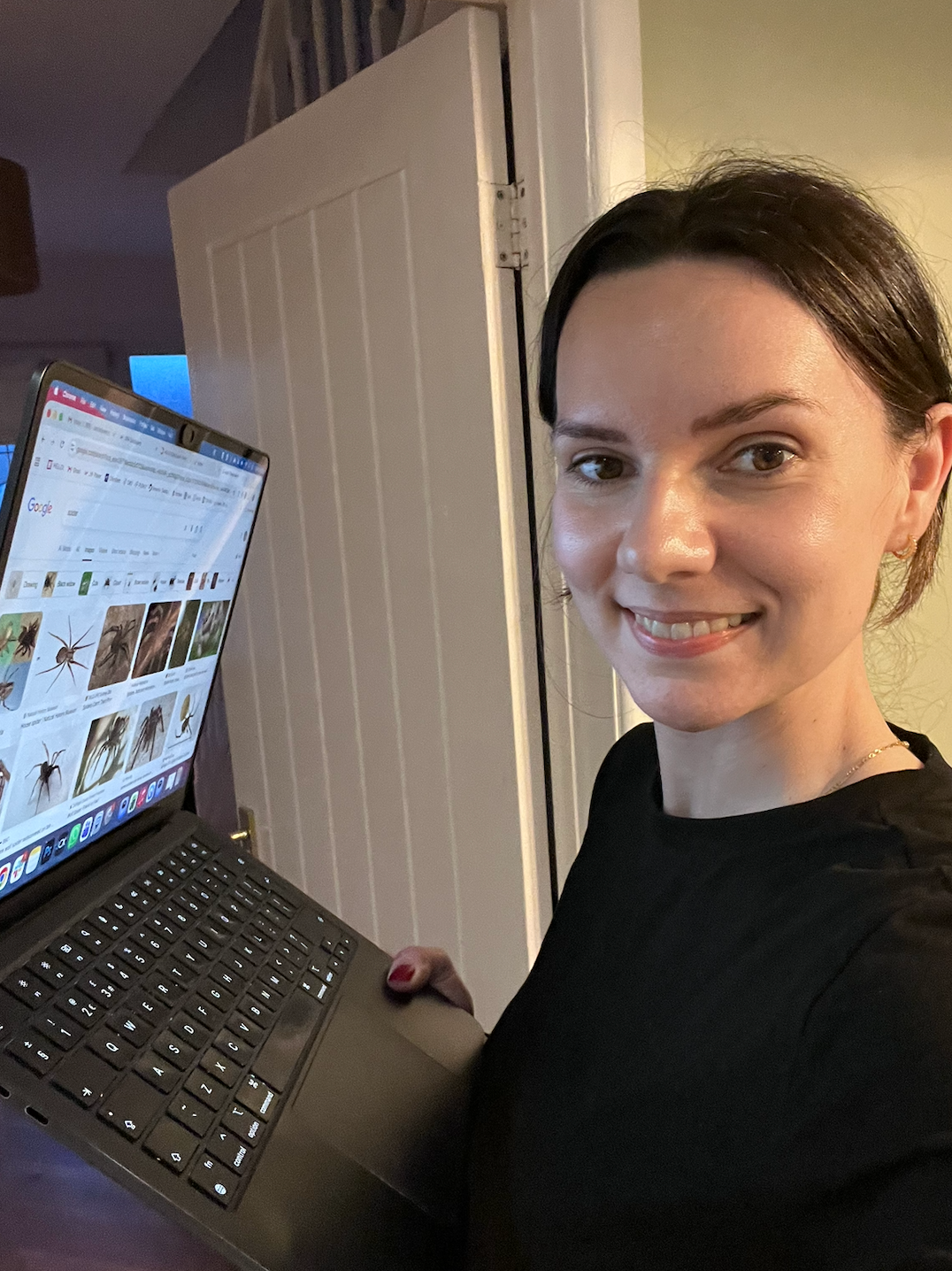
As we spoke about spiders and my thoughts around them, I must admit I felt less scared, but the ‘what ifs’ inside me raged on, ‘What if I still feel triggered when I see one?’ I found myself lingering in the shed a little longer and peeking under boxes in the loft, trying subtly to test my phobia, and by the time I reached my third and final session, I Googled the word spider – a huge leap for me!
Christopher casually mentioned that he knows ‘spider women’, who he works with occasionally for clients to test their progress. I had mixed emotions about the prospect of meeting the spiders, but I tried telling myself, ‘What’s the worst that could happen?’ Also, I’m a dedicated journalist and I really wanted some good pictures for this very piece.
Facing my fear
It was a lovely, sunny day when I left the office and headed to Harley Street to ‘meet the spiders’ as I had booked into my calendar. Approaching the clinic as the sun shone down, I remember thinking that I should probably feel scared, but I weirdly didn’t. It was almost as though all of Christopher’s hard work had paid off…
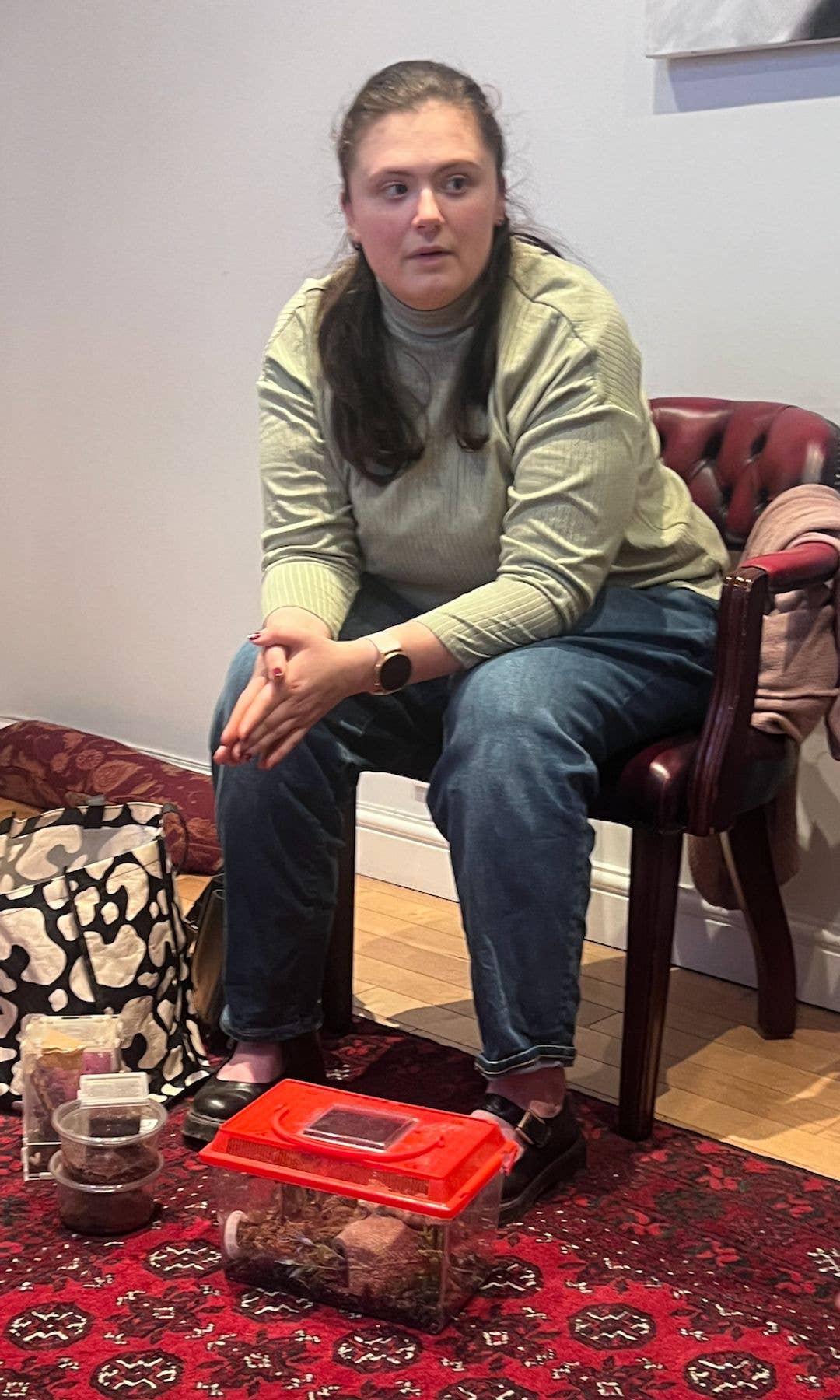
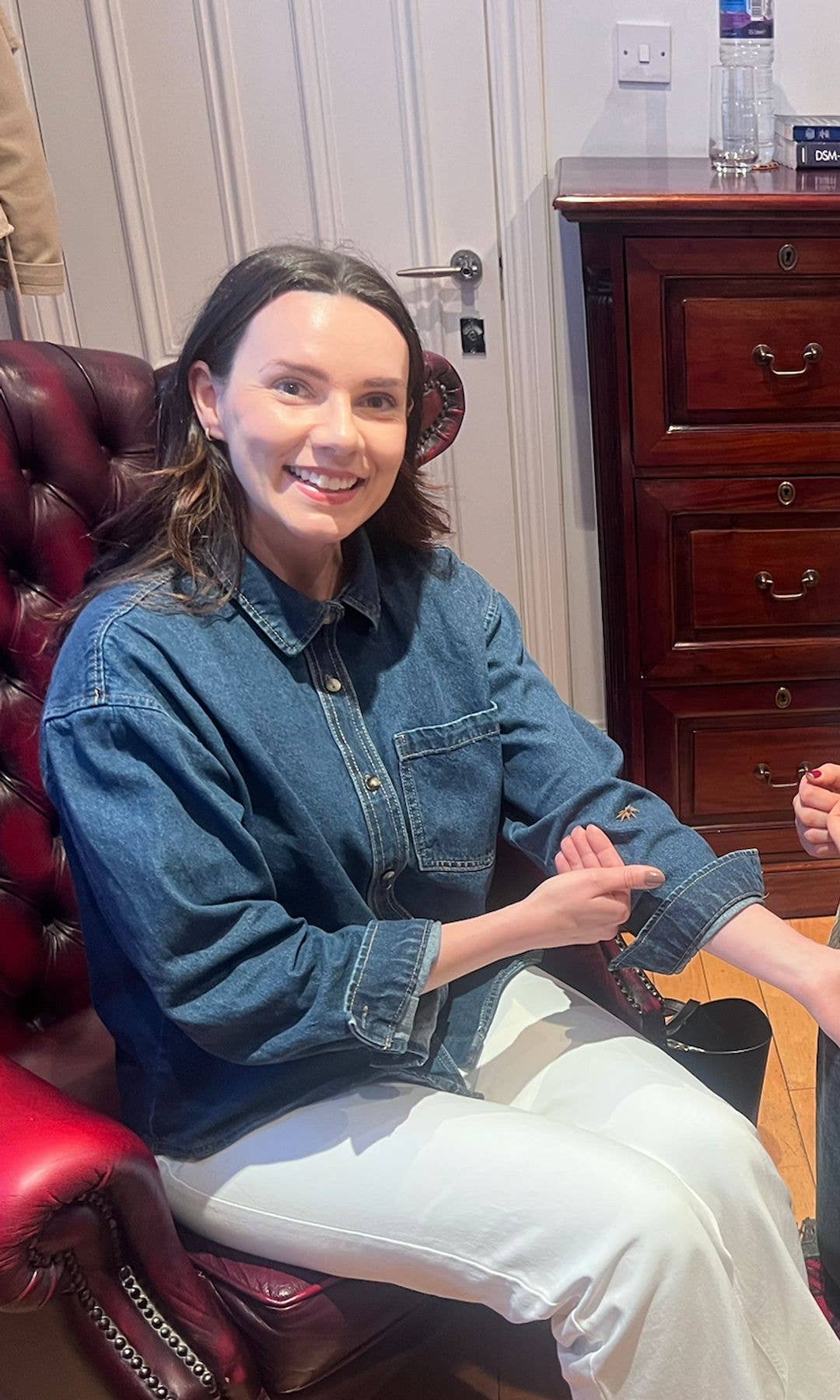
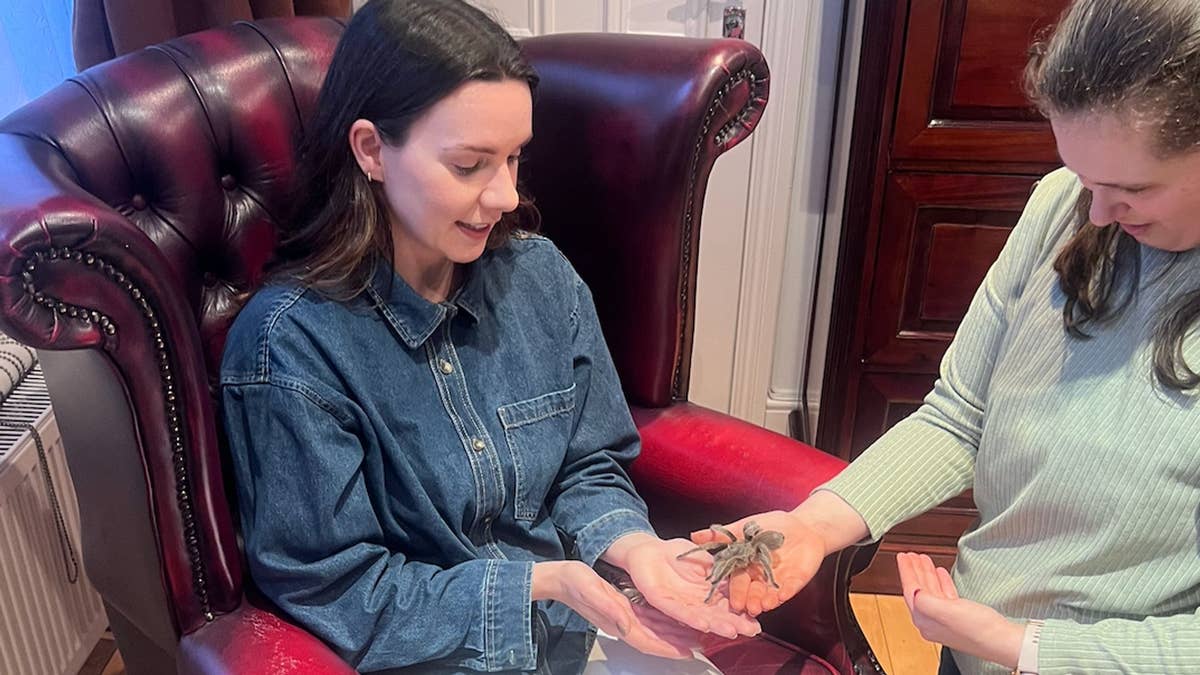
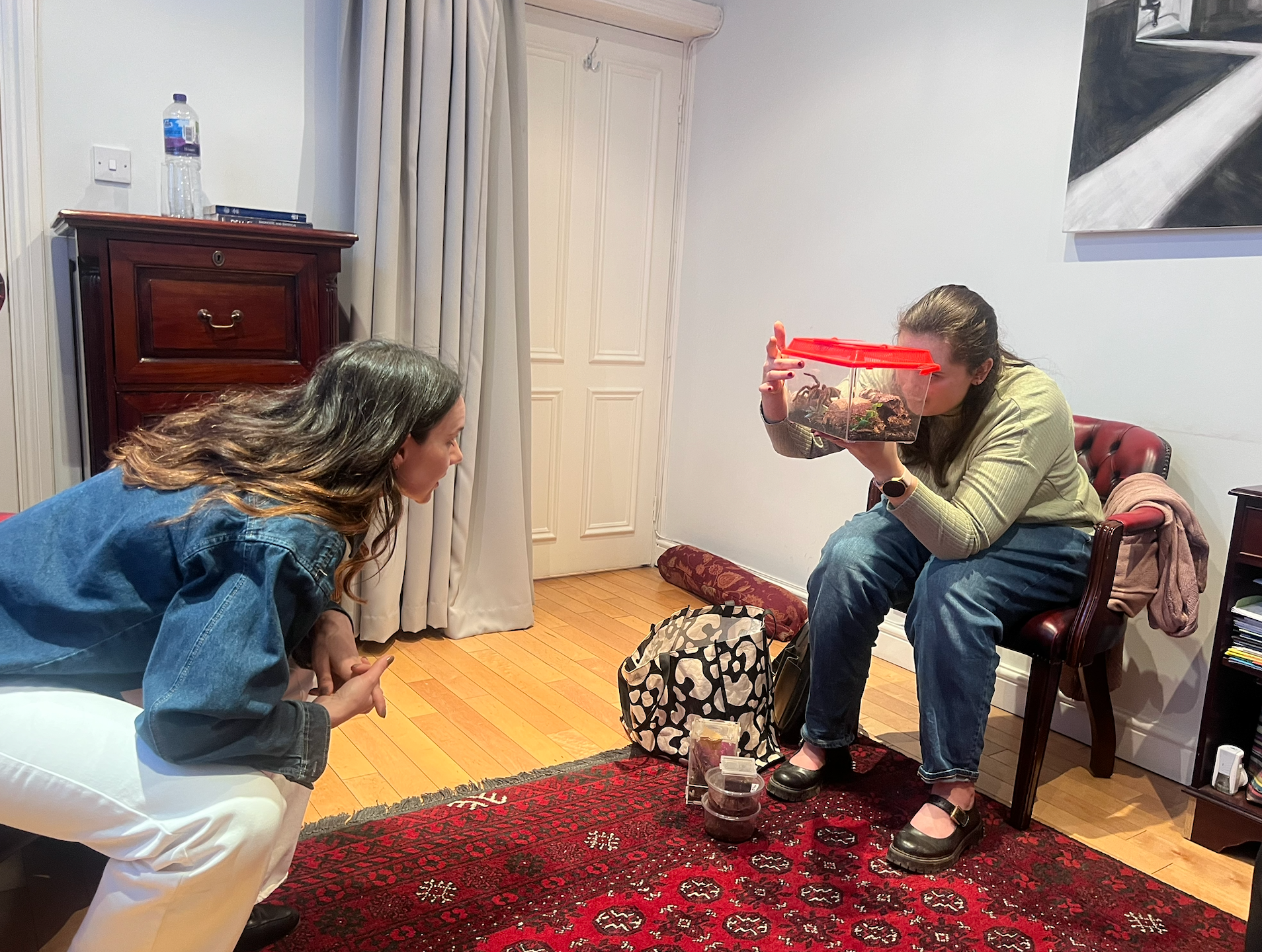
The two spider enthusiasts, Laura and Jessica Mutlow, entered the room with an unassuming tote bag, but under the cover of a scarf were tubs and boxes with a variety of eight-legged friends. As they placed the tarantula box on the floor, I had a flash of anxiety – ‘Would I actually be able to do this?’ But the ladies talked me through their love for their unique pets, explaining their types and giving me interesting facts. Talking to people and asking questions is what I’m good at, thanks to my job, and this familiar process put me at ease.
“Seeing the creature up close was truly fascinating, she was surprisingly fluffy-looking and moved so slowly and elegantly – nothing like the Hollywood movies make out.”
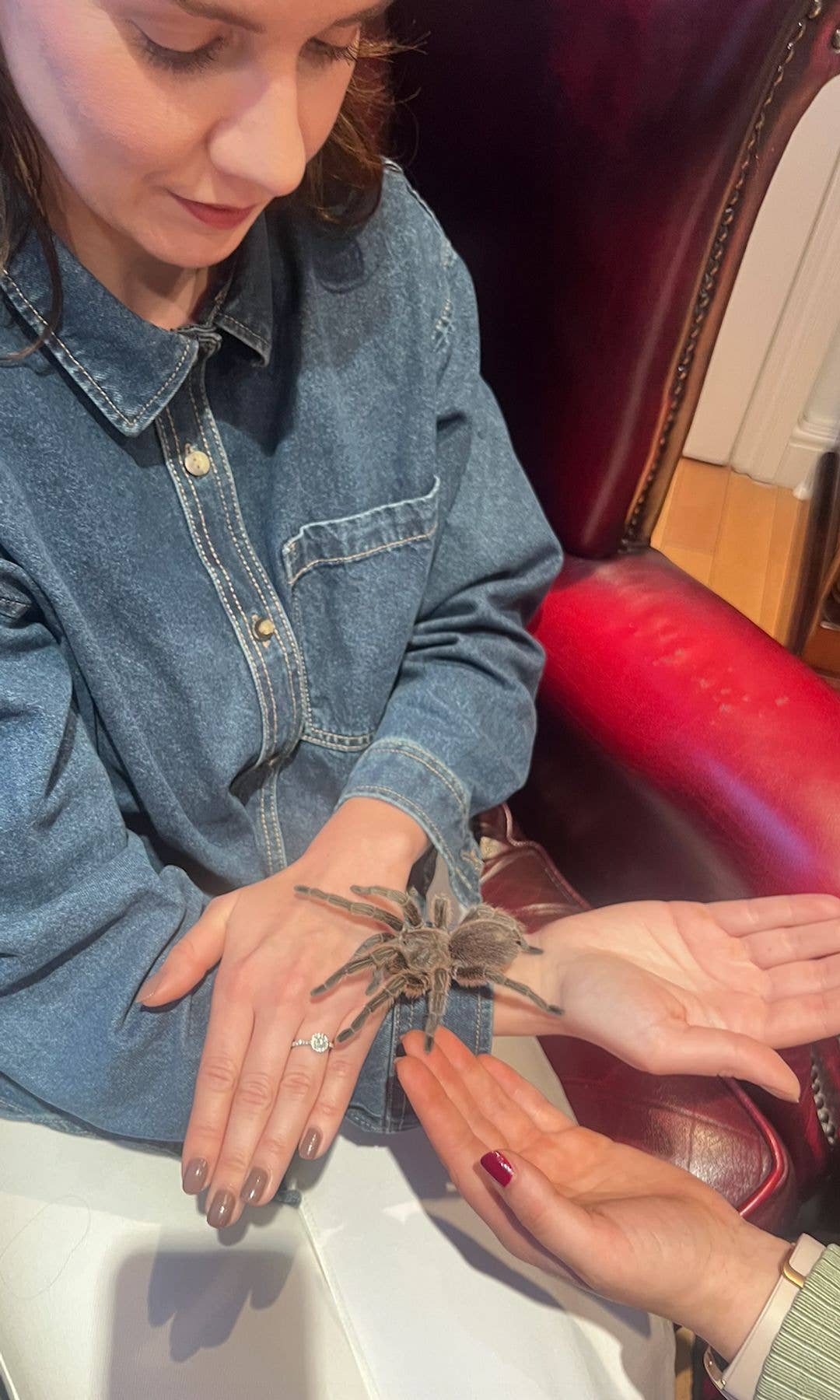
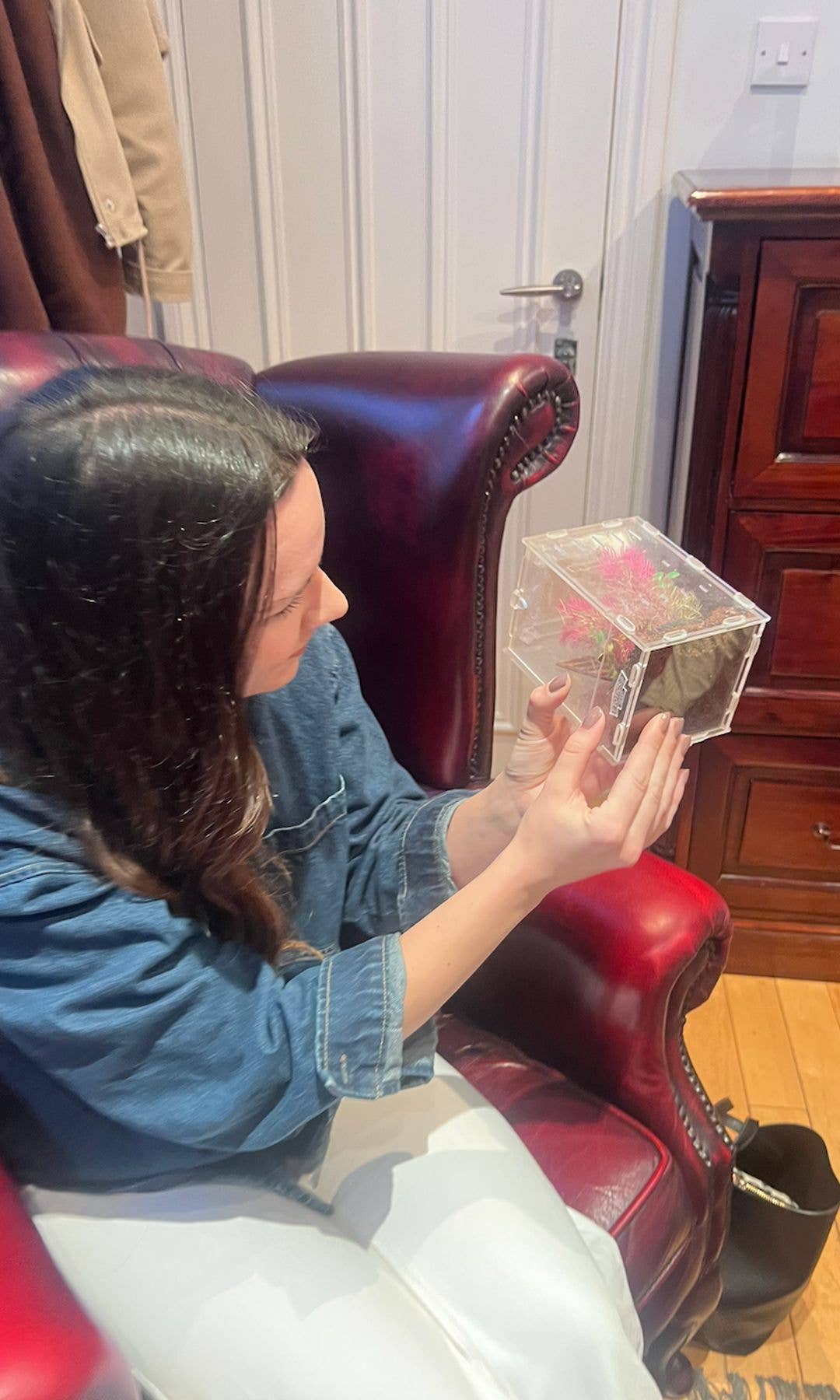
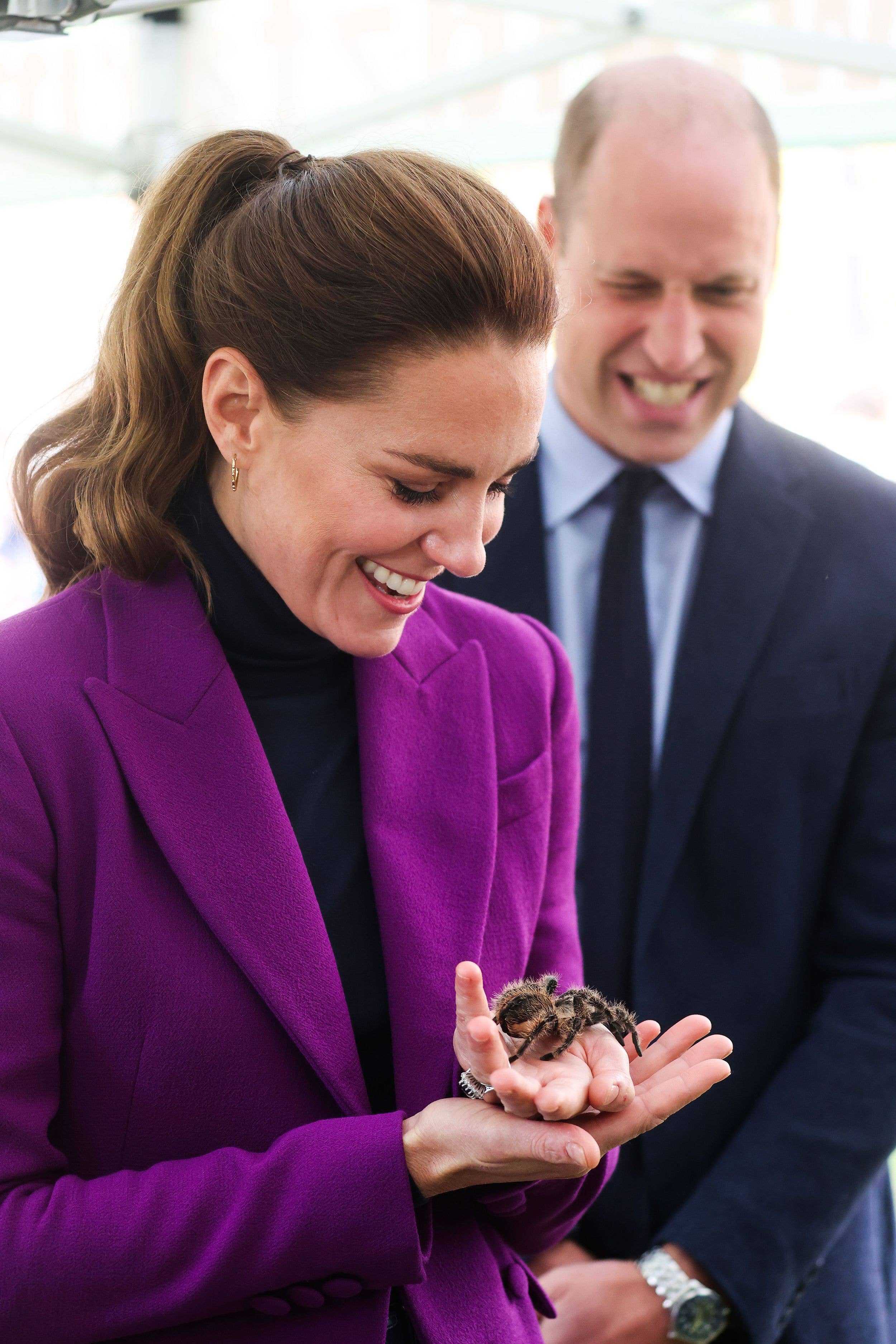
I started with a baby tarantula, and although I was worried about it running up my sleeve, I wasn’t panicking like I thought I would be. After showing me others up close, getting bigger in size, it was time to meet Rosie, the rose-haired tarantula. Seeing the creature up close was truly fascinating. She was surprisingly fluffy-looking and moved so slowly and elegantly – nothing like the Hollywood movies make out. As much as I was rather at ease holding her, it still amazed me that Laura and Jessica like to handle her while they are watching TV – I don’t think I’ll ever be that relaxed in their presence.
Techniques I found useful
Christopher’s approach is his Integrated Change System, so he tackles each phobia with a variety of methods. We worked on working back through bad memories – both spider-related ones and general childhood-anxiety ones, to desensitise the memories. This was actioned by playing them backwards in my mind, fading them to black-and-white and adding humour to them like silly cartoon faces and funny music.
Tapping was another core principle, officially known as Emotional Freedom Techniques (EFT), and by using a basic pattern of tapping like the temples, collarbone and head, for example, can help calm the nervous system while you unpack any traumatic memories.
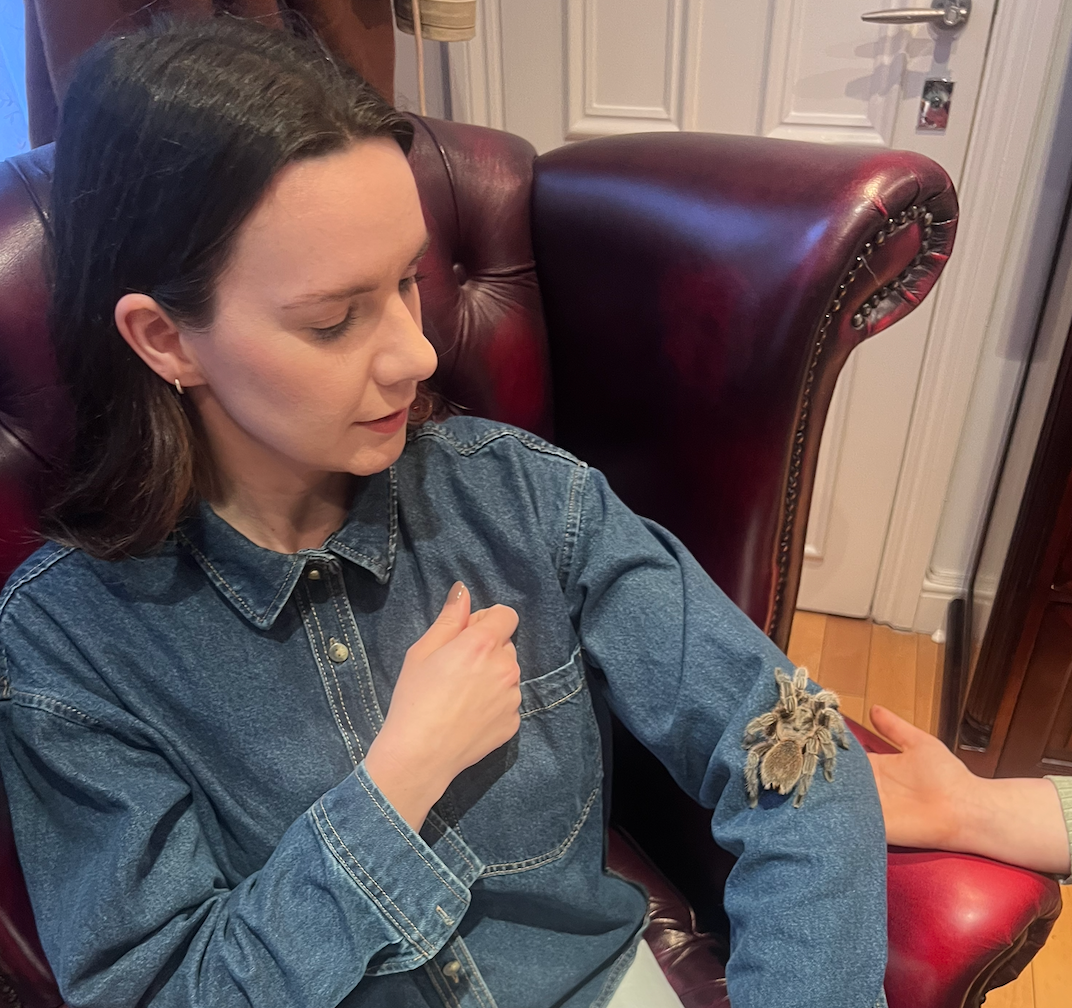
An approach which worked really well for me was anchoring – basically, positive reinforcement tied to a comforting movement. I worked on thinking back through good memories when I felt happy, loved and amused and tying them to the motion of squeezing my hand so that I could use that tool to flood my brain with good vibes when I encountered an issue.
A turning point for me was when Christopher spoke about visualising a calm approach. It works by trying to visualise a positive reaction to your fear and see how that makes you feel and how that would be more empowering than being a cowering wreck. I thought about how I could handle the spider situation better if I were cool, calm and collected, like being able to usher it out on a piece of paper or capture it under a glass, but if I tensed up, I’d lose control of the situation.
Can anyone be freed of a phobia?
It’s worth noting, I now don’t say ‘cured’ of a phobia. As Christopher rightly explained to me, it’s not an illness! But the answer is a resounding yes, anyone can get over their fears. “You don’t have to live in fear forever. When the old pattern is replaced, the physical grip of fear loosens, the mind follows, and life opens up in ways that once felt impossible,” he says.
“Most fears aren’t things we’re born with; they’re associations our mind has created at some point in the past. Because that response is learned, it can also be changed. The brain already knows how to feel calm and relaxed; it simply needs to recondition the response, so it no longer automatically links that situation to fear.
“With the right approach, some self-reflection and a willingness to work on it, I believe most people can overcome their phobias”
“That said, certain things can slow the process down. For example, if someone has a strong need to control situations that are naturally uncertain, or if there is what we call a secondary gain, where the subconscious believes the fear is somehow keeping them safe or prepared, it can make change take longer. But with the right approach, some self-reflection and a willingness to work on it, I believe most people can overcome their phobias.”
What are the top three things someone can do today to start to tackle their phobia?
“The first is getting clear on what they are actually afraid of. Many people say they are scared of things like spiders, dogs or heights, but when you look more closely it is usually something more specific. For example, with spiders it might be the way they move or the fear of being startled,” says Christopher.
Christopher on TV helping people be freed of their fears:
“The second step is to change the way the brain represents fear. Our minds often replay frightening experiences like a mental horror movie. One simple approach is to deliberately change how that image or memory appears in your mind. For example, if you imagine something you are afraid of, try making the image smaller, turning it black and white, or making it look ridiculous, almost like turning a horror film into a comedy scene, so you can start to change the emotional response attached to it.”
“The third step is creating a positive emotional anchor. This means deliberately building a strong positive emotional state that you can access when fear appears. Think of a time when you felt very calm, confident or relaxed, step into that memory and relive it as vividly as possible. At the peak of that feeling do something physical such as pressing your thumb and finger together. If you repeat this several times the brain starts to associate that physical action with the positive state. Over time that anchor can help interrupt fear and replace it with calm or confidence.”
 © Getty Images
What do you say to people who think their phobias are ‘strange or ‘unusual’?
“When people feel their phobia is strange or unusual, I usually explain that all phobias work in essentially the same way,” points out Christopher. “They are not logical, rational or proportional, they are simply learned emotional responses. Usually, they begin in a moment where someone experienced a strong emotion while encountering something. The brain then links that thing with danger even if it is not actually dangerous. Changing emotions has nothing to do with how smart you are or how strong you are, it is simply about identifying the triggers and changing the associations the brain has made. So, people do not need to hide it, suppress it or try to force it to make logical sense.”
Read the full article here