
Duchess Sophie remains in good humour as royal tour begins with travel mishap

News Room By News Room
7 Min Read

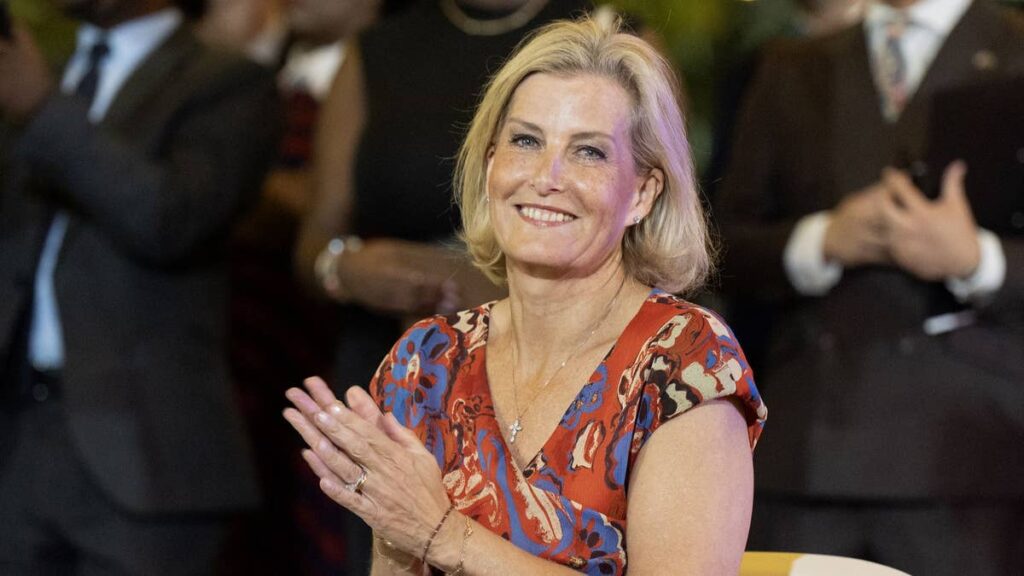
Missing luggage might unsettle even the most experienced traveller, but the Duchess of Edinburgh experienced an unexpected start to her Zambia tour in her stride.

Sophie carried out her first engagement in what she called her “aeroplane clothes” after the royal baggage was mislaid. The dancers welcoming her at the British High Commission, however, performed with undiminished enthusiasm.

It was an eventful beginning to a five-day visit combining the work of strengthening British relations with the southern African Commonwealth country and championing causes close to the duchess’s heart.

HELLO!, the only publication with a royal correspondent accompanying Sophie on the tour, witnessed the warmth and humour she brings to both.

And while her programme includes business leaders, education projects and an important appeal for better eye care, one particularly memorable encounter involved some rather unusual residents of the presidential grounds.

© PA Images via Getty Images
The Duchess of Edinburgh with Mutinta Hichilema (centre), First Lady of Zambia and British High Commissioner to Zambia Rebecca Terzeon (left) at Community House in Lusaka, during her tour of Zambia

Duchess Sophie’s unexpected encounter at Zambia’s presidential residence

At President Hakainde Hichilema’s private residence in the east of Lusaka, Sophie paused to admire half a dozen zebras grazing on the lawn and drinking from a fountain. “They’re good lawnmowers,” she observed. “Yes,” the President agreed. “And good fertilisers.”

The photographers recording this moment of British-Zambian friendship took care to avoid the freshly deposited evidence. The zebras are not the only animals roaming the grounds. Impala and puku antelopes also shared the surroundings, while the President’s background in cattle ranching reflected in the decoration.

Zebras in the gardens at Community House in Lusaka where The Duchess of Edinburgh met with the President of the Republic of Zambia Hakainde Hichilema © PA Images via Getty Images
Zebras in the gardens at Community House in Lusaka where The Duchess of Edinburgh met with the President of the Republic of Zambia Hakainde Hichilema

A painting of cows hung on his verandah, and four longhorn cattle busts spout water around the fountain at the end of the driveway. Inside, there is another revealing detail: a photograph the size of a film poster showing the President alongside King Charles at Dumfries House.

As Hakainde and his wife, First Lady Mutinta Hichilema, welcomed Sophie into their home, the photograph is their first stop. It records the presidential couple’s visit to the King’s Foundation’s headquarters last October, when they presented Charles with traditional chitenge fabric. Now, Sophie has brought a gift that completes the exchange.

The Duchess of Edinburgh presents honey from the beehives at Buckingham Palace, Windsor Castle and Bagshot Park to the President of the Republic of Zambia© PA Images via Getty Images
The Duchess of Edinburgh presents honey from the beehives at Buckingham Palace, Windsor Castle and Bagshot Park to the President of the Republic of Zambia

Duchess Sophie’s personal gifts for Zambia’s President

Some of that fabric has been transformed into a double-sided scarf backed with woven cashmere, which the duchess presented to her hosts. Her other gifts have an even more personal connection: three jars of honey from beehives at Buckingham Palace, Windsor Castle and her own hives at Bagshot Park.

The Duchess of Edinburgh with pupils from PEAS George Secondary School during a reception for students© PA Images via Getty Images
The Duchess of Edinburgh with pupils from PEAS George Secondary School during a reception for students

“So, you have three different types of honey from three different types of bee,” she told the President. “Did you raise the bees?” he asked. “Personally!” Sophie replied.

The exchange offers a glimpse of the ease between the duchess and her hosts. A meeting expected to last ten minutes stretched beyond an hour, with conversation ranging from Zambia’s mines and education to the President’s affection for Britain following his studies at the University of Birmingham.

Duchess Sophie tries gem polishing in Lusaka

The presidential visit is one highlight of a busy day that begins with a meeting of female business leaders. At the Jewel of Africa workshop, Sophie saw how British investment has supported training for women to turn mined emeralds into finished gems.

Then it is her turn to try the painstaking work. Given overalls and a relatively inexpensive piece of quartz, the duchess received a crash course in polishing. There are a few self-deprecating remarks before she produced a stone she is allowed to keep.

Whether that is a reward for her newly acquired skills or a diplomatic acknowledgement that her handiwork is not quite ready for sale remained unclear. Alongside the lighter moments, the day’s programme brought Sophie into contact with people addressing difficult experiences through creativity.

At the Imvelo Gallery, she listened to survivors of gender-based violence who have explored their experiences through art. She also celebrated educational projects linking Britain and Zambia.

The Duchess of Edinburgh delivers a speech at the British High Commissioner's Residence in Lusaka© PA Images via Getty Images
The Duchess of Edinburgh delivers a speech at the British High Commissioner’s Residence in Lusaka

Duchess Sophie’s powerful appeal for eye care

Perhaps the duchess’s most impassioned contribution came at an event hosted by the International Agency for the Prevention of Blindness and eye-care charity Orbis.

Speaking to doctors and charity workers, Sophie described the consequences of sight loss in starkly human terms. Her concern reaches beyond an individual’s ability to see. She spoke about children losing access to education, adults struggling to support their households and people becoming separated from those they love.

“If a child can’t see, they drop out of school,” she told the audience. “If they can’t see, their life chances are drastically reduced. If somebody can’t see in the home, they can’t sustain themselves, their families.”

For Sophie, addressing avoidable sight loss is inseparable from protecting people’s independence, opportunities and place within their communities. Her words drew on the experiences of people she has met.

“I used to say that actually eye health was life-threatening. I still believe it is. I’ve met people who live on the streets because they cannot live with their families anymore because they feel that they’re a burden,” she added. 

“And so they leave and take themselves away. So I place it at a high priority; eye care for all.”

Read the full article here

TAGGED:
Share This Article
Leave a comment