





There is a moment, stepping into Drew Barrymore’s Upstate New York home, where everything suddenly makes sense. It isn’t the kitchen or even the layered living spaces filled with art and personality. It is the greenhouse-style reading nook, where walls of glass blur into the landscape beyond and the outside world quietly becomes part of the room.
And now, in a move that has surprised fans and design lovers alike, Drew is saying goodbye to the deeply personal retreat she so carefully created. The actress has listed her extensively renovated Westchester County estate for just under $5 million, just months after transforming it into a one-of-a-kind sanctuary.
Purchased in 2024 for $4.4 million, the circa-1747 property sits on 12 acres in Harrison, New York, and includes a 5,600-square-foot main house, along with a guest cottage, pool house and sweeping landscaped gardens. Despite the scale and beauty of the home, Drew is parting ways as her family’s needs evolve.
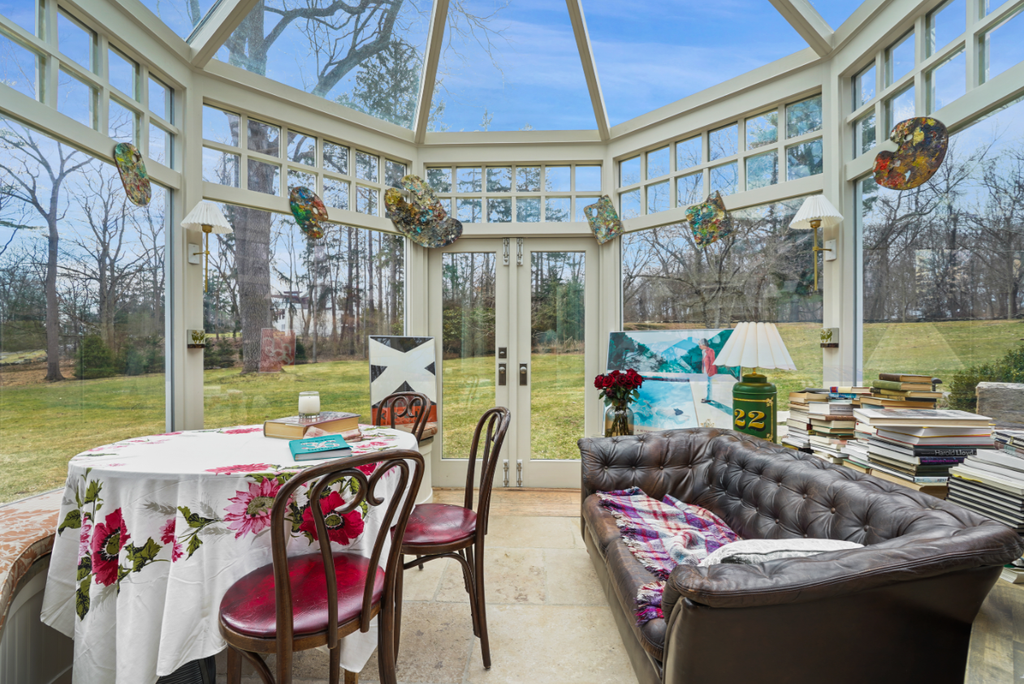
The greenhouse-style reading nook
At the centre of that vision sits the now-iconic conservatory-style reading nook, a glass-encased space that captures both light and stillness in equal measure.
“Nature is my healer and my teacher,” Drew has said, a philosophy that is brought to life in this room more than anywhere else.
Surrounded by greenery, softened by floral upholstery and layered with books and personal objects, the space feels less like a designed room and more like an emotional anchor. It is, quite literally, the heart of the home, and the inspiration from which everything else flows.
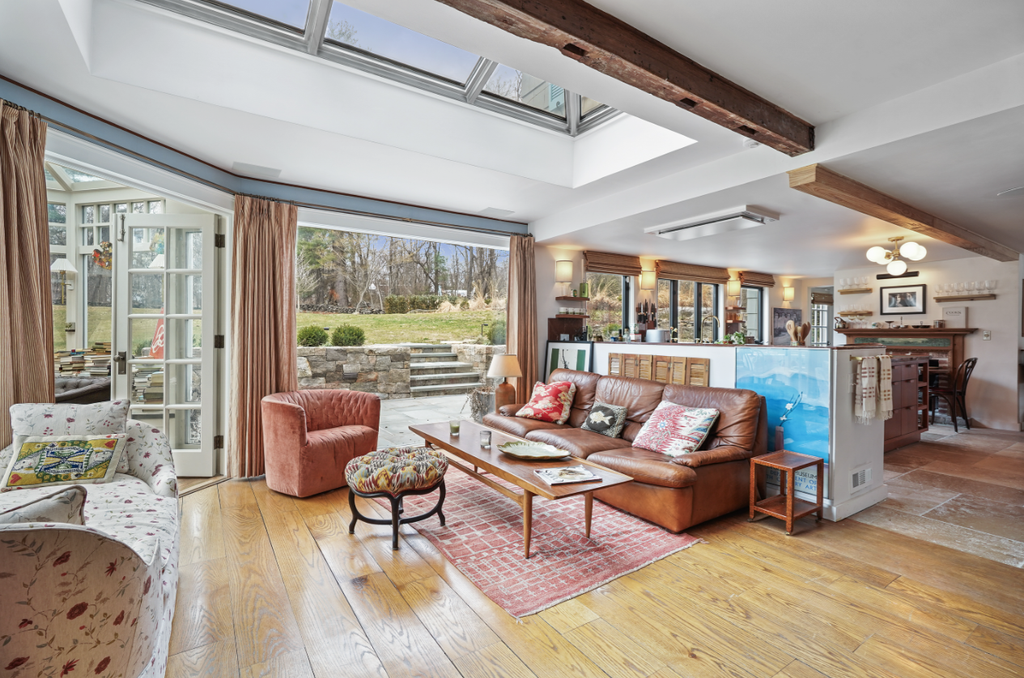
The living room
Elsewhere, the home reveals itself in layers. Its layout is anything but conventional, with winding transitions and unexpected rooms that speak to its 18th-century origins. “I’m really into odd formations and the bones of the house,” Drew explained.The double-height great room is one of the standout features, where soaring ceilings meet an eclectic mix of vintage furniture, curated artwork and tactile finishes. It is a space that has evolved over time, reflecting Drew’s instinct-led approach to design. “It became this obsession of a canvas,” she said, describing how she lived in the space before refining it.
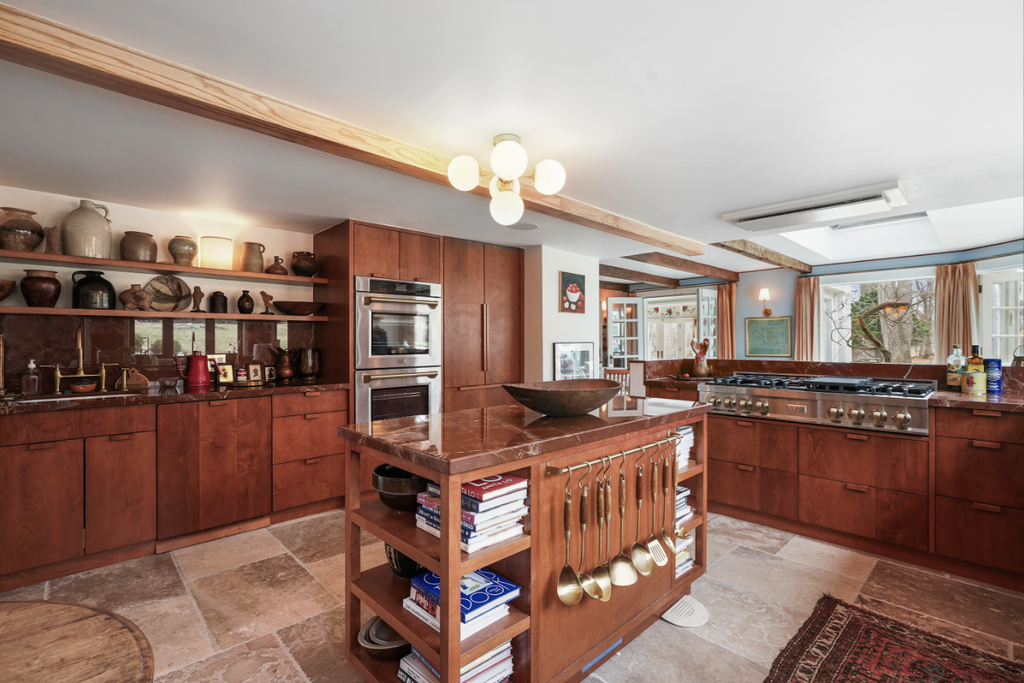
The Kitchen
The kitchen, newly redesigned as part of the renovation, balances rustic warmth with modern functionality. Rich timber cabinetry, stone flooring and a statement island anchor the space, while expansive windows ensure a constant connection to the outdoors. What began as a simple update quickly became something far more ambitious. “I thought it was paint and wallpaper and move in,” Drew admitted. Instead, the project turned into a full-scale restoration, with plumbing, heating and HVAC systems all replaced to bring the historic home into the present.
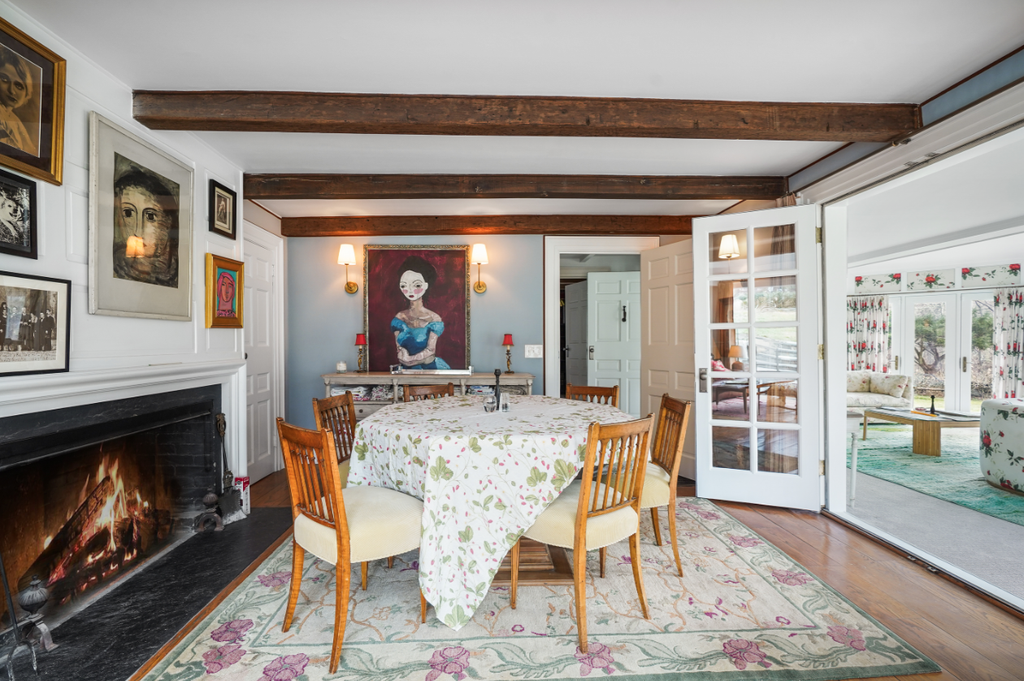
The dining space
The dining room continues the home’s story of warmth and intimacy. Framed by exposed beams and centred around a fireplace, it feels both inviting and quietly elevated.It is here that Drew’s approach to design becomes especially clear. Rather than relying on expensive antiques, she focused on thoughtful details and clever styling. “A little bit of trim can elevate and make a room look so much more expensive without spending a lot of money,” she shared.
Read the full article here