






A landmark new study is challenging everything we thought we knew about baby brain, and the findings might surprise you. Research has found that women lose nearly five per cent of their brain’s grey matter during pregnancy, but researchers say the change is not only normal, it is actually essential preparation for motherhood.
The study, led by Professor Susana Carmona at the Gregorio Marañón Health Research Institute in Madrid, and described as the largest of its kind, tracked women’s brains before conception, throughout pregnancy, and after birth. The findings challenged many common misconceptions about baby brain.
What the research found
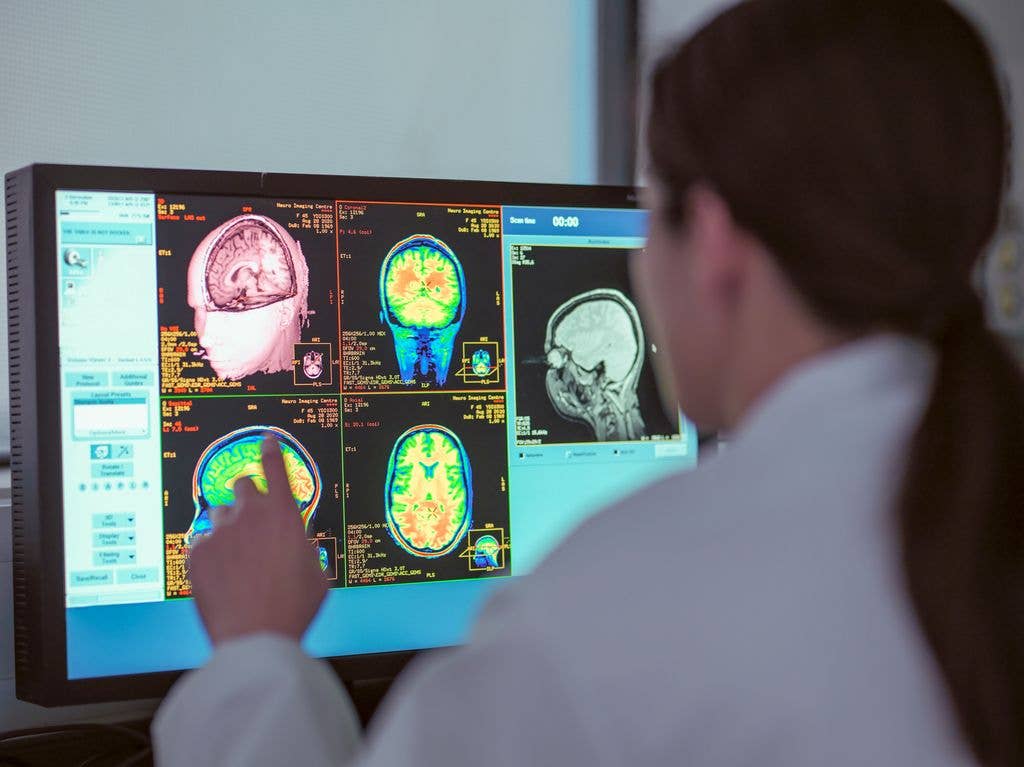
Using neuroimaging techniques, the study found a reduction and partial recovery of almost five per cent of grey matter in the brain, especially in regions linked to social cognition. The affected areas are concentrated in the parts of the brain responsible for reading emotions, interpreting social signals, and attuning to others – many of the skills demanded by new motherhood.
The study also scanned 52 women who had never been pregnant, including 20 women who were partners of pregnant women already involved in the research, allowing scientists to confirm that the changes were driven by pregnancy itself rather than simply the experience of becoming a parent.
The greater the changes in the brain, the more likely women were to say they were relating to and bonding well with their babies, suggesting the changes are not only normal but also actively beneficial.
Debunking the baby brain myth
The findings challenge the idea that pregnancy makes women cognitively weaker. Dr Rab Nawaz Khan, a Consultant Neurologist with over ten years of clinical experience, says the results need to be interpreted carefully.
“A drop in grey matter volume on MRI does not automatically mean brain damage or losing brain cells,” he says. “In neuroscience, volume shifts often reflect remodelling of connections, changes in dendrites, glial cells, and fluid balance – not a simple loss of neurons.”
He adds: “This helps correct a misconception that baby brain equals cognitive decline. The best framing is not that women are becoming less capable, but that the brain is shifting priorities and efficiency during a biologically intense window.”
 © Getty Images
Meanwhile, Professor Carmona likens the process to pruning a tree – cutting back some branches so the rest can grow more efficiently. Scientists have observed a comparable process during adolescence, as the brain matures from childhood to adulthood.
The role of hormones
The study has also, for the first time, identified the likely biological mechanism behind the changes. They are associated with fluctuations in two oestrogens – estriol-3-sulfate and estrone-sulfate – hormones that increase exponentially during pregnancy and return to basal levels after delivery.
Dr Khan says the hormone link makes biological sense. “Pregnancy hormones rise to levels that are rarely seen at any other time in life, and hormones are powerful brain modulators. I would describe the five per cent figure as a population average estimate from imaging – not a statement that five per cent of the brain is gone.”
What it means for maternal bonding
 © Getty Images
The research also has implications for understanding postnatal mental health and attachment. Researchers observed a connection between grey matter recovery and both a lack of hostility toward the child and a stronger attachment to the baby, suggesting the brain’s recovery after birth plays a role in early bonding.
“The regions affected tend to overlap with networks involved in social cognition – reading signals, interpreting intention, and emotionally attuning to others,” Dr Khan says. “Early parenting requires rapid threat detection and prioritising a newborn’s cues. This is less bandwidth for scattered multitasking, more bandwidth for sensitivity to baby-related cues.”
What pregnant women should know
For women who are concerned about cognitive changes during pregnancy, Dr Khan’s message is reassuring. “The reassuring message is that change is expected, and plasticity is often a sign of adaptation, not decline,” he says.
He also advises women who feel significantly impaired to speak to their GP. “It is worth screening for fixable drivers like poor sleep, anxiety or depression, thyroid issues, iron deficiency, and sleep apnoea – because those can mimic or worsen brain fog. Sleep quality is especially important.”
Read the full article here