






Let’s see if this scenario sounds familiar: you look in the mirror and never like what you see. You can’t help but look at your body’s shape as a problem – but trying to “solve” it by losing weight leaves you trapped in a relentless cycle of dieting and guilt.
Rocio Rodriguez – a psychologist, author, and specialist in body image and psycho-nutrition – witnesses this struggle daily in her clinical practice.
In this fascinating Q&A, the mental health expert explains how to spot the hidden pitfalls of diet culture, adopt more intuitive eating habits and confront your fear of gaining weight.
Rodriguez addresses this complex issue with the understanding that changing your self-perception is no mean feat. Thinking differently about your body requires a deep dive into the emotional bonds that define your relationship with food.
How do we end up seeing our own bodies as a ‘problem’?
“The conviction that our bodies are a problem stems primarily from the beauty ideals that dominate our society. It is an ideal rooted in thinness – a mould that is far too narrow for the vast majority of women. Failing to fit that mould leads us to believe there is something inherently wrong with us; that our bodies are the problem and we must do everything within our power to change them – often at the cost of our health, our finances and our general well-being.
“Conforming to this ideal is treated as essential because it is conflated with being desirable and successful, or being worthy of love. But the fault was never with our bodies; it lies with a society that judges and stigmatises those who fall outside the norm, conditioning us to believe that, without a certain physique, we are somehow less valuable.”
Is it difficult to realise that the body isn’t actually the issue we need to resolve?
“It is immensely challenging, as we are constantly bombarded with messages designed to convince us otherwise. Every time we leave the house or scroll through social media, we are met with adverts or influencers promoting ‘before and after’ transformations, weight-loss injections or fad diets.
“Sometimes, the greatest act of self-love is to stop dieting”
“We live in a culture where the desire to lose weight is not only normalised but socially praised, with little regard for the potential consequences. When you live in that type of environment, it is incredibly hard to see that the urge to change your body might be a symptom of a deeper struggle, or that many of the behaviours currently being celebrated could, in fact, be warning signs of an eating disorder.”
In your view, what is the emotional toll of being caught in this relentless cycle of dieting and guilt?
“It is a downward spiral that profoundly erodes mental health. The loop of restriction, guilt, hunger, binge eating and further guilt ensures that food becomes the absolute focal point of one’s life. People find themselves thinking obsessively about what to eat, how much, when, and whether a certain food is ‘allowed’.
“This constant vigilance generates high levels of anxiety, stress and frustration. When a diet is eventually broken (which is unavoidable, as the human body is not designed to survive under constant restriction) guilt sets in.
“Constantly being on a diet is like being trapped in an invisible prison that robs you of energy, joy and freedom”
“This triggers a sense of personal failure that severely damages self-esteem. This dynamic can become extremely destructive and can seriously limit the life of the person experiencing it.”
Many people, women in particular, seem to be on a permanent diet. What message would you give to them?
“I would tell them to stop believing they lack willpower; the fault does not lie with them, but with the diets themselves. Diets are not the solution they promise to be: if they truly worked, we wouldn’t feel the need to start a new one every year. Constantly being on a diet is like being trapped in an invisible prison that robs you of energy, joy and freedom.
“I would tell them that their bodies do not need to be modified to deserve respect; they are already valuable exactly as they are. True self-care is not about counting calories or reaching a specific dress size, but about how you speak to yourself, how you listen and how you support yourself.
“Shrinking your body will not boost your self-esteem; the first step towards feeling good is not to change your body, but to change the way you see it.”
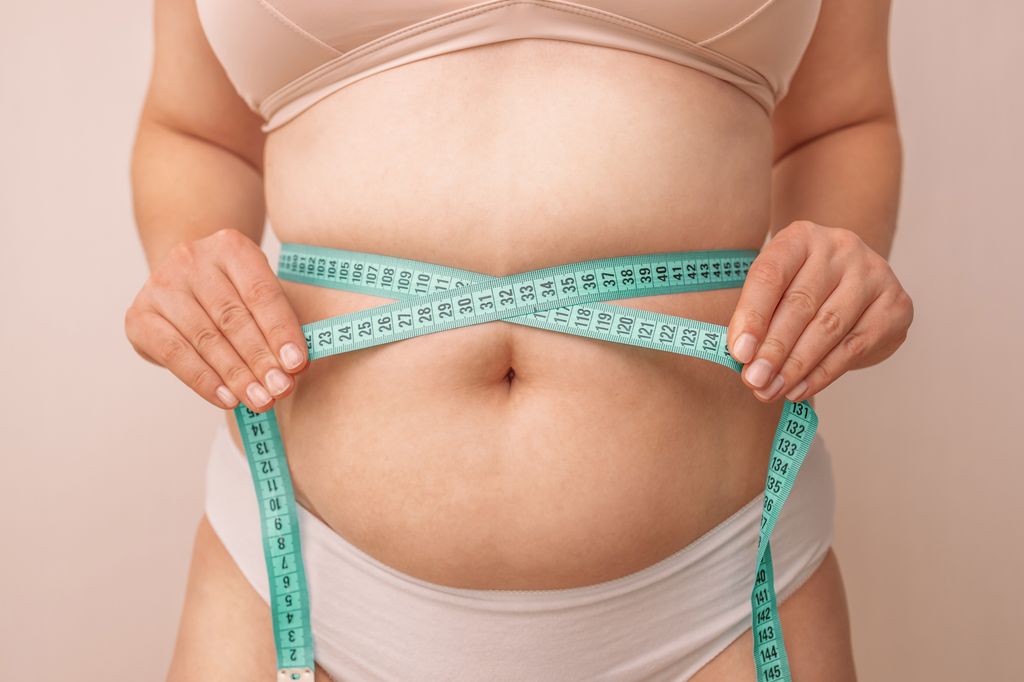 © Getty Images
Yet many people still get hooked on diets – why do you think that is?
“I would say the main reason we stay hooked is that diets don’t just promise weight loss; they promise acceptance, control, love and success. That is exactly what many people are truly searching for deep down. We don’t diet because we enjoy suffering, but because we believe that by changing our body, we will finally feel at peace with ourselves.
“The problem is that we place the responsibility for resolving deeper distress – such as difficult relationships, low self-esteem or emotions we don’t know how to handle – entirely onto our bodies.”
Many women use the phrase ‘I need to look after myself’ as a synonym for going on a diet. What are your thoughts on this association between self-care and restriction?
“Something that causes you harm cannot be considered ‘care’, and dieting harms us physically, emotionally and mentally. Historically, thinness has been associated with health, but that is not always true. Health is a complex concept that includes rest, healthy relationships, emotional balance, financial security conscious movement, and yes, a nutritious diet – but also a pleasurable one.
“Stop viewing your body as an object in the world and start understanding it as the vessel through which you experience the world”
“Food restriction generates a state of alert in the body: it increases cortisol, weakens the immune system, alters glucose regulation and can trigger chronic inflammation. Sometimes, the greatest act of self-love is to stop dieting.”
What impact does this level of food restriction have on our mental and emotional health?
“It has a far-reaching impact. Emotionally, it can trigger irritability, anxiety and heightened stress. It also leads to insomnia, difficulty concentrating and mental fatigue. Our brain perceives restriction as a physical threat and reacts with obsessive thoughts about food, which eventually drives us to eat simply to quiet those thoughts.
“Moreover, it can result in binge eating, which in turn triggers intense guilt and shame. When we condition our self-worth on the size of our body, every change in weight becomes a threat to our very identity. All of this significantly increases the risk of developing a clinical eating disorder.”
 © Getty Images
How exactly does body image influence our relationship with food?
“If you perceive your body as the enemy, as something that is ‘wrong’ and must be corrected, your relationship with food inevitably turns into a battlefield. Food becomes the weapon you use to try and modify your physical form. I always tell my patients: you cannot make peace with food without first making peace with your body. Body acceptance is a fundamental piece of the puzzle when it comes to building a healthy and lasting relationship with what we eat.”
Do you think social pressure and the feeling of being scrutinised influence the guilt we feel when eating certain things?
“Absolutely. We have to contend with the ‘moral weight’ assigned to different foods: the binary of ‘good’ versus ‘bad’. While we can talk about food as being more or less nutritious, categorising it as ‘bad’ only serves to increase the sense of guilt when we consume the ‘bad’ options.
“There is also a social narrative that suggests if you eat ‘bad’ food, you have failed as a person. This is exacerbated for those with larger or non-normative bodies, as they are judged far more harshly. They are often unfairly labelled as lazy or lacking control, which only fosters weight stigma and prejudice.”
 © SofikoS
What advice would you give to someone wanting to build a freer, more authentic relationship with their body?
“Change your perspective. Stop viewing your body as an object in the world and start understanding it as the vessel through which you experience the world. See it as your home rather than a decorative ornament. We need to feel our bodies more and think about them less. Listen to its internal signals: hunger, fullness, rest and pleasure. Value its functionality above its appearance. And finally, practise compassion: treat yourself with the same respect and tenderness you would offer someone you love very dearly.”
About the expert:
Psychologist Rocio Rodriguez is author of the Spanish-language non-fiction book Tu cuerpo no es un problema (Your Body Is Not a Problem), in which she addresses the psychological barriers to body acceptance.
Read the full article here